Tour Privado - Tue onde os imperadores sonhavam e as dinastias Linger


Descrição
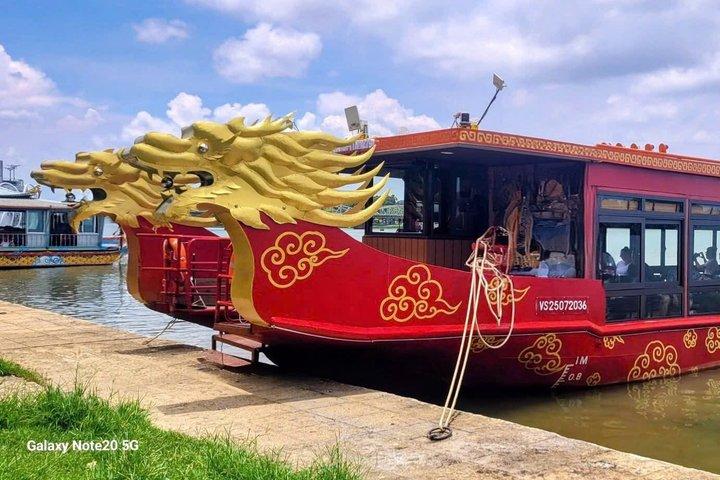
Volte no tempo para descobrir a rica herança de Hue, a antiga capital imperial do Vietname. Por mais de 140 anos, esta cidade serviu como o coração real da nação, permanecendo hoje um museu vivo de templos antigos, grandes cidadelas e elegante arquitetura colonial Francês. Sua jornada começa com um passeio de barco pacífico ao longo do Rio Perfume até Thien Mu Pagoda, cuja icônica torre de sete degraus sobe graciosamente acima da paisagem. Como um dos locais espirituais mais antigos do Vietnã, oferece uma janela para a alma da cidade. Em seguida, mergulhe na grandeza da Cidade Imperial, um vasto complexo murado que uma vez abrigou a corte real. Embora o tempo tenha deixado sua marca, os portões e pavilhões sobreviventes ainda fazem eco com o legado dos imperadores. Depois do almoço, explore a serenidade poética da Tumba do Tu Duc e a mistura impressionante de estilos oriental e ocidental na Tumba do Khai Dinh. À medida que o sol se suaviza, volte ao seu hotel com uma apreciação mais profunda do legado imperial de Hue.
Opções de passeio
Itinerário
Situado na margem norte do rio Perfume, na vila de Huong Long, a cinco quilômetros da cidade de Hue, o Thien Mu Pagoda é um dos locais religiosos mais bonitos e bem preservados do Vietnã.
O complexo de monumentos de Hue é um Patrimônio Mundial da UNESCO e está localizado na cidade de Hue, no centro do Vietnã. Hue foi fundada como capital do Vietnã por Gia Long, o primeiro rei da dinastia Nguyen em 1802. Ele ocupou essa posição por nove dinastias Nguyen até 1945. O complexo maciço apresenta centenas de monumentos e ruínas, como a Cidade Roxa Proibida, uma vez que a residência da família real foi gravemente danificada durante a Guerra do Vietnã, a Cidade Imperial, túmulos reais, torre de bandeiras, pagodes, templos, uma biblioteca e museu .
Tu Duc foi o quarto imperador do Vietnã e viveu de 1829 a 1883, período em que se diz que ele teve 104 concubinas. Durante seu reinado, o Vietnã perdeu sua independência para a França
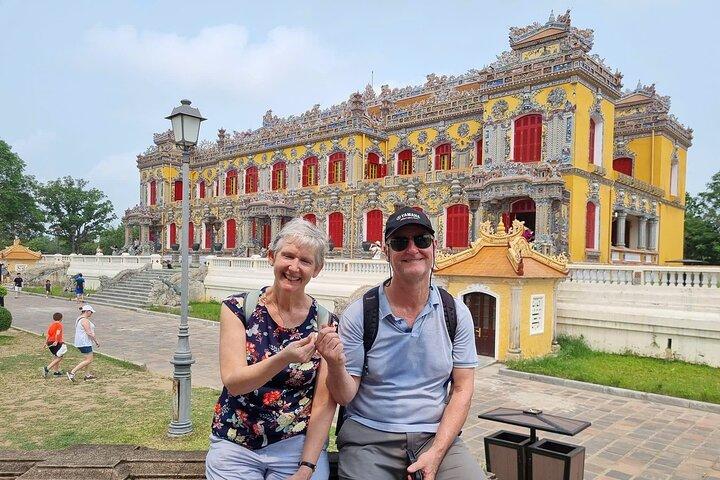
O Túmulo Real do Imperador Nguyen Khai Dinh é único entre os túmulos reais em Hue, Vietnã. Onde outros túmulos reais são amplos e convidam a uma reflexão respeitosa, Khai Dinh construiu seu local de descanso final para ser monumental em estilo e bombástico em execução.
Destaques
O que está incluído
Locais e horários de recolha
Por favor, esteja pronto no lobby do hotel 10 minutos antes do horário de entrega. Nossa Guia irá encontrá-lo lá e ficará feliz em ajudar com quaisquer perguntas que você possa ter.
Avaliações dos viajantes
Informações importantes
- Bebês precisam sentar no colo de um adulto
- Requer condicionamento físico moderado
Avaliações(5)
A UNESCO World Heritage site which, if accompanied by an informative guide, enables visitors to learn a great deal about life during the Nguyễn Dynasty, including the Emperor who had a thousand (legitimate) wives, the roles of eunuchs, and the meaning of dress colours. An entertaining as well as historically significant experiential visit.
Forbidden Purple City is the innermost enclosed area of Hue Citadel. No moat here but still the thick walls and an imposing gate leading to a grand spectacle featuring a palace of majestic architecture and grandeur. This area was meant to support the emperor and his family in everything they needed. It’s being restored slowly but you can still see/feel? How impressive this site must have been at its heyday. Lots of walking so bring some comfortable shoes and water. A local guide would be helpful too.
The Forbidden Purple City in Hue felt like a portal to another world. The moment you walk through the imposing gates, you will be struck by the quiet grandeur of it all. The architecture was majestic, though worn by centuries of history; and the old courtyards, narrow hallways, faded murals and crumbling parts only added to the charm. Wear comfortable shoes because you’ll do a fair bit of walking— a hat and some sunscreen wouldn’t hurt too cos the sun can be pretty strong during the summer months. And just in case you're hankering after a more immersive experience, consider hiring a local guide. I did, and I do not think I would have enjoyed quite as much if I hadn't had all these extra bits explained.
The older section of the city is a moated, walled citadel surrounded by eleven stone gates. This palace is somewhat like the Forbidden City in Beijing China but in no way as crowded with tourists (especially those pushing and yelling CHINESE tourists). This wall enclosed Royal Compound is Massive at 3 X 3 Miles (NOT exaggerating), thus much bigger than the Forbidden City in Beijing China. Hue became the capital city of a reunified Vietnam from 1802 until 1945 under the reign of the Nguyễn dynasty, where the last emperor turned over all political control to Ho Chie Min at the end of the American war. We observed the damage and rebuilding of the citadel’s grounds following the Viet Cong Tet Offensive. THIS IS A MUST SEE location for anyone visiting Vietnam, but make sure you come here with a guide, as just roaming around the grounds on your own, you will NOT relate well to all the history here. There is a massive water Moat around the 3X3 mile complex, and within its design was to be able to fend off invaders, and especially invaders at the time that had the ultimate weapon = Elephants!!!!