Ingresso de entrada para o Leopold Museum Vienna
Descrição
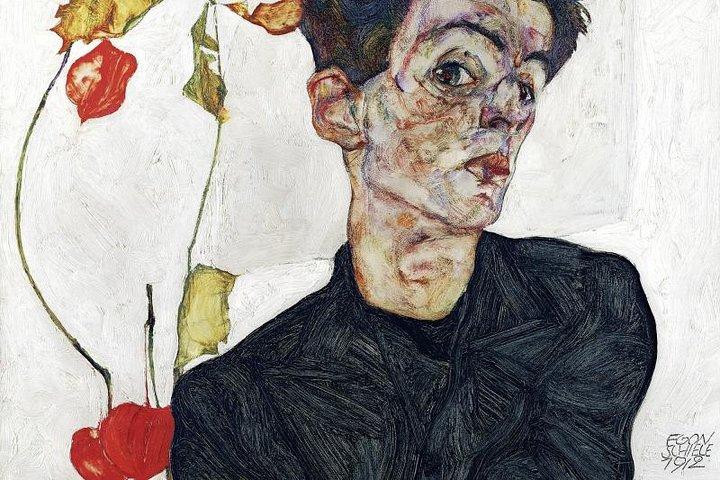
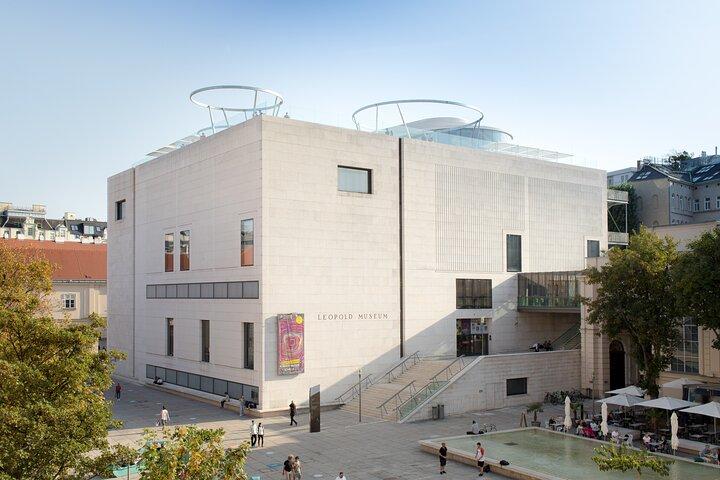
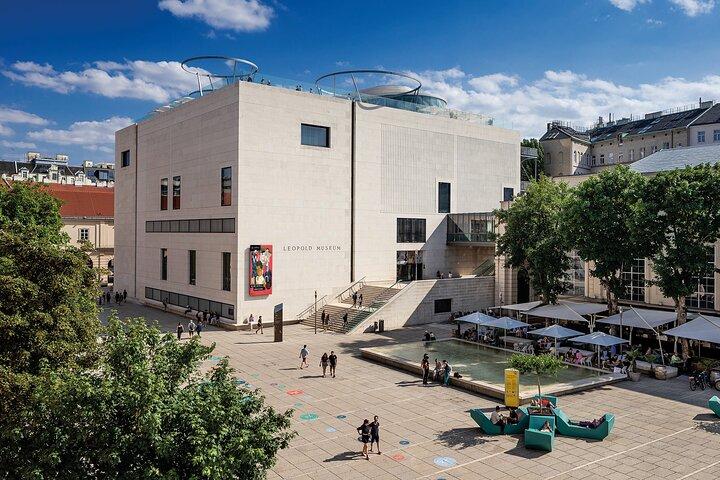
Reabertura dia 8 de dezembro de 2020! Novos horários: quarta-feira a domingo 10: 00h–18: 00h O Museu Leopold é um tesouro único do Jugendstil de Viena, da Wiener Werkstätte e do Expressionismo. É o museu mais visitado do local cultural mais quente da cidade, o MuseumsQuartier, e abriga a coleção Egon Schiele mais significativa e maior do mundo, bem como obras-primas do fundador da Secession, Gustav Klimt. Dica: As janelas panorâmicas do museu oferecem uma bela vista do centro de Viena com a Praça Maria Teresa e o Palácio Hofburg.
Opções de passeio
Itinerário
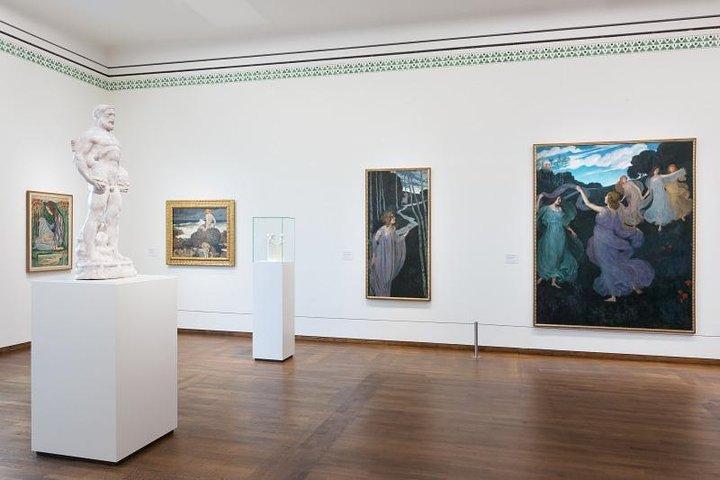
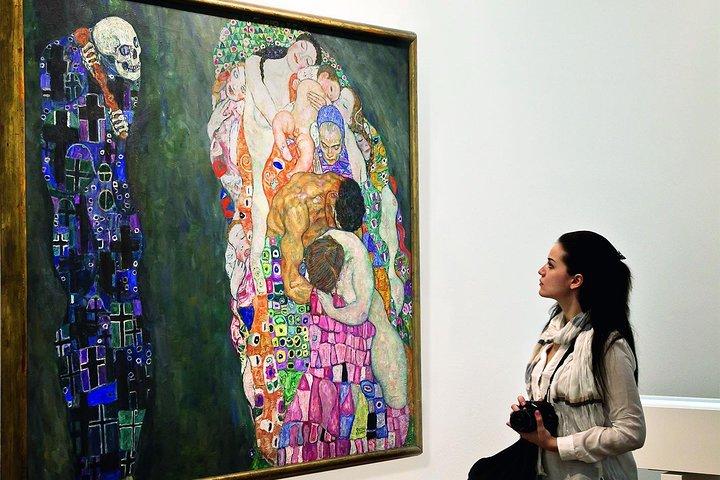
A coleção Leopold é uma das coleções mais importantes da arte austríaca moderna no mundo. As mais de 5.000 exposições foram coletadas por Rudolf e sua esposa Elisabeth Leopold por um período de cinco décadas. Em 1994, a coleção foi consolidada por Rudolf Leopold com a assistência da República da Áustria e do Banco Nacional da Áustria na Fundação Privada do Museu Leopold - uma fundação privada sem fins lucrativos. O Museu Leopold é um museu único e ativo, repleto de luz no coração de Viena e o maior ímã cultural do MuseumsQuartier. Além de emocionantes exposições especiais, ele não só abriga a coleção mais importante e mais importante de Egon Schiele em todo o mundo, mas também obras de Gustav Klimt além do preço, como sua provavelmente pintura mais importante “Morte e Vida”. Em nenhum outro museu de Viena é possível chegar tão perto do lendário "Fin de siècle Vienna" e testemunhar o nascimento da modernidade. A coleção mostra como a arte do Império Habsburgo mudou de estrito Historicismo e encantador Mood Impressionism dentro de alguns anos para o mundialmente exclusivo "Wiener Moderne", que abrange Klimt e Schiele, além de Oskar Kokoschka, Richard Gerstl, Koloman Moser e muitos outros artistas. que estão todos bem representados com grandes obras no Museu Leopold. Um outro foco do museu está no período entre guerras austríaco, que trouxe muitos artistas importantes como Albin Egger-Lienz, Anton Kolig e Herbert Boeckl, e em parte já aponta na direção da segunda metade do século XX. É por isso que artistas austríacos da geração pós-guerra ou obras excepcionais do século XIX de Ferdinand Georg Waldmüller, Friedrich Gauermann, August von Pettenkofen, Anton Romako, Emil Jakob Schindler, Carl Schuch e outros são apresentados repetidamente. Objetos cotidianos substanciais e incrivelmente modernos do Fin de Siècle completam a coleção, onde especialmente Otto Wagner, Adolf Loos, Dagobert Peche e os fundadores da Wiener Werkstätte Josef Hoffmann e Koloman Moser devem ser citados. E como todos os grandes artistas do Wiener Moderne se encontravam regularmente nos cafés épicos para intercâmbios inspiradores, não é preciso dizer que também no Museu Leopold uma cafeteria deve ter seu lugar. No "Café Leopold", você pode relaxar e revisar sua visita à coleção Leopold, que foi reunida ao longo de cinco décadas por Rudolf Leopold e sua esposa Elisabeth e agora conta com mais de 5.000 objetos de arte.
Destaques
O que está incluído
Avaliações dos viajantes
Informações importantes
- Acessibilidade para cadeira de rodas
- Bebês e crianças pequenas podem andar em um carrinho
- Não recomendado para viajantes com problemas cardíacos
- Adequado para todos os níveis de condicionamento físico
- Crianças devem estar acompanhadas de um adulto
- Ingresso com desconto para crianças somente com documento de identidade relevante
- Apresente seu voucher da Viator no balcão do caixa para realizar a troca do ingresso atual, imprima seu voucher
- Guia de áudio disponível em alemão, inglês, francês, italiano - Custo adicional: EUR 4,-
Avaliações(515)
The art blew my mind. A lot of modern art and other work too - sculpture, jewellery, glassware, furniture - but if you’re open-minded and not too traditional, it’s a must. The Egon Shiele and Death and Life (Klimt) were amazing but other unexpected pieces were so memorable too. Loved it. (Cafe was underwhelming.)
The Leopold Museum in the incredible MuseumQuartier is laid out so well that you don't miss a single work, whether it's Klimt's early period or the astonishing productions of Egon Schiele. However, I was less interested in the current exhibitions, but that doesn't take anything away from the quality of the place.
Thank you for your kind feedback! We're glad you had a wonderful time at Leopold Museum and hope to see you again soon.
Stunning Museum showing the whole range of art and design from the Secessionist period.
Thank you for your kind words! We’re pleased you had an enjoyable experience at the Leopold Museum and hope to welcome you back soon.
Incredible museum!!! You are 100% worth it.
Thank you for your positive review! We’re delighted you enjoyed your visit to the Leopold Museum and look forward to welcoming you back soon.
If the Albertina tells the story of the evolution of European art between the nineteenth and twentieth centuries, the Leopold Museum is the place where one truly understands Vienna at its moment of greatest cultural splendor, precisely in the years preceding the collapse of the Austro-Hungarian Empire. It is an immense museum, very rich in works and artists, in which one could—or rather (given the time) should—spend entire days. The heart of the collection is undoubtedly dedicated to Egon Schiele, an artist who struck me a lot. His works release an extraordinary energy, but also a deep sense of restlessness. In his self-portraits and paintings, it seems one is witnessing the continuous search for his own identity, the almost desperate need to affirm his own vitality, but also the laying bare of the most intimate fragilities: the pain for the lack of maternal love, the passion for Wally and then for Edith, desire, loneliness, illness, death. Every painting appears as a confession, so intense that it still seems surprisingly modern today. The section dedicated to the artists of the Vienna Secession and Austrian Expressionism is also very rich. I particularly appreciated Oskar Kokoschka, with his vibrant and psychologically intense painting, and I was also deeply struck by Richard Gerstl, who committed suicide at only twenty-five years old. His paintings are of a surprising beauty: intense, very modern, rich in expressive force, and capable of conveying all the sensitivity and inner torment of the artist. Despite having had a very short life, he left behind works that testify to an extraordinary talent and a truly innovative pictorial language. Naturally, Gustav Klimt is not missing, represented with significant works from the different phases of his artistic production, which allow one to grasp the evolution of his pictorial language well beyond the famous "golden phase." The display dedicated to the Vienna Secession is also of great interest: in addition to the paintings, the museum exhibits furniture, design objects, and artifacts that perfectly convey the idea of how this movement was not just an artistic trend, but a true cultural project, aimed at renewing every aspect of daily life through beauty. It is a journey that helps one understand how, in the Vienna of that period, art, architecture, furniture, and applied arts were in continuous dialogue with each other, giving life to one of the most extraordinary cultural seasons in European history. On the ground floor, there are also splendid works of German Expressionism, with Ernst Ludwig Kirchner in the foreground: paintings of great expressive force, bright colors, and an emotional tension that captures the gaze. I also had the good fortune to visit the large temporary exhibition dedicated to Gustave Courbet. A truly remarkable exhibition that allowed me to understand why Courbet is considered one of the fathers of modern painting. Rejecting the stereotypes of academic painting, he chose to represent nature and man in their authenticity, paving the way for much of the art between the nineteenth and twentieth centuries. I was especially fascinated by his mountain and sea landscapes: brushstrokes that are both fluid and energetic, capable of rendering the matter, light, and force of nature with surprising modernity. Ultimately, the Leopold Museum is much more than a collection of masterpieces. It is a museum that allows one to understand the extraordinary cultural season of late nineteenth-century Vienna, with its tensions, its anxieties, and its incredible creative vitality. For those who truly wish to understand the soul of this splendid city, it represents an absolutely essential stop.
We are incredibly thankful for your outstanding review! Your poetic descriptions of the exhibitions, artists and historic relations was a wonderful read. It's great to hear you had such an inspiring time at the Leopold Museum and look forward to your next visit.
Greatest repository of Secession art, a must for enthusiasts of Klimt and Schiele, in a very comfortable setup.
Thank you for your positive review! We’re delighted you enjoyed your visit to the Leopold Museum and look forward to welcoming you back soon.
Top children's workshop in the studio as part of the holiday program.
Vielen Dank für Ihr nettes Feedback! Gerne richten wir Ihre freundlichen Worte an unsere Kunstvermittlerin aus, die den Kinderworkshop gehalten hat.
Roman was such an excellent guide..he drove perfectly and showed our small group the important sites with ample free time. Roman was so thoughtful and considerate as well..thank you!
Excellent visit and presentation of the works. A remarkable museum not to be missed, especially for people interested in artists, Austrian in particular from the late 19th-early 20th century.
Thank you for your positive feedback! We’re pleased you enjoyed our exhibitions and hope to see you again soon.
Great Museum. The museum has a good selection of paintings and each painting has a short description to better understand the paint and painter idea. I am happy to visit the museum as Several paintings in exhibition was the first time I have seen them in person or in magazines. The best time to visit is once the museum open the doors, we stayed there for 2 hours. Early is quite, but after noon the crowd is larger. All the staff is helpful and friendly.
Thank you for your positive feedback! We’re pleased you enjoyed your experience at the Leopold Museum and look forward to welcoming you back soon.