Dublin in 3 Days: An Itinerary That Actually Works

You land in Dublin with three days and two lists that do not fit together: the city sights everyone names, and the green countryside you came to Ireland for. The trick is not cramming both into every day. It is giving the city two focused days, sorted by neighbourhood, and handing the third to the mountains or the sea.
This plan assumes a first visit, average walking legs, and that you would rather see six things properly than twelve through a phone screen. Everything in the centre sits within a short walk of the river Liffey, so you will barely need transport until day three.
How the three days fit together

Day one stays south of the river, around Trinity and the Georgian squares. Day two moves west through the medieval core to the Guinness Storehouse and Kilmainham Gaol. Day three leaves the city entirely.
| Day | Morning | Afternoon | Evening |
|---|---|---|---|
| 1 | Trinity College and the Book of Kells | Grafton Street, St Stephen's Green, National Museum | Pub dinner off Camden or Wexford Street |
| 2 | Dublin Castle and the Chester Beatty | Christ Church, St Patrick's, Guinness Storehouse | Kilmainham Gaol or a whiskey tasting |
| 3 | Glendalough and Wicklow, or the DART to Howth | Kilkenny on a tour, or the Howth cliff walk | Back in town for a trad session |
If you are still choosing what to book, our overview of things to do in Dublin groups the options by theme and price.
Day 1: Trinity, the Georgian squares and a proper first pint
Morning: the Book of Kells before the crowds
Start at Trinity College at opening time. The Book of Kells uses timed entry and sells out in busy months, so book the first slot of the day. Expect to pay roughly €18–35 for the Book of Kells, depending on the ticket type, and allow about an hour for the exhibition and the Long Room library. The Old Library has been going through conservation work, so check current arrangements before you go.
From Trinity, a guided walk is the fastest way to get your bearings. You come out of it knowing which street is which, and the rest of the trip gets easier.
This two-hour walk is the one we would book for a first morning: cheap, very well reviewed, and it covers the centre you will be walking for the next two days.
 Dublin Highlights and Hidden Gems Guided Walking TourCheck availability on Viator →
Afternoon: Grafton Street to St Stephen's Green
Walk up Grafton Street (about five minutes from Trinity) and into St Stephen's Green for a sit-down. On the north side of the green, the Little Museum of Dublin squeezes the city's 20th century into a Georgian townhouse; its guided tour runs about an hour and is booked in timed slots.
Then cut across to Kildare Street for the National Museum of Ireland, Archaeology. Entry is free, and the gold hoards and bog bodies are worth an hour. The listed hours are Tuesday to Saturday 10am to 5pm, with shorter afternoon hours on Sunday and Monday; check current times before you plan around it.

Evening: where to eat and drink
Head ten minutes south to Camden Street and Wexford Street. This is where Dubliners eat out on a weeknight, with pubs, noodle bars and casual restaurants close together. Order at the bar, pay as you go, and round up rather than tipping in pubs.
Skip: a whole evening in Temple Bar. It is the most overrated part of the city: loud, crowded and priced for people who will never come back. Walk through it once for the photo, then drink somewhere else.
Day 2: medieval Dublin, Guinness and Kilmainham
Morning: Dublin Castle and the Chester Beatty
Dublin Castle is about a ten-minute walk west of Trinity along Dame Street. The courtyards are free to wander; the State Apartments are a paid visit.
Behind the castle sits the most underrated museum in Dublin: the Chester Beatty. It holds manuscripts, illuminated books and art from across Asia, the Middle East and Europe, and admission is free. It closes on Mondays from November to February, so check current hours if you visit in winter. Give it at least an hour.

Afternoon: two cathedrals and the Storehouse
From the castle it is a short walk to Christ Church Cathedral and another ten minutes to St Patrick's. Choose one to go inside if your legs are already complaining; St Patrick's has the park out front for a break.
From St Patrick's, the Guinness Storehouse is around a 20–25 minute walk west through the Liberties, which is also the best area for a cheap lunch on the way. The Storehouse uses timed tickets, and weekend and summer slots go first. For more choices, our page on Guinness Storehouse tickets and tours compares the options.
The standard Storehouse ticket is the right call for most people: two hours, a pint at the Gravity Bar, and free cancellation if the weather changes your plans.
The Storehouse is polished and commercial. Go for the rooftop view and the pint; do not expect a working-brewery visit.
Evening: Kilmainham Gaol or whiskey
Kilmainham Gaol is about 20 minutes on foot from the Storehouse, and it is the most powerful history lesson in the city. Tickets are released online 28 days ahead, only through the museum's own site or Heritage Ireland, and resale tickets are not valid. Book the last slot of the day so it follows the Storehouse naturally.
No gaol tickets left? Take a whiskey tasting instead. Teeling, in the Liberties, is the closer and cheaper choice; the full list is on our Dublin whiskey distilleries page.

Skip: the hop-on hop-off bus on this day. Every stop on this route is within walking distance of the last, and you will spend more time waiting than riding.
Day 3: out of the city, into the mountains or the sea
You have two good options, and the right one depends on whether you want a guide and a fixed schedule or your own pace.
Option A: Glendalough, Wicklow and Kilkenny on a tour
Glendalough is a monastic site with a round tower and two glacial lakes, about an hour from Dublin. Without a car it is awkward to reach, which is exactly why a tour makes sense here.
This full day is the best value in our list: from €45 for 9.5 hours, rated 4.9 from more than 7,000 reviews, and it adds Kilkenny's medieval lanes so you see two very different sides of Ireland.
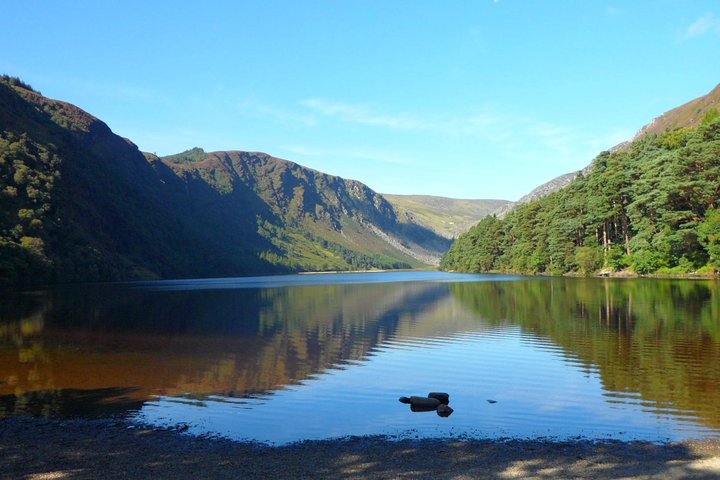 Dublin to Glendalough, Wicklow and Kilkenny Full Day Guided TourCheck availability on Viator →
If a full day feels like too much, there is a shorter half-day Glendalough and Wicklow Mountains tour from €33 (5 hours), which gets you back to the city for the afternoon. More choices are on our Wicklow and Glendalough page.

Option B: Howth on your own
Take the DART coastal train from Connolly or Tara Street to Howth, about half an hour out of the centre. A Leap Card works on the DART; check current fares before you top up.
- Morning: walk the pier to see the seals, then start the cliff path toward the Baily Lighthouse.
- Lunch: fish and chips or seafood near the harbour.
- Afternoon: take the DART back and give your feet a rest in a city-centre café.
Skip: Blarney Castle as a day trip from a three-day stay. Blarney and Cork are about two and a half hours away each way, which leaves very little time on the ground.
Evening: a trad session
Finish with live traditional music. Sessions are free in many pubs; find a seat, buy a drink and do not talk over the musicians. Our Dublin pubs and music guide lists the guided options if you would rather go with someone who knows the songs.
If you only have one day
Do the first half of Day 1 and the afternoon of Day 2. That means:
- Book of Kells at opening time.
- A walk past Dublin Castle and the Chester Beatty.
- The Guinness Storehouse in the afternoon.
- Dinner and a pint well away from Temple Bar.
Our Dublin in one day plan goes through it hour by hour.
If you have a fourth day: go west to the Cliffs of Moher
A fourth day is when the long trips start to make sense. The Cliffs of Moher are about three hours each way, so you need a full, long day for them.
This is the one to pick for the west coast: from €70 for 12.5 hours, rated 4.9 from more than 15,000 reviews, with the Burren and Galway on the same day.
 Dublin to Cliffs of Moher, Burren, Wild Atlantic Way, Galway TourCheck availability on Viator →
The other big option is the Giant's Causeway and Belfast, a similar 12–13 hour day. It crosses into Northern Ireland, which uses pounds sterling, so bring a card that works without fees or a little cash in sterling.
Questions people ask before going
Is three days enough for Dublin?
Yes, for a first visit. Two days covers the city centre properly, and the third gives you a taste of the countryside. Add a fourth only if you want the Cliffs of Moher or the Giant's Causeway.
What should I book before I arrive?
The Book of Kells, the Guinness Storehouse and Kilmainham Gaol, in that order of urgency in summer. Kilmainham releases tickets 28 days ahead and sells them only on its own site and Heritage Ireland. Day tours to the Cliffs of Moher also fill up in summer.
Do I need public transport in the centre?
Hardly. The centre is flat and compact, and every stop on Days 1 and 2 is walkable. Get a Leap Card for the DART to Howth and the airport bus, and check current fares when you top it up.
When is the best time of year to do this itinerary?
May, June and September give you longer days and milder weather without the peak crowds. Around St. Patrick's Day in mid-March, hotels and tours fill months ahead. Winter is the cheapest, but expect short, wet days and plan the day trip for the brightest forecast.
What if it rains?
Probably at least one day of it, whatever the season. Keep the museums (Chester Beatty, National Museum, Little Museum) as wet-weather swaps, and pack a waterproof rather than an umbrella.