Stadstour in de stad Cusco 1/2 dag
Beschrijving
Ontdek de betoverende stad Cusco tijdens een stadstour van een halve dag die u meeneemt door de rijke geschiedenis, levendige cultuur en buitengewone architectuur. Geniet van de ervaring van een deskundige gids die fascinerende verhalen, historische feiten en legendes over Cusco met u deelt. Zo verrijkt u uw ervaring en krijgt u waardevolle informatie over het heden en verleden van de stad. We hebben 2 planningsopties: - 's Ochtends van 9.00 tot 13.30 uur - 's Middags van 1.30 tot 18.00 uur (U kunt het schema kiezen dat het beste bij uw reisroute past).
Rondreisopties
Reisroute
Qoricancha, ofwel de "Gouden Binnenplaats", was de belangrijkste plaats gewijd aan de aanbidding van de zonnegod. De muren waren ooit bedekt met bladgoud. Op deze plek werd het gelijknamige klooster gebouwd, met gepolijste stenen structuren. Het heeft een opvallende voorgevel in renaissancestijl en een unieke baroktoren. Ook is er een indrukwekkende collectie schilderijen van de Cusco-school te zien.
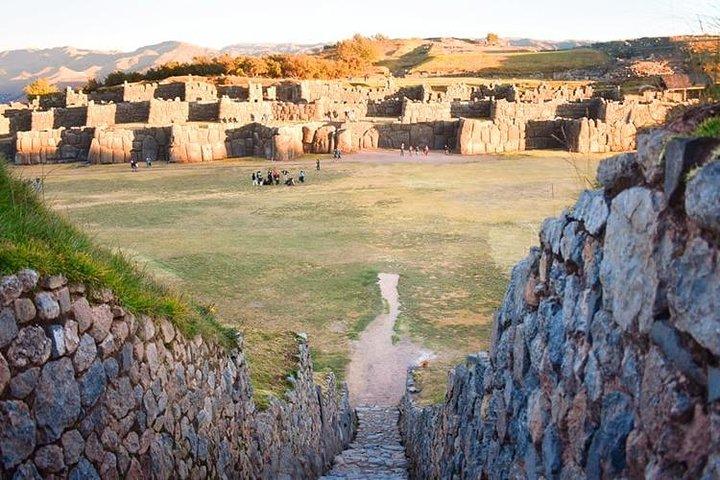
De naam Saqsayhuaman betekent "tevreden valk" in het Quechua. Dit fort werd gebouwd om de stad Cusco te beschermen tegen indringers uit het oosten en is een prachtig voorbeeld van de militaire Inca-architectuur. Het is gebouwd met enorme granieten blokken, waarvan sommige tot wel 5 meter hoog zijn en tot wel 350 ton wegen. Het bestaat uit drie grote terrassen, omgeven door kolossale stenen muren die tot wel 300 meter lang zijn. Vanwege de nabijheid van Cusco diende het ook als steengroeve voor enkele koloniale gebouwen in de stad.
Qenqo was een ceremonieel Incacentrum met tunnels en platforms die werden gebruikt voor rituelen en religieuze ceremonies. Dit laat zien hoe belangrijk deze plek voor de Inca-beschaving was op spiritueel vlak. In Qenqo zijn houtsnijwerken, gaten, trappen en kanalen te zien die waarschijnlijk werden gebruikt om chicha (een drankje op basis van maïs) te deponeren tijdens Inca-rituelen.
Puca Pucara wordt ook wel het rode fort genoemd, omdat de stenen waarvan het gebouwd is deze kleur hebben gekregen door het hoge ijzergehalte. Naast het fort zijn er ook andere archeologische structuren te zien, zoals aquaducten, omheiningen en fonteinen. Vanwege de nabijheid van Tambomachay en de kenmerken ervan, wordt aangenomen dat het een militair fort was ter verdediging van deze plaats.
Tambomachay, bekend als het "Inca-bad", was een ceremonieel centrum gewijd aan de verering van water en een rustplaats voor de Inca-monarchie. Het bestaat uit uitgehouwen rotsen, die een prachtig stelsel van kanalen en watervallen vormen, die uit bronnen ontspringen. Einde van de diensten.
Hoogtepunten
Wat is inbegrepen
Ophaallocaties en -tijden
Als uw hotel zich in een afgelegen gebied bevindt, zullen we een ontmoetingsplaats coördineren.
Beoordelingen van reizigers
Belangrijke informatie
- Geschikt voor alle condities
Beoordelingen(116)
This was a great introduction to the archaeological sites around Cusco, our guide was knowledgeable, led us around the sites efficiently avoiding long ticket lines, and allowed plenty of time to walk around and take photos. I especially appreciate the option at Saqsayhuaman to choose whether to return on the bus or spend as much time as we wanted then walk back on our own. I chose to spend over 2 hours exploring the stunning site taking my time and had small picnic lunch that I recommend packing if you do this. Finally, I really enjoyed the roughly 30 minute mostly down hill walk through some picturesque residential streets back to the city center.
A fabulous Inca place, overlooking the city of Cusco!!!! We wonder how such a site could have been built when we see the size of the stones and their weight!!!!! It is advisable to take several hours to visit the entire site which is very extensive!!!!! Note that the welcome of Peruvians is really warm and really changes from that of French
Our guide Bladimir was very good, professional and his explanations were also good. We had a great time
I wouldn't recommend this experience to an English speaker. The guide was difficult to understand and the tour was rushed due to the guide needing to explain everything in two languages at each stop.
This place is really nice but after exploring Machupichu, the Sacred Valley or Sacsaywaman everything seems pretty much the same. Don't get me wrong I was fascinated with the majestic constructions but after a while, I got tired of it. It is worthy to see it. I suggest going there before going to Machupichu.
Very good experience, first time in cusco, beautiful city, I want to highlight the work of the guide jhonnatan for the quality and affection that was counting for one of the padaras we made, very clear, a genius. Andres from Argentina 🇦🇷
An amazing place, rain or no rain. The history of the place is amazing. Our guide told us how they moved the stones and part of the Inca structure, Seeing him in person is surprising. The pictures are great next to the big rocks and the windows still standing
This is a wonderful tour to see the history of Cuzco Thank you Saul for all the fabulous information and details about everything
To travel to the heights of Peru, you need to have a preparation even if you are 18 years old, since the change is quite abrupt that it is better to take concerns. We asked our pharmacist, then he prepared everything accordingly from heights. Cusco is a city full of history and colors that the natives knew how to keep with inner strength. Each street takes us back to the past by filling our being with curiosity to learn again. Since the Incas are considered the last civilization. This civilization has gathered as much information from past cultures by reusing each piece of information to develop it on another scale of higher intelligence. All this can feel, see, internalize it in the simplest way. Live in the present by breathing this energy. Forget about selfies for 10 minutes and feel that strength as you let yourself be guided for this culture that is permeated everywhere.
It was a great deal and worth every penny The tour guide was well informed and enthusiastic to explain about the historical story behind every archaeological site