Ghetto ebraico di Varsavia : tour privato in auto retrò con prelievo dall'hotel




Descrizione
Questo tour privato del ghetto ebraico di Varsavia esplora uno dei capitoli più tragici della storia della seconda guerra mondiale. Prima della guerra, Varsavia era una delle più grandi città ebraiche del mondo. Durante l'occupazione nazista Tedesca, la comunità ebraica fu quasi interamente distrutta e il ghetto cancellato. Viaggiare con un minibus vintage Żuk retrò permette di visitare più luoghi storicamente importanti che sono difficili da raggiungere a piedi. Con una Guida locale esperta, imparerai a conoscere la vita quotidiana sotto il dominio nazista Tedesco, le deportazioni di massa e la rivolta del ghetto di Varsavia del 1943. Il tour include siti chiave come Piazza Grzybowski e Via Próżna, frammenti conservati del Muro del Ghetto, Via Waliców, Mila 18, il Monumento agli Eroi del Ghetto, l'area del Museo POLIN e la Umschlagplatz. Come tour privato, l'itinerario è flessibile e può essere adattato ai tuoi interessi. Questa esperienza è ideale per i viaggiatori interessati alla seconda guerra mondiale, all'Olocausto e alla storia di Varsavia.
Opzioni del tour
Itinerario
Dopo il ritiro in hotel, la tua Guida introduce il background storico della Varsavia ebraica e la creazione del Ghetto ebraico durante la Seconda Guerra Mondiale, impostando il contesto per i siti che stai per visitare. Il tour inizia dal monumento dedicato a Janusz Korczak, un educatore polacco-ebreo, autore e direttore di un orfanotrofio di Varsavia. Nonostante le opportunità di fuga, scelse di rimanere con i bambini affidati a lui e fu deportato con loro nel campo di sterminio di Treblinka.
Successivamente, visita Piazza Grzybowski, un tempo parte della Varsavia ebraica e oggi un luogo che riflette la drammatica storia della città del XX secolo. L'area è stata testimone di due guerre mondiali, due sistemi totalitari e la trasformazione dell'Europa moderna. Le strade vicine conservano ancora tracce della vita ebraica prebellica.
Via Próżna è l'unica strada di Varsavia dove sono sopravvissute case popolari ebraiche prebelliche. Oggi, si erge come un raro ricordo fisico della Varsavia ebraica e diventa un punto focale durante l'annuale Festival della cultura ebraica di Varsavia del cantante.
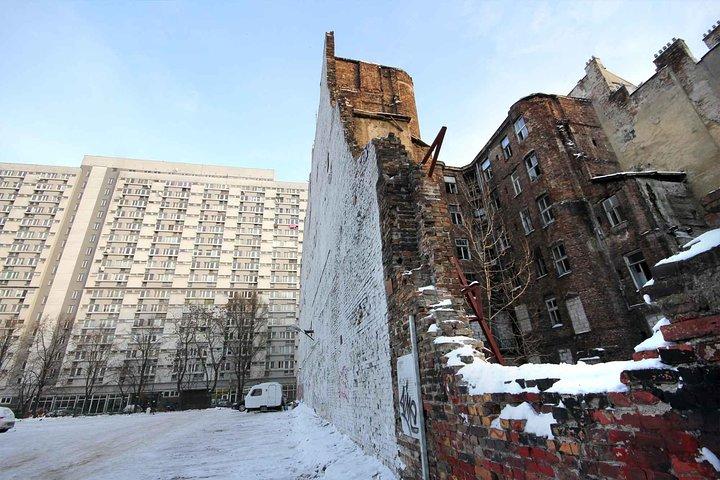
Visita un frammento conservato del muro del ghetto di Varsavia, che segna l'ex confine del ghetto. Alcune sezioni rimangono nascoste tra gli edifici e la tua Guida ti porterà in uno dei luoghi accessibili per spiegare come l'area è stata isolata dal resto della città.
In via Waliców, vedere una casa di campagna in rovina spesso indicata come l'ultimo "fantasma" visibile del ghetto. Qui è conservato anche un frammento del muro del ghetto, che offre un potente ricordo visivo di distruzione e perdita.
In via Chłodna, scopri il ponte di legno costruito nel 1941 per collegare le due parti separate del ghetto. Il ponte si innalzava al di sopra del traffico stradale attivo, permettendo ai tram e ai veicoli Tedeschi di passare al di sotto. Foto d'archivio aiutano a illustrare questa straordinaria struttura.
Si prosegue per Muranów, un quartiere residenziale del dopoguerra costruito direttamente sulle macerie del ghetto distrutto. Anche se sembra essere un tipico quartiere, il terreno sottostante contiene strati di storia del tempo di guerra rivelati attraverso le spiegazioni della tua Guida.
Visita il Monumento agli Eroi del Ghetto, situato vicino al sito dei primi scontri armati della rivolta del ghetto di Varsavia del 1943. L'area simboleggia anche la memoria e la riconciliazione del dopoguerra attraverso eventi svoltisi negli ultimi decenni.
Fermati fuori dal Museo POLIN di storia degli ebrei polacchi, costruito sull'ex ghetto. Il nome del museo si riferisce a una leggenda legata all’insediamento ebraico in Polonia. L'ingresso è facoltativo e non incluso nel prezzo del tour.
A Mila 18, scopri il bunker utilizzato dai combattenti della resistenza ebraica durante la rivolta del 1943. Quando furono scoperti dalle forze naziste Tedesche, molti di coloro che si nascondevano all'interno scelsero la morte piuttosto che la cattura. I loro resti sono sepolti sotto il sito.
Il tour si conclude alla Umschlagplatz, l'ex punto di deportazione dove gli ebrei furono trasportati al campo di sterminio di Treblinka. Oggi, il memoriale di Stawki Street è un solenne promemoria del capitolo finale della vita ebraica in tempo di guerra a Varsavia.
Punti salienti
Cosa è incluso
Luoghi e orari di ritiro
Il servizio di prelievo da hotel, Airbnb e appartamenti è disponibile fino a 3 chilometri dal centro città. Se il tuo hotel/appartamento è più lontano o inaccessibile in auto, il nostro consulente ti suggerirà il punto d'incontro più vicino e comodo. Si prega di notare che il trasferimento da e per l'hotel conta nel tempo totale del tour. Pertanto, a volte è meglio incontrare la guida nel centro della città piuttosto che passare il tempo a trasferirsi dal punto di raccolta più lontano.
Valutazioni dei viaggiatori
Informazioni importanti
- Animali di servizio ammessi
- Sono disponibili trasporti pubblici nelle vicinanze
- Sono disponibili seggiolini specifici per neonati
- Adatto a tutti i livelli di forma fisica
- Questo tour può essere prenotato istantaneamente online per adulti e bambini di oltre 150 cm. Se desiderate prenotare il tour per un bambino di meno di 150 cm, siete pregati di contattare il tour operator in anticipo per verificare la disponibilità dei seggiolini, obbligatori secondo la legge polacca.
- Ogni minibus può ospitare fino a 8 passeggeri, ed è disponibile una flotta di 5 minibus.
- I veicoli sono utilizzati principalmente per i trasferimenti tra località, con segmenti a piedi ad ogni fermata. Si prega di indossare indumenti comodi e calzature adeguate.
- Siete pregati di notare che i classici minibus d'epoca non sono dotati di aria condizionata, e alcuni di essi non sono dotati di cinture di sicurezza (consentite per i veicoli storici). Tutti i veicoli sono dotati di riscaldamento per la stagione invernale.
Recensioni(13)
Tom (Tomek) was an excellent guide! We learned so much from him on our three hour walking tour. He made the Jewish ghetto more real for us by showing us black and white photos of the war period verses what is there today. JayWay had suggested this tour for us, and I argued at the time that I could do it on my own. In hindsight, I was glad to meet Tom and listen to his detailed explanations rather than reading from my guidebook.
The tour we had with Konrad was one of the absolutely best tours we have ever had on any trip. Konrad was extremely knowledgeable about the history of Jews in Warsaw, brought us to locations throughout the city to show us specifically some of the history of our people in the area and even had actual historical pictures of the areas he was showing us. My wife and I learned a phenomenal amount of history from that tour and we would both very highly recommend it.
My husband and I took an anniversary trip to Poland and had the best time! While we were in Warsaw, we had the best tour guide, Konrad! We were so lucky we got to have him for both our Jewish History Tour and our WWII buffs tour. HE WAS AMAZING! We were able to go around the city in a mini bus but also walk around and show us all the major sites of where things were before they were destroyed and are now rebuilt. He has such a wealth of knowledge being born and raised in Warsaw that it cannot be beat. He even went above and beyond and showed us local restaurants, away from tourists, where locals hangout, drink, and drink. For anyone who is considering any tours in Warsaw, request Konrad, you will not be disappointed, gain so much knowledge, and have a great time!
Konrad is a wonderful tour guide - he’s very knowledgeable, polite and helpful. We learned a lot and highly recommend him!
My husband and I were lucky enough to have Tom as our tour guide and driver on this full day exploration of Jewish Warsaw and Treblinka. Tom gave us a full visit of ghetto sites, both south and north. Although we knew about the ghetto uprising, being in the locations brought the experience to life . Tom has a wealth of information and photos from the past to illustrate places and events that we could not see with our eyes but could now visualize at those locations. We then drove to Treblinka and felt the weight of this terrible place and learned more from Tom.
The guide is knowledgeable about the ghetto and its history. However, the narrative presented reflects a Polish perspective, emphasizing that 3 million Poles killed were "coincidentally" Jewish, while also suggesting that Jews were seen as communist sympathizers, leading to local resentment. This perspective aligns with a typical antisemitic narrative. The true victims of the Holocaust were the Jews—not the Poles, who, while they suffered, were also perpetrators in some cases. This distortion of history is similar to how Hamas terrorists attack Jews and then portray themselves as victims. The tour felt like an official propaganda session that we paid for. Additionally, the 3-hour duration was quite intense for such a heavy and difficult subject, especially when mixed with biased messaging. That said, despite these issues, I would recommend the tour.
Dear Elazar, My name is Marcin, and I was your guide that day. Thank you for sharing your emotions and opinions about our tour. Meeting you and your group was a meaningful experience, and I believe we all learned something from our discussions. My goal is always to provide accurate information and context, allowing my guests to understand these tragic events more deeply. I’m sorry to hear that parts of the presentation felt unbalanced or biased from your perspective. Throughout the tour, I aimed to illustrate the fate of Polish Jews, particularly during the Second World War, when our country was attacked and occupied by both Nazi Germany and the communist Soviet Union. It’s also the story of Polish Catholics and others of various faiths who bravely helped, such as Irena Sendler, as well as those who regrettably betrayed and collaborated with the Nazi regime. I also covered the tragic pogroms, the role of the "Polish Blue Police" in Warsaw, and the "Jewish Police" formation in the Ghetto. However, as it was an exceptionally cold day, I noticed some group members were unprepared for the weather. We shortened certain parts for everyone’s comfort, and I observed some people stepping away or unable to hear the full explanation—this may have resulted in missing or misunderstanding parts of the narrative. I sincerely regret if any part of the tour’s content or delivery made it seem as though I was downplaying Jewish suffering or promoting biased perspectives. I did not say that “3 million Poles killed were "coincidentally" Jewish”; this had to be the misunderstanding. German Nazis murdered 3 million Polish Jews during the Holocaust and around 2 million Polish Catholics, other faiths and minorities. I intended to emphasise that they were all citizens of Poland (before WWII). It also came to my attention that during a conversation in the car, someone from your group mentioned that “all the Poles were happy when the Jews were murdered.” This statement is deeply troubling, as it generalises and misrepresents the complexity of Polish attitudes during the war. While there were undoubtedly collaborators and those who committed terrible acts, there were also people who risked their lives to save their Polish Jewish neighbours. I stand firmly against any form of antisemitism or hate speech. My mission is to illuminate the complex and often painful history of wartime Warsaw, including acts of heroism, resistance, collaboration, and tragedy. I regret that the tour left you feeling it was “official propaganda”; I always intend to present history responsibly and comprehensively. Thank you once again for your feedback. It helps me develop and ensures I honour the memory of all who suffered during this tragic chapter of history. Sincerely, Marcin Grabowski
It has been a very interesting and amazing tour, I recommend it. The guide, Karol, was very passionate about the impact of the Jewish community and culture on the city. The historical van is a fun addiction to the tour.
Marcin was very interesting and friendly! He knows a lot about history, Jewish history to be specific. This is a small price to pay to access to all of his knowledge about the past of this communauty. He was in time at my hôtel with his retro minibus Zug (I loved Zug!) and drove me to several places in Warsaw. He even showed me pictures of the past when we were there. Awesome expérience: I do think this activity should be on every "things to see in Warsaw". I highly recommand it to everyone who wants to know more about the dark past of the Jewish community!
Must do Jewish Heritage Tour! From my first email to Marcin and all the planning in between, everything was great. Marcin promptly answers emails and helps with the planning stages . Our tour guide Mariusz was fantastic. We happened to have our scheduled tour on the anniversary of the 80th anniversary of the Warsaw Ghetto Uprising, and with Mariusz’ planning everything went smoothly. Our driver Matthiew navigated to streets flawlessly. Mariusz was extremely knowledgeable. He took us to a great little local spot for lunch in Praga. If you’re looking for a tour in Warsaw I highly recommend Warsaw Behind the Scenes.
Excellent tour and guide. Very interesting, Informative and professional. Would definitely recommend Martin as a tour guide.