Tour a piedi di Lecce con audioguida e guida scritta da un locale

Descrizione
Se stai cercando un modo divertente e curioso per visitare Lecce, sei nel posto giusto! Con questa guida digitale creata con il supporto di una persona del posto, potrai visitare tutti i monumenti più importanti al tuo ritmo. Conoscerai le storie e le curiosità di Lecce! Ma scoprirai anche tutto sui cibi locali, l'aperitivo italiano in autentici ristoranti locali e molto altro!
Opzioni del tour
Itinerario
Porta Rudiae è una delle porte storiche della città di Lecce che consentiva l'accesso alla città attraversandone le mura difensive. L'attuale struttura, realizzata nel 1703, è una ricostruzione barocca realizzata grazie a Prospero Lubelli.
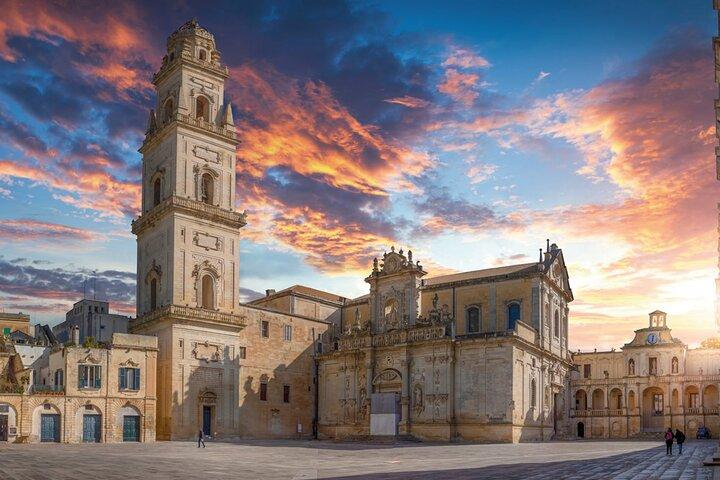
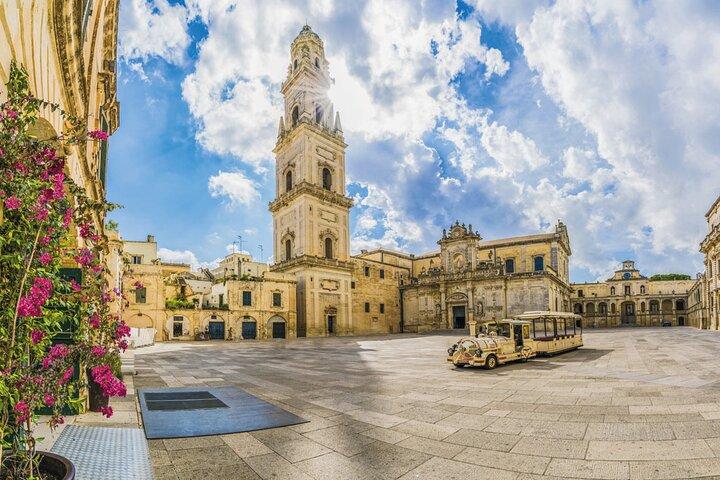
In passato la piazza era conosciuta come “Cortile del Palazzo Vescovile”, un’area riservata esclusivamente al clero e circondata da edifici religiosi che la isolavano dal resto della città.
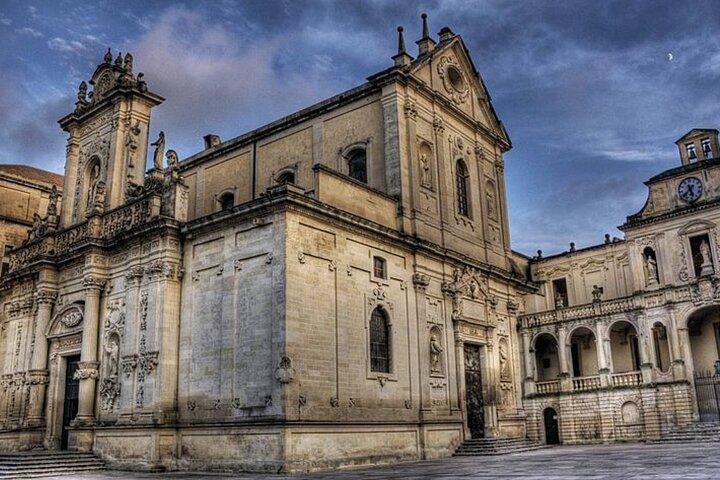
La Cattedrale di Lecce, detta anche Cattedrale di Santa Maria dell’Assunta e Sant’Oronzo, è il centro della vita religiosa della città. La cattedrale fu ricostruita nel 1659 sulle rovine di una chiesa precedente, che era stata demolita perché non più adeguata ad accogliere la crescente popolazione di fedeli.
Il Campanile del Duomo di Lecce è alto più di 70 metri ed è decorato con balaustre, vasi di fiori, piramidi e altre elaborate decorazioni. Vista spettacolare dalla cima!
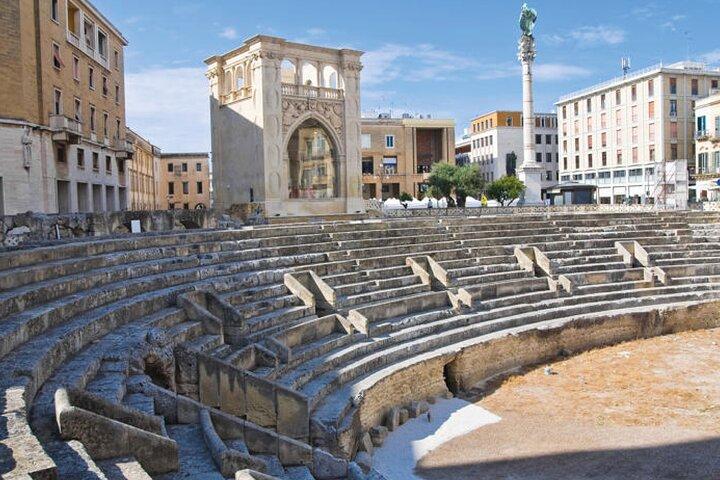
Il Teatro Romano, una delle testimonianze più significative dell’antica città imperiale di Lupiae. Costruito durante i primi decenni del I secolo d.C. per volere dell’imperatore Ottaviano Augusto, il teatro, insieme all’anfiteatro di cui vi parlerò più avanti, rappresentava un importante centro di svago per questa città dell’Impero Romano.
Fu l'imperatore Ottaviano Augusto, nei primi decenni del I secolo d.C., a volere la costruzione di questo grande Anfiteatro. Gli studi suggeriscono una capienza di circa 20.000 spettatori.
Piazza Sant’Oronzo rappresenta il vero centro vitale della città di Lecce, non solo dal punto di vista artistico, ma anche simbolico e sociale. Piazza Sant’Oronzo si trova nel cuore di quella che un tempo era la Lupiae romana.
La Basilica di Santa Croce è considerata il simbolo del barocco leccese. La sua costruzione iniziò nel 1549, su iniziativa dei Padri Celestini, un ordine religioso, dopo la demolizione del precedente tempio e convento fondato nella seconda metà del XIV secolo nell'area del Castello Carlo V.
Il Castello di Carlo V è il più grande castello della Puglia. Costruito nel XII secolo d.C., deve il suo nome al re spagnolo Carlo V perché, nel 1539, l'imperatore ordinò la ricostruzione del precedente castello, ritenuto inadatto a difendere la città dalle incursioni turche nel Mediterraneo.
Punti salienti
Cosa è incluso
Valutazioni dei viaggiatori
Informazioni importanti
- Accessibile in sedia a rotelle
- I neonati e i bambini piccoli possono essere portati in carrozzina o passeggino
- Animali di servizio ammessi
- Sono disponibili trasporti pubblici nelle vicinanze
- Adatto a tutti i livelli di forma fisica
- Per utilizzare la guida digitale è necessario uno smartphone con connessione internet (i dettagli per attivare la guida digitale sono riportati sul voucher, leggilo attentamente!)
- Potrai ascoltare l'audio attraverso i tuoi altoparlanti o, se li hai, attraverso le tue cuffie
Recensioni(69)
Before I booked this, I had already completed the audio guide in Alberobello, so I knew what to expect. I do find this to be a great way of exploring somewhere! It is great for solo travellers and those who don't want to spend as much on a guided tour. I like that you can explore at your own pace, taking time to stop for food, drinks or shopping. The link to the guide also comes with the written explanation of the audio guide in case you have forgotten your headphones!
Very good guide, comprehensive and easy to use. A good alternative to "classic" guided tours :)
The tour was really on point! Recommended
This was a perfect way for us to see Lecce on our own terms! The guide allowed us to set our own timetable and not be part of a group. Would definitely use again for other destinations.
It’s an easy download and guide to follow and navigate. Very interesting history and information on Lecce. We did a self guided tour and enjoyed lunch & some shopping along the way!
An economical and useful way to approach a first visit to a city that one does not know, directed towards unmissable places and monuments. Lecce is a remarkable city made bright by the number of buildings constructed from Lecce stone. The guide is very clear in the essentials of the commentary, which can be deepened on the sites normally used by tourists (wiki or city sites or those of individual monuments).
A great option to learn and have a plan but still be able to do your own thing/deviate/go at your own pace. I did this tour in Bari and Lecce and loved it both times. A great option for the price and if you have limited time or don't want to deal with a guided tour.
I used these tours in Bari and Lecce and they were such a great way to see this city with a little extra guidance and information, without having to join a full guided tour or do the research yourself. The information is basic, but thorough for each stop and it is so easy to follow with map links to every site. It's the perfect way to learn and have a goal instead of just walking around but still have freedom to do your own thing.
App not good. Every time I took a photo , I had to restart, put in password again. The Jewish museum and Faggiano were not even mentioned .
Ciao, actually, access remains active in the browser for 3 days, so it seems strange you're having these problems! We're always ready and responsive to respond via WhatsApp, and we're sorry you didn't message us: we would have helped you right away 😌! The Jewish Museum is mentioned in the extras to visit, while Faggiano is about 100km away: perhaps a bit too far for a walking tour 😌! I hope this answer can help other travelers! Ciao Walking Cap
I used this to give a basic structure to a day trip to Lecce. The technology worked fine, and the commentary provided useful information. Inevitably, there are limitations: for example, the tour started at the Porta Rudiae which is being restored and was not visible on the day I visited; and no such tour can be comprehensive, so I enjoyed visiting the Chiesa San Matteo which did not feature on the walking tour. But the tour does what it does (and what I bought it for) effectively. The flexibility to go at one’s one pace is a big plus.