Andrew Descent e Podil da Kiev
Descrizione
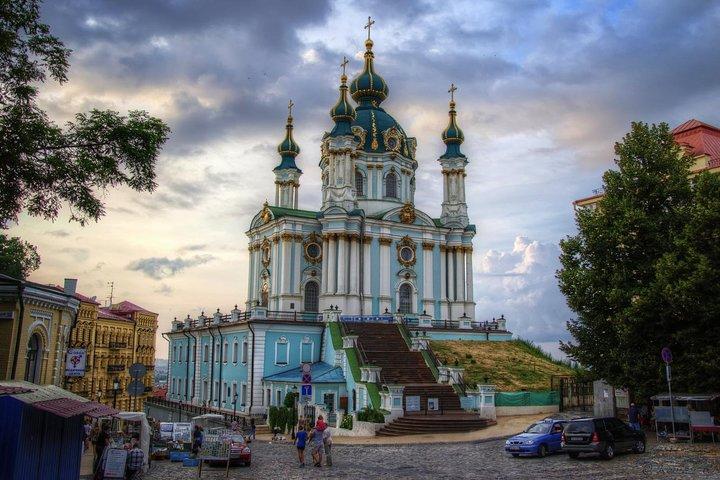
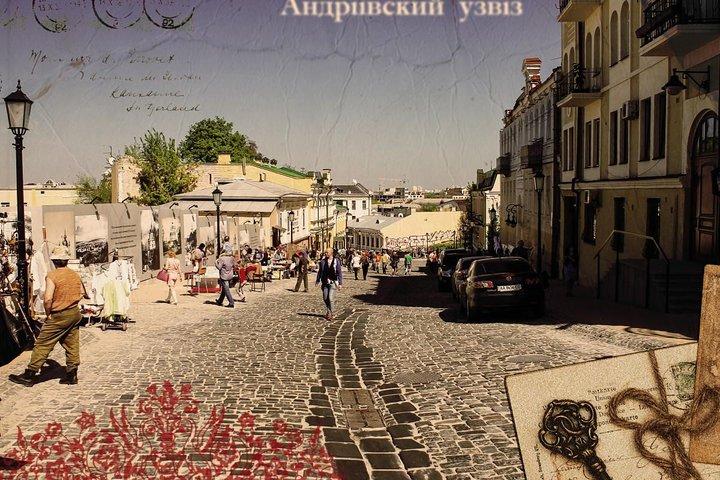
Esplora i misteri della vecchia strada di Kiev, la discesa di Andrew negli ultimi 3 secoli e goditi l'atmosfera che ti riporta indietro nella storia, come se viaggassi vicino alla macchina del tempo. Di solito la discesa di Andrew è associata unicamente al nome di Mikhail Bulgakov, lo scrittore di fama mondiale, che visse nella discesa nell'edificio n. In realtà, dalla fine del diciannovesimo secolo molte personalità eminenti della scienza e della cultura ucraine vivevano in questa strada densamente popolata. Ora la discesa di Sant'Andrea è una delle principali attrazioni turistiche della capitale dell'Ucraina. Sembra un museo all'aria aperta.
Opzioni del tour
Itinerario
Andrew's Decent
One Street Museum
Museo Mikhail Bulgakov
Fontana di Sansone
Punti salienti
Cosa è incluso
Luoghi e orari di ritiro
Albergo o appartamento situato in posizione centrale nel centro di Kiev. Siete pregati di comunicare l'indirizzo del vostro soggiorno a Kiev nella prenotazione con il nome dell'hotel, il numero civico e il nome della via. Nel caso in cui non si conosce il luogo di ritiro a Kiev, possiamo incontrarvi in Downtown all'Hotel Ukraina, area della lobby. Hotel Ukraina: 4 via Institutskaya, 01001, Kiev, Ucraina, ucraina-hotel.kiev.ua
Valutazioni dei viaggiatori
Informazioni importanti
- Sono disponibili trasporti pubblici nelle vicinanze
- I neonati devono sedere in grembo a un adulto
- Adatto a tutti i livelli di forma fisica
- Un'altra guida linguistica è su richiesta
Recensioni(4)
Our very good and knowledgable guide gave us a very interesting walking tour from the upper Town to charming Podil. In Podil we were taken to the Convent complex and to the Central market. Absolutely reccommendable excursion
Andrews Descent is beautiful. At the top you have the sublime St Andrews Church, an Italian architect was responsible so you know it will be a feast for your eyes. Walk down the cobblestone street and browse all the souvenir stalls and shops. Take in the views if you fancy walking up the stairs on a couple of occasions to the viewing areas. Once you get to the bottom you can explore Podil, the old town and historic area of Kyiv, yes Kyiv, not the Russified version Kiev. Then use the funicular railway to go back up to the top. Go to Kyiv - it's a fab city!
Lovely walk descending down the Andreevsky path and seeing the murals and all the shops. Starting from the church, the descent takes you all the way down to the old town - with access to restaurants and the big wheel. However, it is a cobblestone walk all the way down - so ladies (and cross dressers!) you'd be advised to leave those heels at home and come prepared in comfortable flats or you may literally trip yourself over!!
Saint Andrew's Church late baroque style was constructed between 1747 and 1754, to a design by the Italian architect Bartolomeo Rastrelli a Russian architect of Italian origin. His major works, including the Winter Palace in Saint Petersburg and the Catherine Palace in Tsarskoye Selo. The new empress, Catherine II, 1762 dismissed baroque architecture as an old-fashioned "whipped cream", and the aged architect had to retire to Courland where he supervised the completion and decoration of the ducal palaces. Saint Andrew's Church overlooks the historic Podil neighborhood, situated on a steep hill to which the church gave its current name—Andriyivska Hill. The descent, 720 meters (2,360 ft) in length, is constructed of laid cobblestones and connects Old Kyiv (Upper city) with Podil (Lower city). It starts at the end of Volodymyrska Street and winds down steeply around the Zamkova Hora hill, ending near the Kontraktova Square. The idea to construct the Saint Andrew's Church came from the Russian Tsaress Elizabeth Petrovna. When she visited Kiev in 1747–1754, she laid the foundation brick of the church with her own hand. In 1963, Rastrelli's the original plans of Rastrelli's baroque cupolas were uncovered in Vienna, Austria. This made it possible to reconstruct the original images on the building. The church consists of a single dome and five small decorative spires. From the outside façade, Corinthian columns decorate the church, accompanied by additional decorations. Baroque Architecture (c.1600-1750) Characteristics: Baroque architecture differs notably from one country to another but with a common aesthetic origin. It ended by becoming designed to create spectacle and illusion. Thus the straight lines of the Renaissance were replaced with flowing curves, while domes/roofs were enlarged, and interiors carefully constructed to produce spectacular effects of light and shade. It was an emotional style, which, wherever possible, exploited the theatrical potential of the urban landscape - as illustrated by St Peter's Square (1656-67) in Rome, leading up to St Peter's Basilica. Its designer, Bernini, one of the greatest Baroque architects, ringed the square with colonnades, to convey the impression to visitors that they are being embraced by the arms of the Catholic Church. Following the pronouncements made by the Council of Trent on how art might serve religion, together with the upsurge in confidence in the Roman Catholic Church, it became clear that a new style of Biblical art was necessary in order to support the Catholic Counter-Reformation and fully convey the miracles and sufferings of the Saints to the congregation of Europe. This style had to be more forceful, more emotional and imbued with a greater realism. Strongly influenced by the views of the Jesuits (the Baroque is sometimes referred to as 'the Jesuit Style'), architecture, painting, and sculpture were to work together to create a unified effect.