Excursion d'une journée à Mycènes et Épidaure au départ d'Athènes en espagnol
Description
Faites une excursion d'une journée au départ d'Athènes pour explorer les vestiges de l'ancienne Mycènes, le centre de la civilisation grecque de 1600 à 1100 avant JC. C. Visitez la ville d'Épidaure, célèbre pour son impressionnant théâtre hellénique.
Options de l'excursion
Itinéraire
Départ de l'excursion d'une journée de notre terminal par la route nationale côtière vers le canal de Corinthe (petit arrêt).
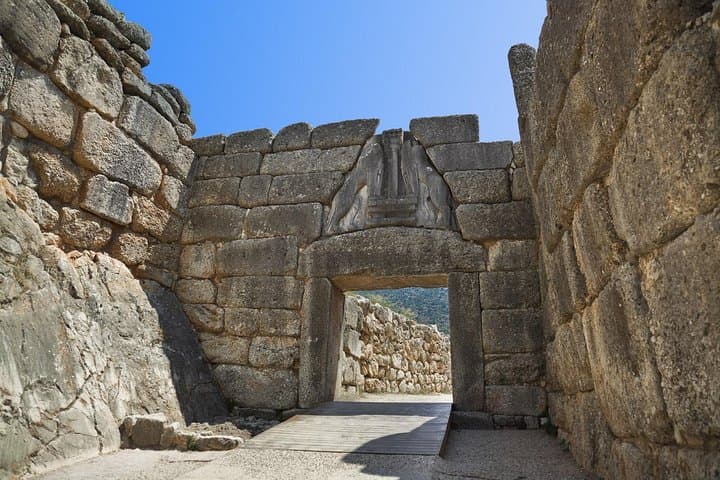
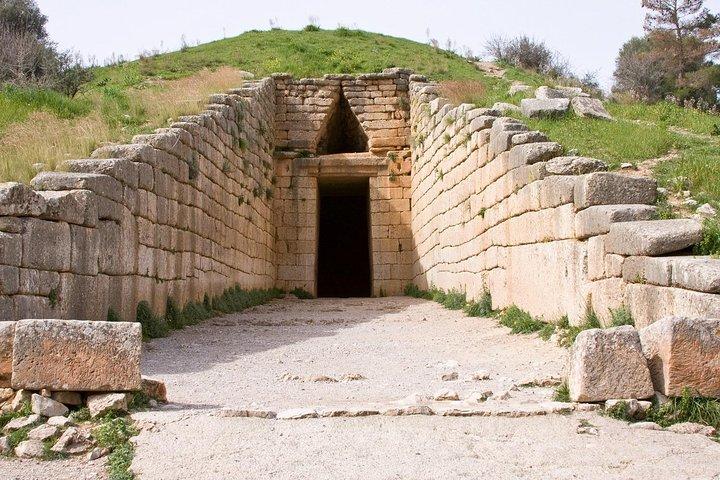
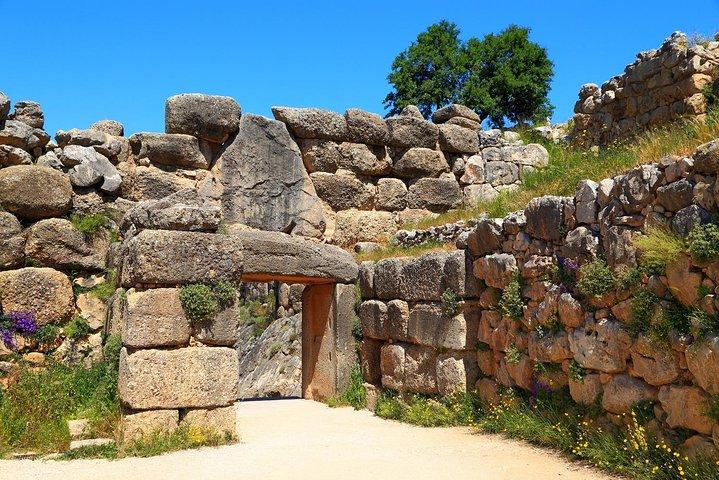
Après le canal de Corinthe, nous entrerons dans la région d'Argolide, la terre dorée de Mycènes d'Homère, un site du patrimoine mondial de l'UNESCO. Datant du deuxième siècle avant J.-C., Mycènes était l'un des principaux centres de la civilisation grecque et une forteresse militaire qui dominait une grande partie du sud de la Grèce. Nous visiterons le site archéologique abritant le royaume mythique d'Agamemnon. Où vous pouvez voir les murs cyclopéens, la porte du Lion, les tombes royales, y compris celle de Clitemnestra de Agamenón, et le trésor d'Atreus, une magnifique sculpture du 14ème siècle avant JC. Ensuite, il restera du temps pour un déjeuner grec traditionnel optionnel dans un restaurant voisin.
Nauplie, ville pittoresque de la côte du Péloponnèse, allie histoire et charme. C'était la première capitale de la Grèce et elle est connue pour son architecture néoclassique et ses monuments tels que la forteresse de Palamidi et le château de Bourtzi. Pendant l'arrêt de 90 minutes, comprenant une pause déjeuner de 30 minutes (si vous le souhaitez), vous pourrez explorer la vieille ville, vous promener le long du front de mer ou découvrir les boutiques et cafés locaux. Une courte visite dans l'une des destinations les plus romantiques de Grèce.
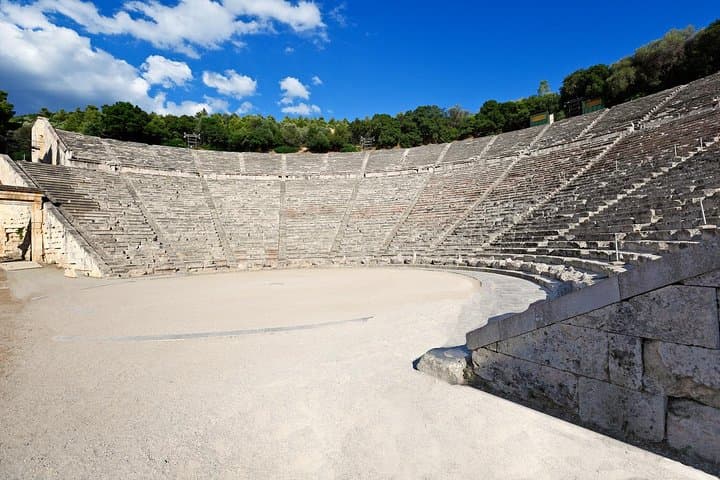
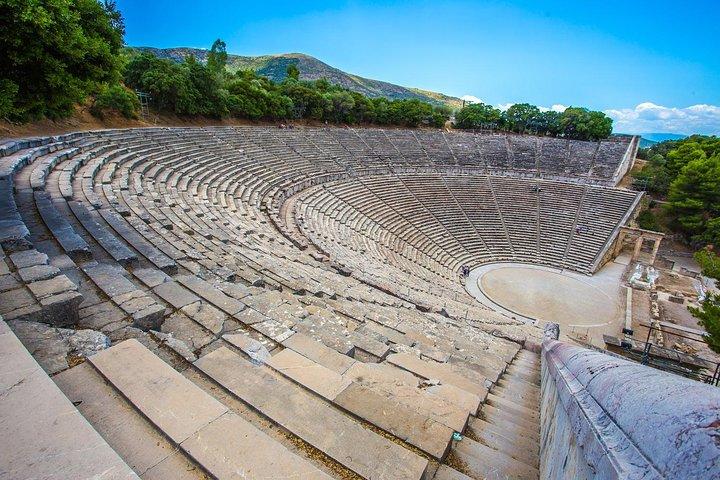
Avant le déjeuner, un arrêt facultatif sera effectué dans une usine de céramique. Après le déjeuner, nous continuons vers Epidaure et visitons l'ancien théâtre. Le monument du patrimoine mondial de l'UNESCO est réputé être le lieu de naissance du fils d'Apollon, Asclepius, le guérisseur et était le centre de guérison le plus célèbre du monde classique. Epidaure est probablement le plus célèbre pour son théâtre, l'un des bâtiments les mieux conservés de la Grèce classique et est encore utilisé aujourd'hui pour son incroyable acoustique. L'excursion d'une journée à travers l'Argolide (Mycènes - Epidaure) revient à Athènes dans l'après-midi.
Points forts
Ce qui est inclus
Avis des voyageurs
Informations importantes
- Landau ou poussette possible pour les bébés et enfants en bas âge
- Les enfants en bas âge doivent être assis sur les genoux d'un adulte
- Convient à toutes les conditions physiques
Avis(1)
We had an interesting and happy day thanks to the hard work of our driver and the tour guide. Briskly directed onto the tour bus, we made our inevitably slow way through the Athenian morning traffic to the motorway for Corinth. Our guide was highly informative about several places en route, including Eleusis and Salamis. She gave clear information and instructions in excellent English, and invited responses and feedback. The Corinth Canal walkway is crowded (and begging children greet each tour bus) but worth persevering with for the stupendous view of the C19th engineering work (surely redundant even as it was being constructed) and to imagine the bizarre sight of ships being taken on rollers across land in ancient times. The tour route winds on below the lonely and vertiginous Acro-Corinth fortifications, taking us down into Nemean valleys and in due course to the citadel of Mycenae between twin giant peaks. A hold-up on the motorway (no fault of the tour) reduced our time here to a bare hour, which meant I wasn't able to visit the museum. The Mycenaean artefacts on display at the National Archaeological Museum in Athens would make up for the disappointment. Our guide dealt expertly with a late-comer back to the bus, and we were able to catch a quarter of an hour's glimpse into the 'beehive tombs' close to the main site, with their gigantic entrance ramp. Next stop, Napflio. The guide told us about the site at Tyryns, so we could appreciate it as we drove by. In Napflio she took us on a short tour of the central harbour area, informing us of the city's role in the struggle for Greek Independence, and of the Venetian presence here a century or so earlier. Some of us had booked lunch at a restaurant on the quayside, and could fuel up on salad and salt cod for the afternoon visit to Epidauros. We had a slightly longer stop here, allowing us to make the most of the extraordinary theatre in its stupendous setting, and begin to figure out the main elements of the ground plan and remains of the wider site. Siginifcant here are the ruins of the early 'hospital', the main temple, and the tholos (this last heavily dependent on scaffolding when I visited). Our driver kindly drove us back to Corinth along the old national road through the mountains. It was picturesque, and afforded fine views of the sea and nearest island. Our guide continued to inform us about significant places, including the spot alleged to be where Paul first came ashore to preach to the Corinthians after his difficult time over the water in Athens. It was a long day for driver and guide. They remained cheerful throughout, and our guide very engaging, knowledgeable, and committed. The coach made additional stops to drop customers in the city centre before returning us to the Key Tours office. The coach was very comfortable. I felt this tour was an efficient way to introduce people to two important ancient sites which would otherwise be hard to access in one day independently. And Napflio made for a picturesque interlude, with its two fine castles--the one in the bay just like a sandcastle--and masted ships (and super-yachts) berthed in the harbour. Good value, made even more so by the efforts of our driver and guide. Thank you.