Entrée Musée Kurá Hulanda - Guide non inclus

Description
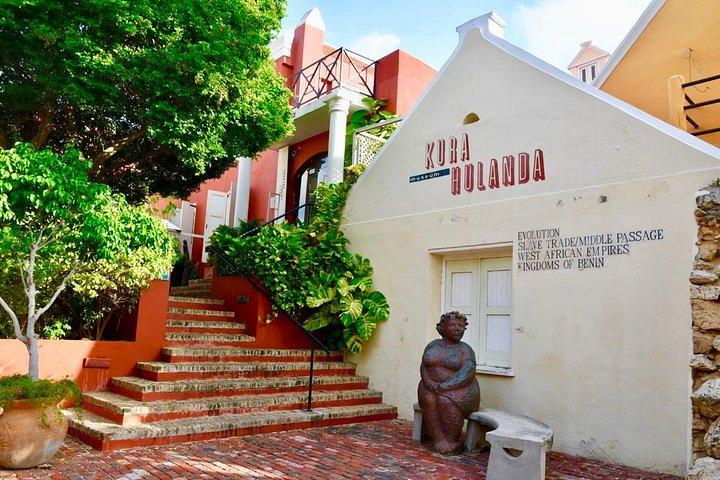
Le musée Kurá Hulanda est situé juste au centre-ville du port de Willemstad, où les Hollandais expédiaient et « trafiquaient » des esclaves africains. Ce musée expose de façon impressionnante la traite transatlantique des esclaves dans sa version totalement, de la capture en Afrique, le voyage à travers le passage du Moyen et la vie dans les Caraïbes et les Amériques. Nous invitons nos hôtes à imaginer non seulement le traumatisme et la douleur qu'ont vécus les Africains réduits en esclavage, mais aussi le courage, la résilience et l'espoir de survivre à cette période brutale de l'histoire. Le Musée Kurá Hulanda expose également une vaste collection d'artefacts d'Afrique continentale, montrant la vitalité dynamique et les grands Empires d'Afrique de l'Ouest. Avec l'exposition des Royaumes d'Afrique de l'Ouest, nous voulons dissiper la représentation négative d'une Afrique appauvrie pour mettre en valeur la profondeur de l'histoire, de la beauté et des contributions culturelles africaines à la civilisation humaine.
Options de l'excursion
Itinéraire
Le musée Kurá Hulanda est situé juste au centre-ville du port d'Otrobanda, Willemstad et explore le rôle joué par l'esclavage dans l'île de Curaçao. L'histoire de Curaçao est profondément liée à l'héritage terrible de la Compagnie Néerlandaise des Indes occidentales et de l'esclavage; et le port de Willemstad était l'un des principaux points de transbordement pour déplacer les esclaves de la région sur le chemin des plantations en Amérique du Nord et du Sud, et dans le reste des Caraïbes. C'est une étape essentielle qui plonge dans les forces qui ont façonné Curaçao et le reste de l'hémisphère occidental. En plus de l'expédition transatlantique sur l'esclavage, le musée Kurá Hulanda expose une vaste collection d'artefacts d'Afrique continentale, montrant la vitalité dynamique et les grands Empires d'Afrique de l'Ouest. En outre, le musée Kurá Hulanda présente une petite mais unique exposition sur les civilisations mésopotamiennes anciennes qui présente les rituels, la religion, le commerce et la vie quotidienne.
Points forts
Ce qui est inclus
Avis des voyageurs
Informations importantes
- Accès pour les personnes à mobilité réduite
- Landau ou poussette possible pour les bébés et enfants en bas âge
- Transports en commun disponibles à proximité
- Convient à toutes les conditions physiques
Avis(133)
Wow! What a wealth of information at this Museum. I did do the tour with a guide and so glad I did as there is a lot of history and information to cover. I was able to listen to the guide instead of having to read all of the information. I believe this added value to the experience. Highly recommend using a guide.
Visiting the Kura Hulanda Museum was an interesting, amazing, yet deeply depressing experience — in the way that honest history often is. I learned so much about the history of slavery, and the exhibits were powerful, sobering, and thoughtfully curated. Our historian guide was incredibly knowledgeable. You could feel the weight of the past in the way she explained what happened throughout the centuries — not just reciting facts, but conveying the human pain behind them. Her storytelling made the experience even more impactful. The staff were also very kind and accommodating. They encouraged us to take our time, never rushed us, and welcomed every question with patience and respect. That level of care made a difficult subject feel supported and safe to explore. This museum is not an easy visit emotionally, but it is an important one. I walked away with a deeper understanding of history and a profound appreciation for the way it was presented. If you’re looking for a meaningful, educational experience that honors truth and humanity, I would absolutely recommend visiting Kura Hulanda.
Very interesting museum, I absolutely wanted to see this. It's quite big, very fascinating and a must-see, but does need an update urgently. Not everything says what it is, sometimes it is not in all languages, museums are nowadays a bit more modern and interactive. But nevertheless a very fascinating place that I can definitely recommend.
It's a must-see museum. The history of slavery is overwhelming. It gathers one, ample show from times BC to the 20th century. Its richness is sculptural art.
Interesting section on the slave trade and beautiful African antiquities collection. Make sure you look through all the buildings, almost missed one since signage isn’t clear. Some of the text is hard to read and repeats, but was happy to support and it’s well maintained.
We would have opted for a tour guide, except that I like moving very slowly through exhibits, reading and studying in detail. We started in the ancient history room that displayed many artifacts from areas of Mesopotamia, Egypt, around the Mediterranean, through Greek and Roman Empires. It then follows a time line through to the present with focuses on trade, cultures, religious influences, colonization, and enslavement of peoples. Lots of great signage with information is posted throughout, many documents and artifacts to view. The curators mention that they are taking care to use accurate replicas where possible to ensure original artifacts can be returned to their countries of origin, which is admirable.
This museum has a fascinating and varied collection
The Kura Museum is a treasure trove of authentic history.. Sad, but necessary to know.. This is a must see for everyone!
Very moving and informative displays throughout. First exhibits highlight Africa and its history. The last building gets into the slavery exhibition. It sure shows the lack of funding as many areas of the museum are quite dusty and not maintained. We did a self guided tour and the fonts used on all the exhibits are pretty small and difficult to read. I took pictures of many of them to read later. Many of the plaques to read are positioned way too low. If you’re 4 feet tall they’re perfect. Also it seemed like there is little to no maintenance of the actual exhibits which is such a shame. They really need to spruce the place up. They need to do audio tours like the Jewish museum to get a much better feel of the place. It’s worth seeing but kind of disappointing.
Dear Guest Thank you so much for your visit and the feedback! The museum was established in 1998 and indeed is in need of a major update! After surviving the 'COVID' years and uncertainty around the future of the museum, in 2023 we crafted a plan to update the museum, starting with the basic infrastructure. This year a curator will come on board, earmarking a key phase in the journey of how our valued guests view and interact with materials in the space. Follow us on social media, Instagram and Facebook to celebrate the milestones we hope to achieve in this year and beyond! Thank you again for your visit and support and we hope to welcome you back in the future.
A critical look at the historical Dutch Slave Trade in Curacao. Very moving museum tour at times upsetting for the honest look at the brutal, inhumane treatment of an enslaved people. If you are sensitive, be prepared to cry.