Découvrez Rio Little Africa : un voyage culturel et historique
Description
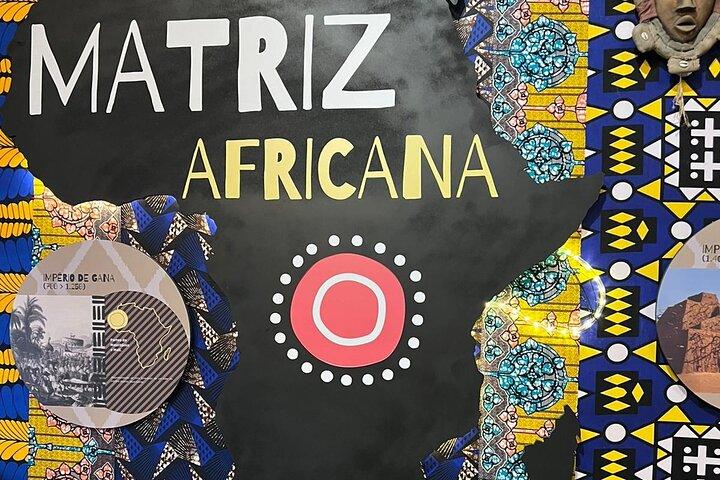
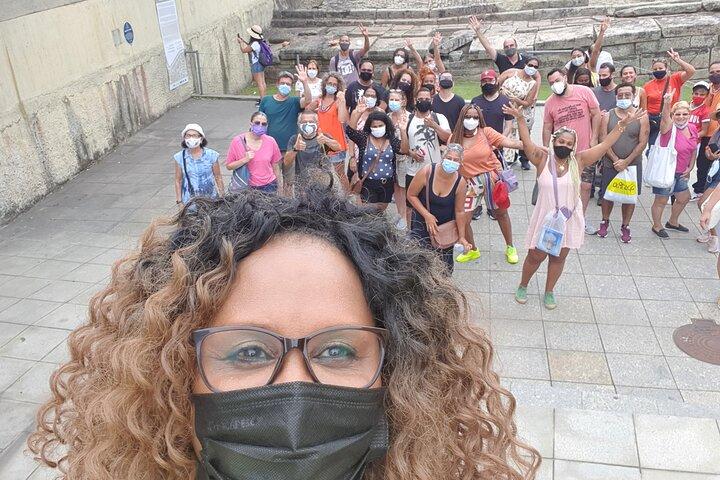
Embarquez pour un voyage transformateur à travers les récits cachés de la Petite Afrique dans le port animé de Rio de Janeiro avec la visite à pied immersive de Florencio. Plongez dans le profond héritage de plus de quatre millions d'Africains réduits en esclavage au Brésil pendant trois siècles, où Rio est devenu l'épicentre de la traite mondiale des esclaves africains au XIXe siècle, accueillant un esclave sur cinq de l'ère moderne. Aujourd'hui, les échos de ce riche héritage résonnent dans tout le Brésil, avec plus de la moitié de sa population s'identifiant fièrement comme noire. Des rythmes palpitants de la samba au kaléidoscope de couleurs du carnaval, des saveurs alléchantes de la cuisine afro-brésilienne aux rythmes spirituels de la musique d'influence africaine, la tapisserie vibrante de la culture africaine est tissée dans le tissu même de la vie brésilienne. Rejoignez Florencio pour un voyage inoubliable à travers le temps et la culture, où le passé prend vie et où l'héritage de Little Africa continue d'inspirer et d'enchanter.
Options de l'excursion
Itinéraire
Lieu de rendez-vous pour "Pas de prise en charge à l'hôtel" - Musée d'Art de Rio (MAR). Le musée est situé Praça Mauá, 5 - Centro, Rio de Janeiro.
Au Largo da Prainha, vous verrez la statue de la Mercedes Baptista. Elle fut la toute première danseuse de ballet afro-brésilienne à s'inscrire dans la troupe de ballet du Théâtre municipal de Rio de Janeiro à la fin des années 1940. Le plaisir, la bière glacée, la samba et la musique noire sont toujours dans l'air.
Ensuite, notre voyage nous mènera à Pedra do Sal, un site vénéré de Rio imprégné de l'histoire de la samba carioca urbaine. Son importance remonte aux esclaves africains qui travaillaient pour décharger le sel importé du Portugal, d'où son nom. Ces individus résilients ont également minutieusement sculpté les marches qui caractérisent la région, ouvrant la voie à l'émergence du premier carnaval des ranchos, des processions afoxés et des espaces sacrés à la fin des années 1800. Après leurs journées laborieuses, les sambistas (musiciens de samba) et les débardeurs se rassemblaient chez les tantes bahianaises, formant des cercles de samba dynamiques. Des personnalités notables telles que Pixinguinha étaient des participants réguliers, contribuant à la riche tapisserie d'expression musicale. Aujourd'hui, Pedra do Sal reste une plaque tournante vitale pour les cercles de samba et les rassemblements culturels, perpétuant son héritage de bastion du patrimoine et de l'expression artistique afro-brésiliens.
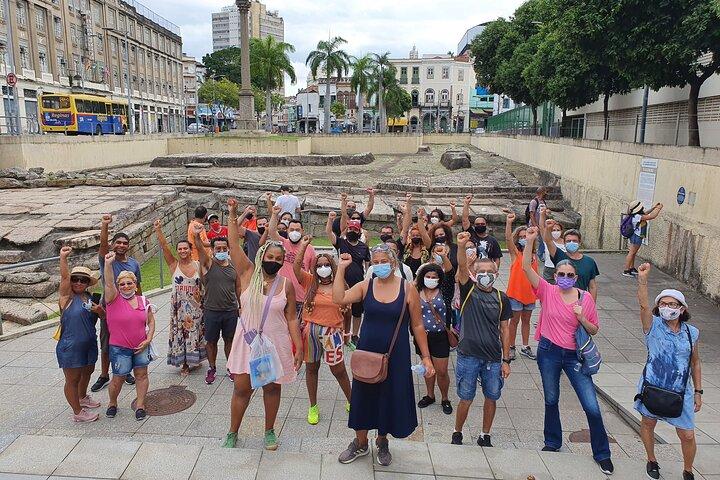
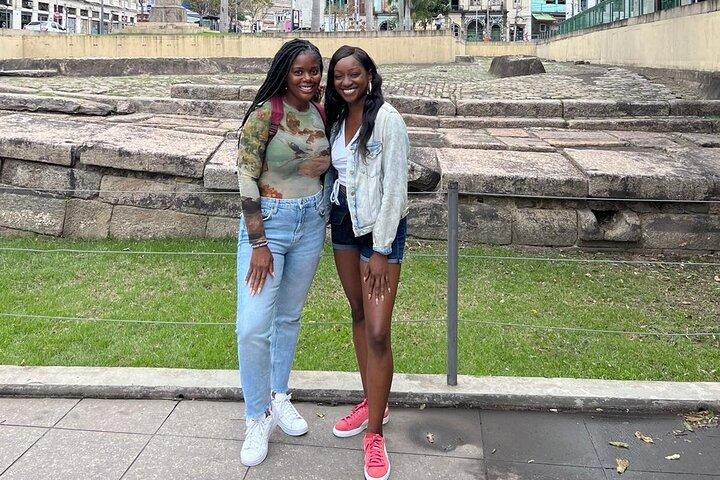
Cais do Valongo, un site du patrimoine mondial à Rio de Janeiro, est un ancien quai en pierre construit en 1811 pour débarquer les esclaves africains. On estime qu’environ 900 000 Africains sont arrivés en Amérique du Sud via Valongo. Le site comporte plusieurs couches archéologiques et constitue la preuve physique la plus significative de l’arrivée des esclaves africains dans les Amériques.
La fresque des Ethnies est une peinture de 3 000 mètres carrés située dans la Zona Portuária (Saúde) de Rio de Janeiro. Il a été créé pour les Jeux olympiques de 2016 et comprend cinq représentants de différentes tribus, un de chaque continent. Les tribus Huli, Mursi, Kayin, Supi et Tapajós ont été choisies pour représenter la diversité du monde. La fresque murale a nécessité deux mois de travail, avec des équipes de 12 heures, en utilisant plus de 3 000 bombes aérosols, 700 litres de peinture colorée et 1 800 litres de peinture blanche pour le fond.
Après MUHCAB, nous marchons vers IPN, un musée et site archéologique de Rio de Janeiro dédié à honorer la mémoire des Africains amenés dans la ville comme esclaves. Il est situé sur le site du « Cimetière des Nouveaux Noirs » et propose depuis 2005 des activités culturelles et des ateliers sur l'histoire et la culture des personnes d'ascendance africaine. Le musée est reconnu par l'État et désigné Espace Culturel depuis 2009. .
Le MUHCAB est un musée de la Petite Afrique, basé autour du quai de Valongo, site classé au patrimoine mondial. Il raconte l'histoire de la plus grande arrivée d'esclaves africains dans la région, les étapes marquantes de l'affirmation des Noirs au Brésil, le développement de la culture afro-brésilienne et les problèmes contemporains auxquels sont confrontés les Noirs au Brésil.
Points forts
Ce qui est inclus
Lieux et horaires de prise en charge
ATTENTION, S'IL VOUS PLAÎT: Nous confirmons et mettons à jour votre heure et lieu de prise en charge via les messages WhatsApp et le messager Viator envoyés à votre adresse e-mail. Cependant, WhatsApp est largement utilisé au Brésil et constitue le moyen de communication le plus simple et le plus rapide. Avis important : Pour mettre à jour votre heure et votre lieu de prise en charge, nous vous enverrons un message via WhatsApp et Viator Messenger sur votre adresse e-mail. Veuillez noter que WhatsApp est largement utilisé au Brésil et constitue le moyen le plus rapide et le plus efficace de communiquer avec nous. Merci pour votre soutien. Nous avons hâte de vous voir à Rio ! Sincèrement, L'équipe Florencios.
Avis des voyageurs
Informations importantes
- Transports en commun disponibles à proximité
- Les enfants en bas âge doivent être assis sur les genoux d'un adulte
- Déconseillé aux voyageurs avec des problèmes à la colonne vertébrale
- Déconseillé aux voyageurs avec des problèmes cardiovasculaires
- Convient à toutes les conditions physiques
Avis(260)
My friend and I thoroughly enjoyed the tour with Ana Julia. The tour was enhanced by her clear excitement to learn and share the information she knows. Throughout the tour she also answered our questions and we engaged in thoughtful discussion. I HIGHLY recommend this tour.
The tour was very insightful and interesting. Myllena showed us quite a few sites in provided historical commentary on the significance of the sites. She was very pleasant and patient as she answered our many questions. We enjoyed this tour and would recommend it to anyone who wants to learn about the history of Africans in Brazil!
My friends and I booked Florencios Tours for our trip to Rio de Janeiro, and it was one of the best decisions we made. We wanted a balance between the major tourist attractions and a deeper dive into the Afro‑Brazilian cultural history of Rio — and Florencios Tours delivered this perfectly.A huge thank‑you to Damanica and our amazing tour guide, Gabrielle, who were both incredibly knowledgeable, warm, and attentive. They listened to our interests and crafted a day that felt personal, meaningful, and beautifully paced.From iconic landmarks to powerful cultural sites, every stop was intentional and enriched with stories that helped us understand Rio beyond the surface. We left feeling connected, inspired, and grateful for the experience.Highly recommended for anyone seeking a tour that goes beyond the typical itinerary and truly honors the client!
This tour was fantastic! I especially appreciated my tour guide, Scarlet! Her depth of knowledge regarding 'Little Africa' & its history was IMPRESSIVE! She took me all around the surroundings sites & answered every question. She took great pics & was kind & courteous. Please book her for your next tour.
We arrived in Rio on July 2 for a four day stay before going to São Paulo. So it was important for us to have a structured tour so we could get the most out of our visit. Gabriella our very knowledgeable and caring tour guide met us in the airport and escorted us to our van where Paulo our driver was waiting. There were five people in our group and they took great care of us. They took us to our hotel in Copacabana where we checked in and came back down to go on a sunset tour of Sugar Loaf mountain. After we went to the Ginga Show which wasn’t that far from our hotel. The Gabriela explained our itinerary for the next few days which included some of the closures for the July 5 FIFA Brazil vs Norway. The next morning we visited Christ the Redeemer Statue and Gabriela made certain that accommodations were made for me since I have issues with my knee. We took the train up to the statue which was amazing!! After we went to lunch at a steak house where the food was phenomenal. We visited the Samba School which I personally loved and we did a walking tour of Little Africa. Gabriella explained in detail what we were looking at and the history behind it. We were a group of educators from New York City so we had an eagerness to learn as much as possible to bring back to our schools and classrooms. The museums she took us to were very deep in revealing the AfroBrazilian experience in ways that we did not know. The murals, favelas, and mansions, and people we experienced along the way will require another trip. Of all the places I’ve been, Brazil 🇧🇷 Rio is the most memorable. We will be back!
Our Little Africa tour with Carolina (“Carol”) was one of the highlights of our time in Rio. Carol is an excellent guide and communicator. She speaks English fluently and made complex historical, social, and cultural topics easy to understand. She welcomed questions and engaged thoughtfully with sensitive subjects related to race, ethnicity, national identity, and inequality. Her answers were honest, nuanced, and respectful, and she encouraged meaningful discussion by inviting us to share similarities and differences between our own experiences and those of people in Brazil. We were fortunate to have a private tour, which allowed for more conversation and a deeper exploration of topics that particularly interested us. While the tour follows a well-designed structure, Carol was attentive to our interests and spent additional time discussing contemporary Afro-Brazilian life, including social, political, and economic issues. She reached out before the tour to introduce herself and answer questions, which helped us get the most out of the experience. I learned an incredible amount about Brazil’s colonial history, the transatlantic slave trade, resistance movements, and the diverse African cultures that shaped Brazil. One particularly moving stop was the site where the remains of enslaved Africans, buried in a former mass grave, were rediscovered relatively recently. Carol helped us understand not only the historical significance of the site but also the ongoing process of uncovering, acknowledging, and reckoning with parts of Brazil’s history that were hidden for generations. I came away with pages of notes and a long list of topics I want to learn more about. What I expected would be an interesting tour turned out to be a genuinely eye-opening experience. Carol’s knowledge, thoughtfulness, and passion for the subject left a lasting impression on us. Highly recommended! Tips for Future Visitors: * Check the weather forecast and dress accordingly. * Wear comfortable walking shoes with good traction. Your guide can adapt the route to make it less physically demanding when possible, but expect cobblestones, uneven pavement, construction areas, and typical urban walking conditions. * Bring water, especially on warmer days. * The tour takes place in living neighborhoods and community spaces, so approach them with the same respect and courtesy you would want visitors to show in your own community. * The scheduled tour is about three hours, but if you’re curious and enjoy asking questions, it may run a little longer. If you have plans immediately afterward, it’s worth mentioning that to your guide in advance.
Ana Julia was an amazing informative tour guide! I recommend her and this Little Africa tour to all!!!
We toured with an incredibly knowledgeable and engaging guide named Myllena. She gave us so much information about the history of the slave trade in Brazil and an informed perspective on the repercussions of the social and economic impact it has had and still has on the Black Brazilians to this day. The tour sparked comparisons to the US (where I am from) and other colonized nations where I have lived (Vietnam, Singapore, Egypt, India, and Nigeria), especially with the recent Ghana resolution that passed in the UN declaring the transatlantic slave trade and the racialized chattel enslavement of Africans as the "gravest crime against humanity." This was an extremely enlightening and informative tour, which also highlighted the resilience of the people and the strong influence Africans had on Brazilian culture. Highly recommend the tour and our guide Myllena who was excellent.
Immersive experience into the history and culture of the city. I was struck by the resilience of the people and the evolution of the city
If you’re ever in Rio, please book this tour. Our tour guide carol was absolutely amazing!!! She’s very knowledgeable, organized and has such a sweet spirit. We learned so much about the history of Brasil and Carol also shared a little bit about her own personal background. Whenever I’m in Rio, I will definitely book again with her. Please ask for Carol when you book. Thank you again, Carol and team for putting together such an amazing tour.