Excursión de un día a Khujand desde Tashkent
Descripción
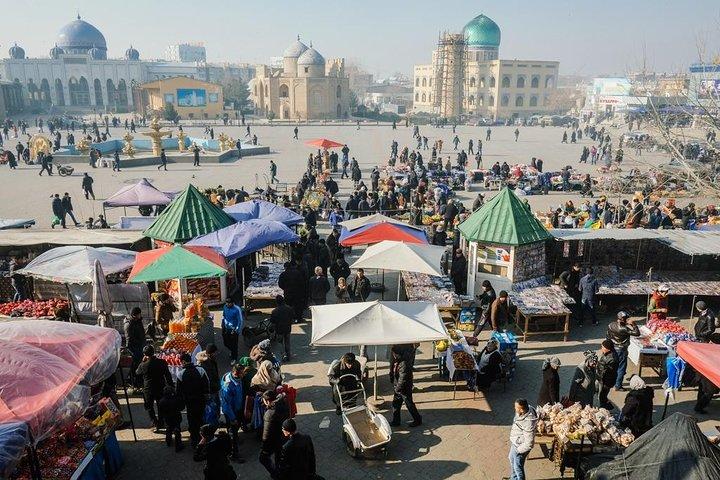
Khujand es una de las ciudades antiguas de Asia Central: la edad de la ciudad es de aproximadamente 2500 años. La ciudad fue encontrada por Ciro, un emperador aqueménida y fue ocupada por Alejandro Magno, reconstruida, fortalecida y nombrada: Alejandría más lejos. Durante los siglos, la ciudad tuvo una posición muy importante en el comercio de la ruta de la seda: conectó Samarcanda con el valle de Fergana y China. Al hacer un recorrido por Khujand, disfrutará visitando el ruidoso y vibrante bazar oriental "Paishanba", el mercado más grande de todo Tayikistán. Te fascinarán las calles tranquilas, la variedad de deliciosas frutas y la hospitalidad de los lugareños, las ruinas de las fortalezas, los monumentos arquitectónicos de los siglos XVI.
Opciones de la excursión
Itinerario
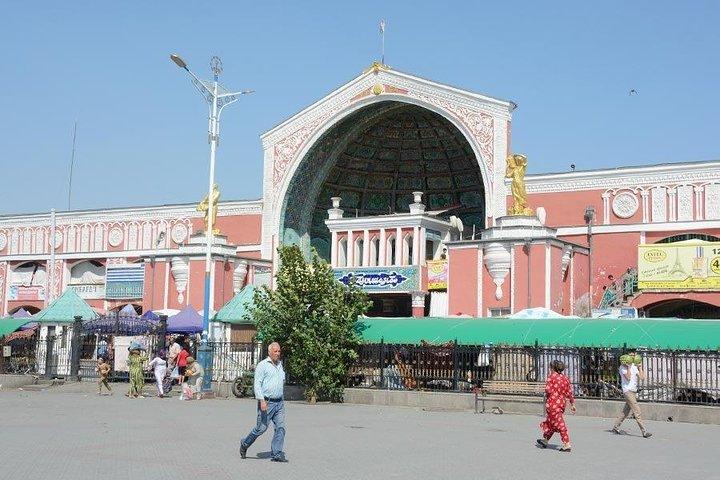
El mercado cubierto de Panjshanbe es una de las famosas atracciones de Khujand. Panjshanbe significa jueves. En Dushanbe comerciaban los lunes y en Khujand los jueves. El bazar de Panjshanbe se encuentra en el centro de Khujand y frente a él está el mausoleo de Sheikh Muslihiddin. El bazar consiste en el pabellón principal y muchas tiendas, carpas y tiendas adyacentes. Aquí siempre es muy ruidoso, ya que no solo los residentes de la ciudad vienen de compras, sino también los huéspedes de las aldeas cercanas. La característica principal del mercado de Panjshanbe es su arquitectura y decoración únicas. La construcción del pabellón se llevó a cabo a mediados del siglo XX y se completó en 1964. El edificio del bazar combina elementos del imperio oriental y estalinista, y la decoración se realiza armoniosamente utilizando los estilos soviético y oriental.
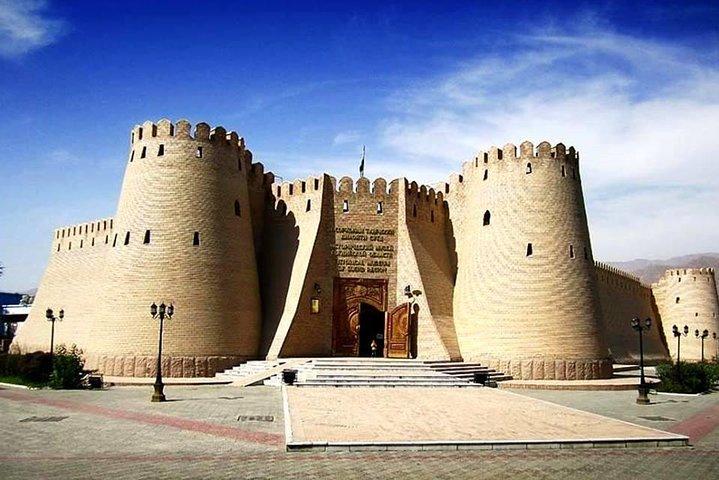
A lo largo de la historia de Khujand, en el centro de la ciudad estuvo su fortaleza. Durante 2500 años, la fortaleza de Khujand se expandió con la ciudad, fue destruida por los conquistadores y reconstruida nuevamente. Después de las excavaciones arqueológicas, se descubrió que la primera fortaleza se erigió en los siglos VI-V aC y consistía en una muralla de terraplén convertida gradualmente en gruesos muros de arcilla cruda. Además, además de la fortaleza, había una muralla que cubría 20 hectáreas. Durante el apogeo de la Gran Ruta de la Seda, la fortaleza de Khujand fue reconstruida, así como la muralla de la ciudad. Sin embargo, la ciudad creció aún más, y se dividió en tres partes: la ciudadela, Rabad y Shahristán. En ese momento, la fortaleza de Khujand era considerada una de las ciudades más importantes de Asia Central. Sin embargo, la fortaleza fue destruida por el ejército de Genghis Khan. En 1219-1220. En 1999, se restauró parte de la pared oriental de la fortaleza de Khujan, que data de los siglos VIII-X.
En 1999, parte del muro oriental de la fortaleza de Khujan, que data de los siglos VIII-X, fue restaurado y construido junto al Museo de Historia y Conocimiento Local de Arqueología y Fortificación. Este museo contiene artículos para el hogar, cerámica y herramientas que se encuentran en el sitio de excavación de la fortaleza. En total, el fondo del museo contiene 1.200 exhibiciones, la mayoría de las cuales están disponibles para los visitantes.
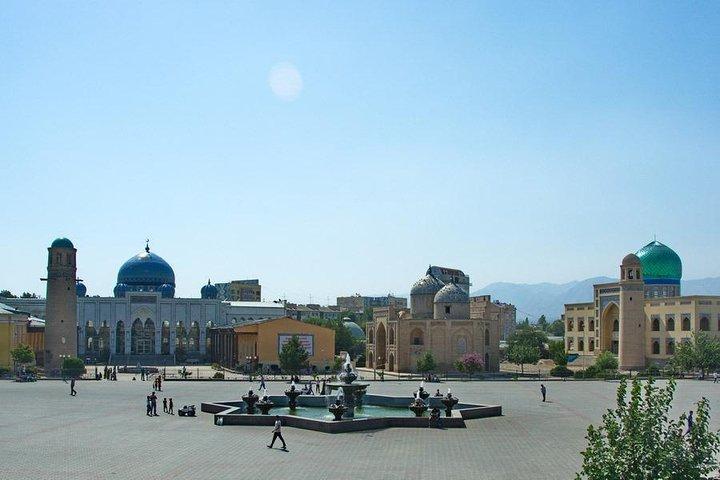
Este gran conjunto conmemorativo, ubicado en la parte histórica de la ciudad, fue erigido en la tumba de Muslihiddin Khujandi, el gobernante de la ciudad de Khujand y poeta que vivió en el siglo XII. Sheikh Muslihiddin fue un hacedor de milagros santos. Al principio fue enterrado en la aldea de Unji (un suburbio de Khujand), pero sus admiradores trasladaron las cenizas del jeque a la ciudad y erigieron un mausoleo en este sitio. Fue en el siglo XII. Entonces el mausoleo era una pequeña cámara funeraria de ladrillos quemados, decorada con terracota. Esta tumba fue destruida durante la invasión mongol. En el siglo XIV, el mausoleo fue reconstruido nuevamente. Hoy, el Mausoleo Sheikh Muslikhiddin es un conjunto arquitectónico que consiste en una mezquita, un minarete del siglo XIX (más de 20 m de altura) y el mausoleo Sheikh Muslikhiddin.
Lo más destacado
Qué incluye
Valoraciones de viajeros
Información importante
- Accesible para silla de ruedas
- Los bebés y los niños pequeños pueden ir en un cochecito o en una silla de paseo
- Se admiten animales de asistencia
- Hay opciones de transporte público disponibles en las cercanías
- Los bebés deben sentarse en el regazo de un adulto
- Hay asientos o sillas infantiles disponibles
- Las opciones de transporte son accesibles para sillas de ruedas
- Todas las áreas y superficies son accesibles para sillas de ruedas
- Adecuado para todos los niveles de aptitud física
Opiniones(45)
We loved our trip to Khujand from Tashkent. The pick up from our hotel was seamless. The car was clean and comfortable and Daniel, was a really good and safe driver. Once we crossed the border to Tajikistan our guide, Shahrom, found us and took us to our new driver, who was also great. Shahrom showed us around the city and taught us so much about Tajik culture and history. We had an amazing time learning, exploring and meeting friendly faces.
The journey started when the driver picked us up from our hotel in Tashkent at 7:30 a.m. By 10:00 a.m., we had arrived at the border between Uzbekistan and Tajikistan. The border-crossing process was smooth and took only 15 minutes. Once we entered Tajikistan, we were greeted by our tour guide, who arrived with his car to drive us around the city. It took about an hour to drive from the border to the city of Khujand. Our tour guide was very kind and knowledgeable, with an excellent understanding of the region’s history. Since it was a private tour, we were able to decide what we wanted to do and visit. We spent about four hours in Khujand before deciding to head back to the border. We reached the border at 4:00 p.m. and crossed back into Uzbekistan in another smooth 15 minutes. Finally, we arrived back at our hotel in Tashkent by 7:00 p.m. It was a wonderful trip, and I truly appreciated the hospitality of our tour guide. The people were kind and courteous. Two things to note: First, bring a Visa ATM card to withdraw cash. In Khujand, many establishments do not accept Visa credit cards. Secondly, don’t let the taxi drivers touting at the Uzbekistan or Tajikistan borders ruin your overall experience. This happens in many countries, and the borders are safe.
We completed a 12 day guided tour in Uzbekistan and thought it was good idea to take a day tour to khjand from Tashkent. It ended up a bad trip. First, there is really nothing new to see in Khujand. And secondly, the time spent on the road is too long. Thirdly, this day tour is way over priced based on living standard in these two countries. However, the tour guide and the drivers on both countries are friendly and helpful. I would not recommend to is trip to my friends.
I met my guide Hussein at the border. He was very polite and knowledgeable. Gave me a good overview about the history of Tajikistan and then details about Khujand. I had a lovely day. Luckily it was also Nowruz so I could observe some celebrations. He took me to a restaurant where I had a very tasty green salad. I still think about it. We finished the day with typical market. All together I can recommend the tour. Thanks Hussein.
Two important things; 1. It is a long ride from Tashkent on decent, but not good roads. We had a nice car and the driver kept the speed down on the way there. 2. Despite specifically stating admissions are included In the trip description, they are not. This matters because you have to change money at the border for this day trip. Credit cards were not accepted for admissions. The tour operators will not reimburse those admission fees. The drivers spoke no English but the guide, Hussein, was very good and knowledgeable. We did enjoy our trip.
A day trip to another country, crossing the border on foot and going through 8 (?) passport checks and an excellent guide to tell us about Tajikistan and Khujand . Hussein was an excellent guide - knowledgeable and helpful. Make sure you organise your visa for Tajikistan in good time for your trip!
The driving was safe-ish, and the border crossing well prepared. We were able to cross both ways with hardly any waiting, no visa and no cost (Norwegian passports). :-) The guide spoke a lot and was an experience in himself. He hardly understood any of our English but it somehow worked out, and we undertood most of what he said. Entrance fees are not included (even if it says so). You need some local currency for entrance and lunch. ATMs are available but the places mentioned didn't take Visa. All in all we had a great day!
Tour went generally smooth. Note that there you will be pick-up in your hotel and that ypu will cross the border. Your khujand tour guide will be waiting at the Tajikistan side if the border. Our tour guide Sha is good in history and have a lot of interesting stories to share.
A driver dropped me off at the border of Tajikistan close to Tashkent. I walked through the border and met my guild from Tajikistan, Hussein. He was very knowledgeable and informative. It was a great experience.
The journey was comfortable. There was a shuttle service from my hotel in Tashkent to the Uzbekistan border. After passing through immigration, I met my guide at the Tajikistan border. The guide and driver then took me sightseeing in Kujan. Both the driver and guide were very polite. The guide was very knowledgeable about Kujan and explained everything clearly. Thank you so much for this trip. I highly recommend this tour.