Rothenburg Walking Tour with Audio Guide on Your Smartphone

Description
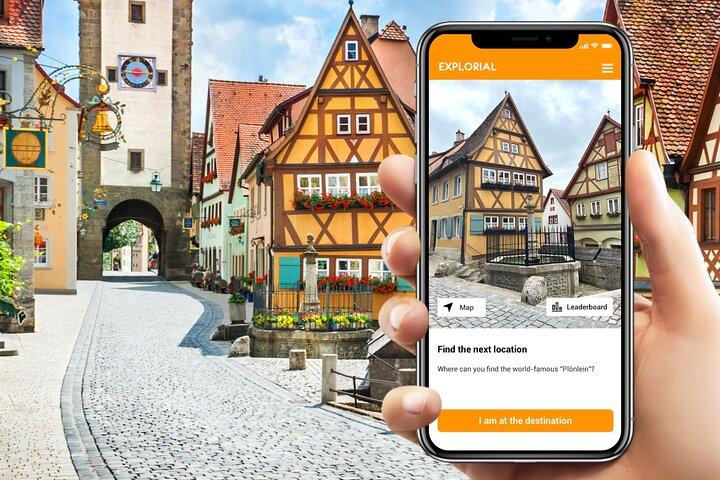
The TouringBee audio guide is your convenient mobile companion for a self-guided tour of Rothenburg. This tour is specially designed for exploring the city in a short time (1.5–2 hours). Follow the route on the app’s map to walk from Market Square to the Hospital Bastion, passing by the city’s main attractions. Highlights include: City Hall, Jewish Street, St. Wolfgang’s Church and St. James Church, St. Mark's Tower, Gerlach Forge, Plönlein Square. The tour features 25 points of interest. All stories are crafted by professional journalists and historians, with a touch of humor and a passion for travel. Once you download the tour, the app works offline. The audio guide is always clear in your headphones. Enjoy fascinating stories and legends at your own pace, without having to keep up with a tour group. You can pause anytime to relax in a café or wander down a picturesque alley before continuing your exploration.
Tour Options
Itinerary
The Clock Tower in Rothenburg ob der Tauber, known locally in German as Markusturm, is one of the town’s historic medieval towers. Built as part of the early town fortifications, it stands beside the Röder Arch and marks one of the most picturesque corners of the old centre. Its stone base, timbered upper section, and clock face reflect Rothenburg’s preserved medieval character.
The Architect’s House, known locally in German as Baumeisterhaus, is one of the most distinctive Renaissance buildings in Rothenburg ob der Tauber. Built in the late 16th century for master builder Leonhard Weidmann, it reflects the status and craftsmanship of the town’s prosperous period. Its ornate façade, stone figures, and decorative details add a refined civic note to the medieval streetscape.
Toppler’s House, known locally in German as Topplerhaus, is one of Rothenburg ob der Tauber’s most unusual historic buildings. Built in the late 14th century, it is associated with Heinrich Toppler, the powerful mayor who helped shape the town’s medieval prosperity. Its narrow tower-like form, half-timbered upper floors, and position by the Tauber valley reflect both domestic life and defensive architecture.
The German Christmas Museum, known locally in German as Deutsches Weihnachtsmuseum, is a museum in Rothenburg ob der Tauber dedicated to the history of Christmas traditions. Its collection includes ornaments, decorations, nativity scenes, Advent calendars, and festive objects from different periods. The museum reflects how Christmas customs developed in German-speaking regions and became part of family and cultural life.
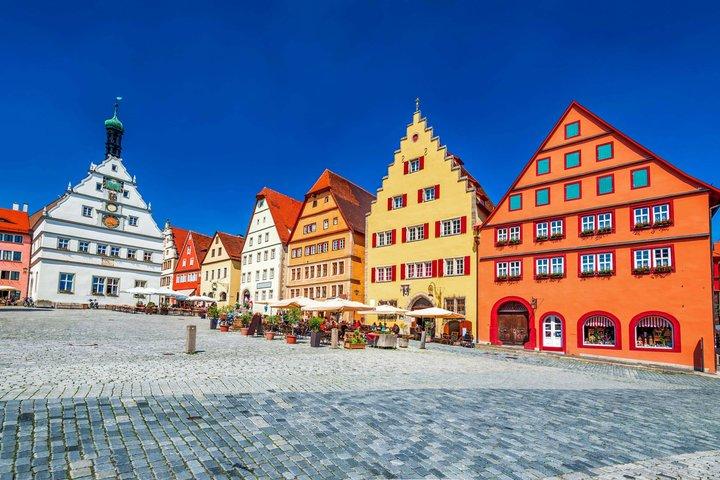
The Town Hall, known locally in German as Rathaus, stands at the heart of Rothenburg ob der Tauber’s Market Square. Its two-part architecture combines medieval Gothic elements with a later Renaissance façade, showing how the town changed over centuries. The building reflects Rothenburg’s civic power, legal traditions, and former status as a Free Imperial City.
The Powder Tower, known locally in German as Pulverturm, is one of the defensive towers of Rothenburg ob der Tauber. It formed part of the town’s medieval fortification system and was linked with the storage of gunpowder and military supplies. Its sturdy structure reflects the practical needs of defence in a Free Imperial City surrounded by walls, gates, and watchtowers.
Blade Gate, known locally in German as Klingentor, is one of the historic gates of Rothenburg ob der Tauber. Built as part of the town’s medieval fortifications, it combines a defensive tower with a passage into the old centre. Its massive walls, narrow openings, and connection with the town wall reflect the military architecture that protected Rothenburg for centuries.
St. Wolfgang’s Church, known locally in German as St.-Wolfgangs-Kirche or Schäferskirche, is a fortified church near the Klingentor in Rothenburg ob der Tauber. Built in the late 15th century, it combines a place of worship with defensive architecture. Its thick walls, towers, and connection with the town fortifications reflect the close link between faith, civic life, and protection in the medieval city.
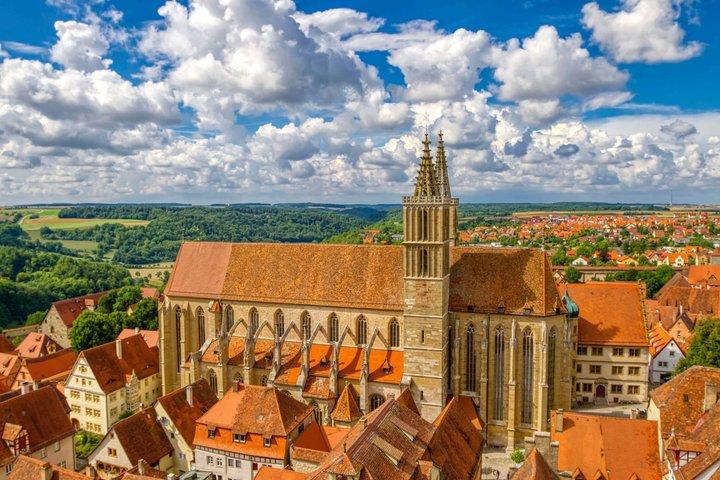
St.-Jakobs-Kirche, known in English as St. James’s Church, is the main Protestant church of Rothenburg ob der Tauber. Built between the 14th and 15th centuries, it reflects the town’s wealth and religious importance in the late Middle Ages. Its Gothic architecture, stained glass, and famous Holy Blood altarpiece by Tilman Riemenschneider make it one of Rothenburg’s most significant landmarks.
Franziskanerkirche, known in English as Franciscan Church, is one of the oldest churches in Rothenburg ob der Tauber. Built in the late 13th century for the Franciscan order, it reflects the simplicity and restraint of mendicant architecture. Its Gothic interior, historic monuments, and quiet atmosphere connect the town with medieval monastic life.
Burgtor, known in English as Castle Gate, is one of the historic entrances to Rothenburg ob der Tauber. Built into the town’s western fortifications, it marks the approach to the former castle area above the Tauber valley. Its towers, defensive passages, and heavy gate structures reflect the strategic importance of protecting the medieval city.
Burggarten, known in English as Castle Garden, lies on the site of the former imperial castle of Rothenburg ob der Tauber. The castle was destroyed by an earthquake in the 14th century, leaving the garden as a quiet reminder of the town’s early medieval power. Its paths, viewpoints, and monuments overlook the Tauber valley and connect Rothenburg’s fortified centre with its wider landscape.
Stadtmauer Rothenburg, known in English as Rothenburg Town Wall, is one of the best-preserved medieval fortification systems in Germany. Built and expanded over several centuries, it surrounds the old town with gates, towers, and covered wall walks. The wall reflects Rothenburg’s former strength as a Free Imperial City and its carefully preserved medieval character.
Mittelalterliches Kriminalmuseum, known in English as Medieval Crime Museum, is one of Rothenburg ob der Tauber’s most unusual museums. Its collection explores law, punishment, trials, and social order from the Middle Ages to the early modern period. Original instruments, documents, seals, and legal symbols reveal how justice, fear, and public discipline shaped everyday life in historic Europe.
The Old Rothenburg Craftsmen House, known locally in German as Alt-Rothenburger Handwerkerhaus, is a preserved medieval home showing the world of Rothenburg’s artisans. Dating back to the 13th century, it presents workshops, living rooms, tools, and everyday objects from earlier centuries. The house reflects the domestic life, manual skills, and working traditions that supported the town’s prosperity.
Markus Tower, known locally in German as Markusturm, is one of the oldest surviving towers in Rothenburg ob der Tauber. Built as part of the town’s early medieval fortifications, it stands beside the Röder Arch and marks a historic entrance into the old centre. Its stone base, half-timbered upper section, and clock face reflect Rothenburg’s layered defensive and civic history.
Röderturm, known in English as Röder Tower, is one of the main gate towers in Rothenburg ob der Tauber’s medieval fortifications. Standing above the Rödertor, it marked an important eastern entrance into the town. Its tall structure, defensive passages, and connection with the town wall reflect Rothenburg’s need for protection and control over traffic entering the Free Imperial City.
Gerlachschmiede, known in English as Blacksmith’s House, is one of the most picturesque half-timbered buildings in Rothenburg ob der Tauber. Once used as a working forge, it continued its craft function until the 20th century. Its steep roof, timber framing, small windows, and corner position reflect the town’s artisan life and preserved medieval atmosphere.
Plönlein, known in English as Little Square, is one of the most famous views in Rothenburg ob der Tauber. The small fork in the street is framed by half-timbered houses, the Siebers Tower, and the Kobolzell Gate. Its compact medieval scene has become a symbol of Rothenburg’s preserved old town and romantic image.
Stöberleinsbühne, known in English as Stöberlein Stage, is a small open-air amphitheatre in Rothenburg ob der Tauber’s Spital Quarter. Set near the town wall and the Stöberlein Tower, it forms a quiet cultural corner away from the busier market streets. Its intimate layout connects Rothenburg’s medieval surroundings with local performances and community events.
Hegereiterhaus, known in English as Forester’s House, is a distinctive historic building in Rothenburg ob der Tauber’s Spital Quarter. Built in the late 16th century, it once served officials responsible for managing the surrounding forests and hunting grounds. Its steep roof, half-timbered form, and position near the town fortifications reflect the practical administration of the Free Imperial City.
Hospital Bastion, known locally in German as Spitalbastei, is one of the strongest defensive structures in Rothenburg ob der Tauber. Built in the 16th century to protect the southern entrance to the town, it formed part of the expanded fortification system around the Spital Quarter. Its massive walls, gates, and defensive passages reflect the military engineering of the late medieval city.
Highlights
What's included
Traveller Ratings
Important Information
- Public transportation options are available nearby
- Suitable for all physical fitness levels
- The audio guide is available through a dedicated mobile app for iOS and Android
- Entry tickets to museums and churches are not included. Please purchase them separately in advance
- The tour does not cover all Rothenburg attractions
- This is a self-guided tour. You will need to download the audio guide app, activate your purchase, and follow the route on the app’s map. No human guide is provided
- The audio guide is available at any time. The date and time provided at checkout are approximate
Reviews(1)
I love Bavaria and the south of Germany overall – it's one of those places I keep coming back to again and again. For some reason I always somehow missed Rothenburg though. This year I finally fixed that. I already had a pretty good idea of what the town was like, but it still exceeded my expectations. There's quite a lot to see and do, and some really nice places to eat (I'll write about those separately). Also, I think the local fortifications were probably the inspiration for Oxenfurt in The Witcher game, haha. I know, but the nerds will appreciate it – those walls look very characteristic. As usual I used the TouringBee app tour. Good route and a healthy mix of info and interaction – like “look here”, “spot that”. Voice is ok. As a history nerd I can easily listen to a much bigger volume of pure facts, but I guess this is a nice balance for people who are less obsessed and would get bored otherwise, so it’s not really a downside. How long it takes... hard to tell, very depends on your walking speed and how slow you to ''explore'' stuff once on place. Took me around 2.5 hours, but I was really not in hurry. Value? Not super cheap these days, but then again live guides aren’t exactly immune to inflation either – some guided tours have become pretty expensive for experiences that aren’t necessarily that great. So I can totally recommend this app and its contents. One small suggestion: maybe add a few extra POI markers beyond the basic route, like bonus spots that are also worth exploring on your own.
Thanks for such a detailed review! We’re especially glad the TouringBee route worked even for a self-confessed history nerd — that’s a high bar. And the Oxenfurt comparison made us smile; Rothenburg’s walls clearly have some serious fantasy credentials. We hope another TouringBee tour joins you on your next return to Germany.