Private Half Day tour Manjanggul Lava tube in Jeju island
Description
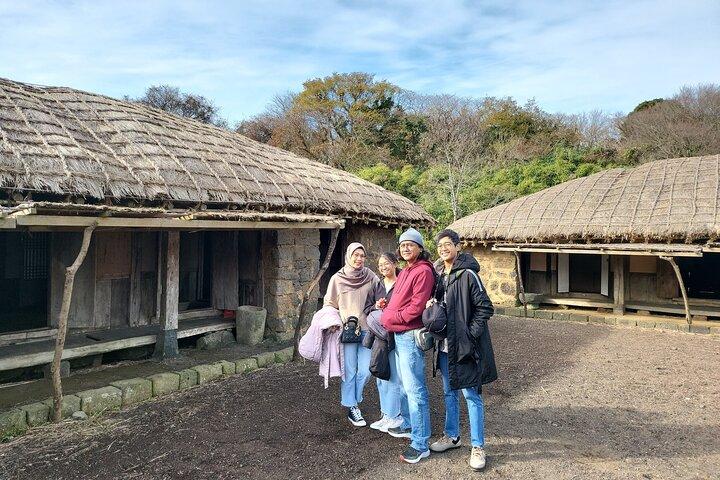
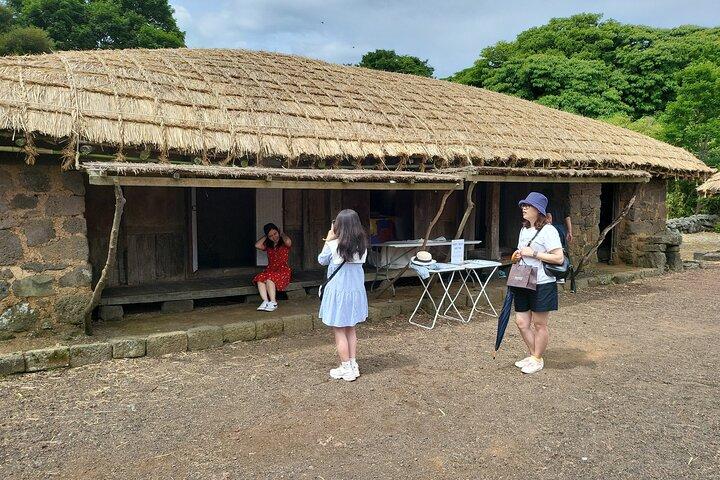
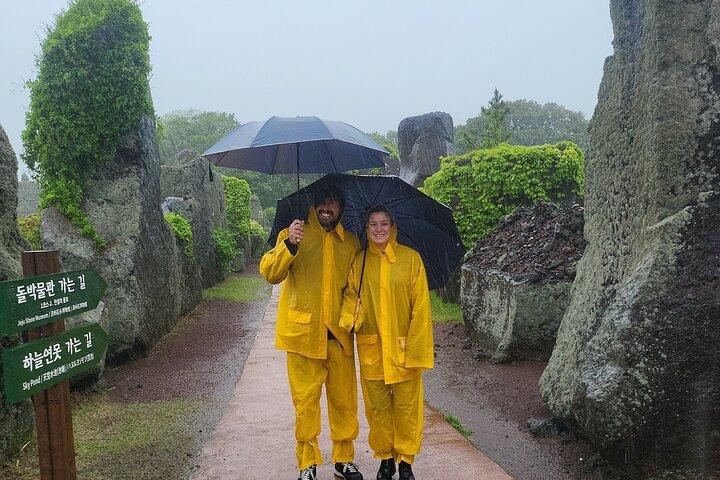
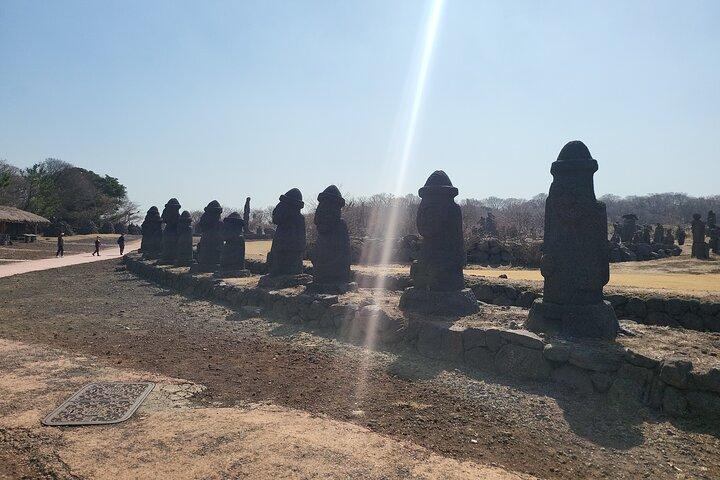
This tour is guided by a local taxi tour guide who personally accompanies the customer excluding climbing. At Jeju Stone Culture Park, you can walk around the park and see the lives of Jeju people, including stones, Jeju guardian deities, stone pagodas, traditional thatched houses, and traditional toilets. For those who have difficulty walking, you can ride an electric cart around the park. Manjanggul Cave is a natural cave formed approximately 100,000 to 300,000 years ago by lava flowing from Geomun Oreum, one of the small mountains in Jeju, along the surface. It is the core of the Geomun Oreum Lava Cave System, which was designated as a UNESCO World Natural Heritage Site in 2007. The general exploration section extends about 1 km inward from the Second Entrance. The main passage, measuring 18 meters in width and 23 meters in height, evokes a sense of openness that makes one forget it is an underground space.
Tour Options
Itinerary
Jeju Sangumburi Crater is a parasitic volcanic crater of Hallasan Mountain. It is the only submerged volcano in Jeju Island. The outer circumference of the crater is 2,067 meters, the inner circumference is 756 meters, and the depth of the crater is 100-146 meters, forming a conical cliff, and the floor area is about 26.400 square meters. The crater rarely ejected lava, only a hole was dug deep by the explosion, and the material from the explosion was scattered in all directions and only a small amount accumulated around it. Although the diameter and depth of the crater are larger than that of Baeknokdam, the water does accumulate and flows out to the sea through the basalt gravel layer of the crater wall. Such a crater is called a maar, and Sangumburi Crater is unique in Korea, and there are only a few in Japan and Germany worldwide.
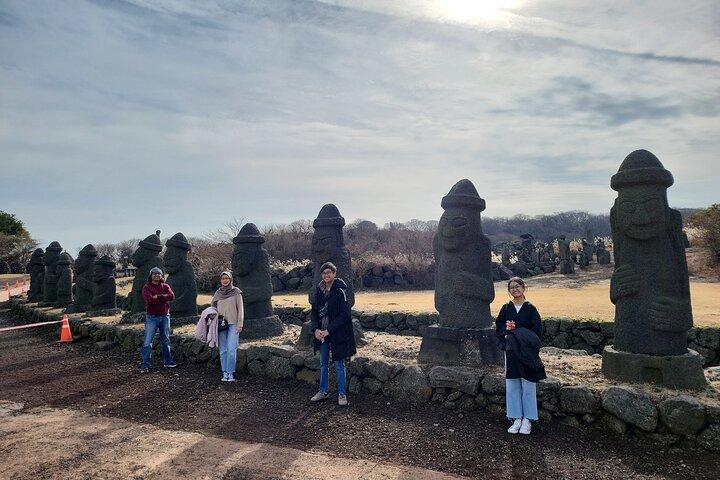
Dolhareubang is the guardian deity & symbol of Jeju. Wherever you go in Jeju, you can see Dolhareubang on both sides of the village entrance, and he is an old man who protects the village & its residents. Along with Jeju's traditional thatched houses, traditional toilets are no longer used and can be seen in many places to show off to tourists. Traditional toilets have small pig houses and stone bowls where pigs eat food. Jeju residents actually used them until 1980, and since pigs would approach while people were doing their business in the toilet, people would always prepare sticks to eat the pigs that approached them. In the past, traditional toilets were used as fertilizer for the fields along with grass & pig excrement, and were very necessary for farming in rural areas. However, they are no longer used anywhere. In addition, Jeju people stack stones to get rid of bad energy, and stack stones to protect the safety and peace of their families and pray for their happiness.
만장굴 상품 정보 Manjanggul lava tube information Manjanggul Cave is a natural cave formed approximately 100,000 to 300,000 years ago by lava flowing from Geomun Oreum, one of the small mountains in Jeju, along the surface. It is the core of the Geomun Oreum Lava Cave System, which was designated as a UNESCO World Natural Heritage Site in 2007. The general exploration section extends about 1 km inward from the Second Entrance. The main passage, measuring 18 meters in width and 23 meters in height, evokes a sense of openness that makes one forget it is an underground space. At the end of the section stands a 7.6-meter-tall lava column, the symbol of this cave. Formed by the lava flowing from the ceiling and solidified lava on the floor coming into contact to form a single column, it is the largest lava column known to date in the world. Manjanggul Lava Cave is approximately 7.4 km long and features a multi-layered structure in some parts.
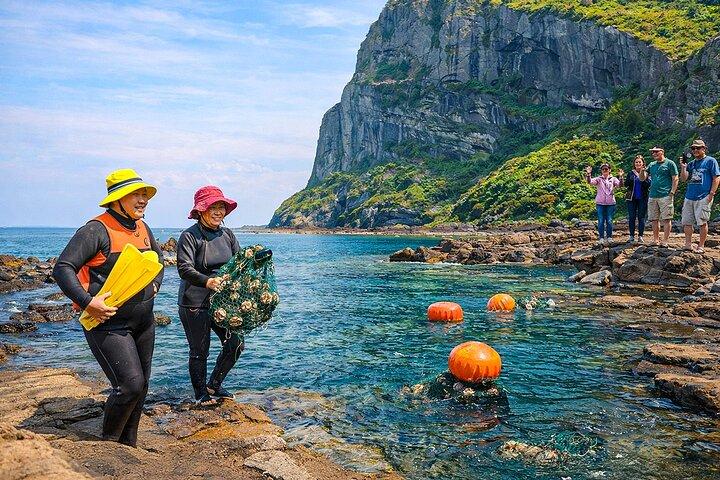
Seongsan Ilchulbong (Woman diver performance every day 2pm only ) Seongsan Ilchulbong was formed by a hydrovolcanic eruption. Seongsan Ilchulbong was formed by a hydrovolcanic eruption that occurred under the sea about 5,000 years ago. After that, Seongsan Ilchulbong underwent coastal erosion by waves and sea breezes, and in particular, the eastern coast, which is open to the open sea, was greatly eroded by stronger wave energy, forming a vertical coastal cliff. Seongsan Ilchulbong Peak is a World Natural Heritage Site and one of Jeju's top 10 scenic spots. The scenery is said to be the most beautiful in Jeju. It takes about an hour to go up & down. If climbing is difficult, you can also walk along the left shore. Its height is 182 m. Seongsan means a mountain that looks like a castle. 'Ilchulbong' means the peak where the sunrises. Next up is a female diver performance. In case of bad weather, the show is suddenly canceled. Haenyeo performances are held a day at 2:00pm.
It is time to go back to the accommodation after finishing the sightseeing taxi tour. We will drop you off at the location you started in the morning or around your accommodation.
Highlights
What's included
Pickup Locations & Times
Hotel and stay : parking area Our taxi car plate number check.please Jeju airport : we will hold your name of card
Important Information
- Infants and small children can ride in a pram or stroller
- Service animals allowed
- Public transportation options are available nearby
- Infants are required to sit on an adult’s lap
- Not recommended for travelers with spinal injuries
- Not recommended for pregnant travelers
- Not recommended for travelers with poor cardiovascular health
- Travelers should have at least a moderate level of physical fitness
- If you need a baby seat, please make a special request and we will provide it free of charge.
- At Jeju Stone Culture Park, you can walk around the park and see the lives of Jeju people through Jeju stones, guardian deities believed in by Jeju people, Jeju stone towers, traditional thatched houses of Jeju people, and traditional toilets. For those who have difficulty walking, you can ride an electric cart and see the scenery. You can feel and touch the beauty of natural stones created by volcanic activity on Jeju Island, and see the stones, soil, and culture of Jeju people. Sangumburi is a unique crater in the world. It is a circular crater that has sunk into the ground during a volcanic eruption. It is a must-see for those who have never seen it before. You can see the beautiful surroundings of Hallasan and the 360 small mountains around the crater. Seongsan Ilchulbong is a World Natural Heritage site. It takes about an hour to climb, and the large lava looks like a castle. It is located on the east side, so it is a famous sunrise spot at the peak. Haenyeo performances are held on the beach every day at 2 o'clock. The Haenyeo performance is a performance where the Haenyeo sing a song about going to work and also catch conches and octopuses underwater. Jeju was famous as an island where Mongolian Genghis Khan raised horses for 100 years in the past, and the land, grass, and surrounding mountains were controlled as horse ranches, preventing farming, which further developed the Jeju people's strong Haenyeo activities.
- Manjanggul Cave (Lava tube )is closed on the first Wednesday of every month.