Morning Heritage Walk - house of mg



Description
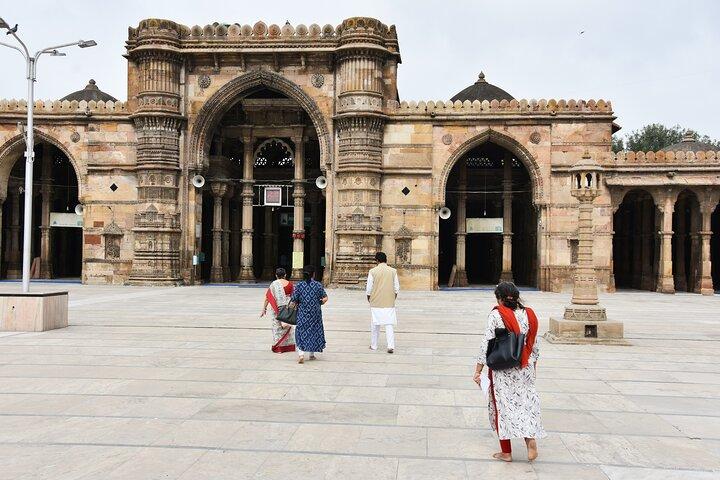
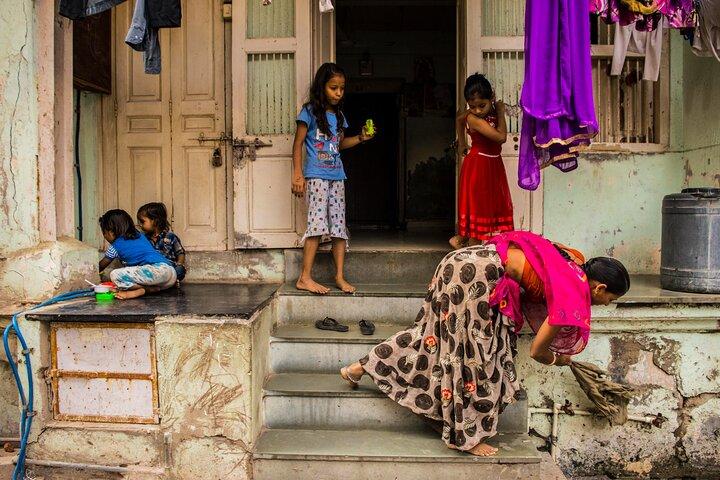
Ahmedabad – World Heritage City boasts of some of the finest Islamic monuments, Jain temples, vernacular wooden architecture, and a thriving ‘Walled City Culture’. One way to witness and experience this milieu of vibrant living culture is through a heritage walk. Heritage Walks will give you an unforgettable glimpse into six hundred years of history through old city highlights like Mangaldas ni Haveli, Jami Masjid, Bhadra Fort, Manek Chowk Vegetable Market, Chandla Ol, Sidi Saiyad Jali, Khetrapal Jain Shrine and the Teen Darwaja Market. Carrying a copy of Ahmedabad City Guide that we provide as a PDF that will make the walks more insightful and allow you to take the history home with you.
Tour Options
Itinerary
The Sidi Saiyed Mosque, commonly known as Sidi Saiyad Ni Jali is built in 1572-73 A.D. The mosque has beautiful stone latticework Jalis (windows) on the side and back arches. The back wall is packed with square stone cut panels in geometrical designs
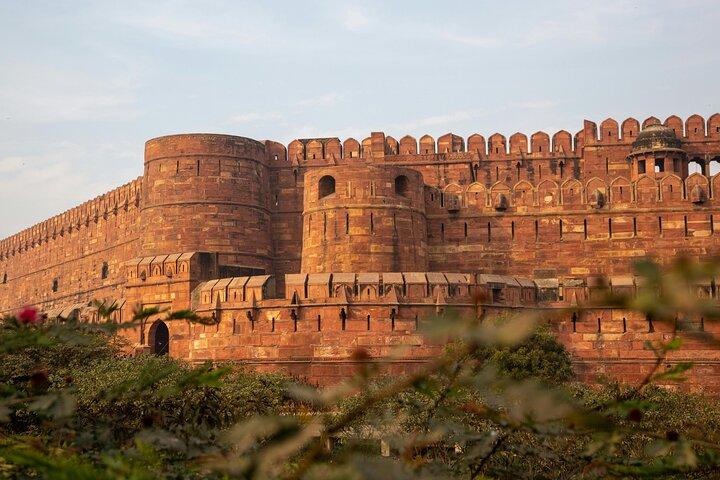
Fort constructed in the year 1411 A.D. during the rule of Marathas, was established by Sultan Ahmad Shah, the founder of the city. Fort was named after the presence of Bhadra Kali goddess temple built during the reign of the Marathas. The Bhadra Fort consists of the palace, the beautiful Nagina Baugh and the Ahmed Shah's Mosque on the west along with an wide open area known as Maidan-Shah on the east side.
The Jumma Masjid was erected by Ahmed Shah 1 (A.D. 1411- 1441). It has three side entrances doorway on eastern, northern and southern side. The pillars of the prayer hall entrance have beautifully carved motifs influenced by different cultures of the city. It has 260 pillars and 15 domes.
The famous Ahmed shah’s tomb also known as Raja No Haziro is situated in Manek Chowk area close to Jumma Masjid and opposite to Rani no Hajiro. The mosque consists of tomb of Ahmed Shah I, the founder of Ahmedabad city, while the grandson of Ahmed shah Qut-ud-Din Shah is buried to his right. The mosque was completed in 1414 by his son Muhammad shah.
The Manek Chowk is a city square area got it named after the saint Baba Manek Nath a 15th century saint who lived on the banks of Sabarmati River. The Manek Chowk area has three phases during a day. In morning used a cow feeding area, then for day it turns to silver market and at night it converts to food market. Also the square is famous for silver jewelers market.
Highlights
What's included
Traveller Ratings
Important Information
- Public transportation options are available nearby
- Infants are required to sit on an adult’s lap
- Not recommended for pregnant travelers
- Not recommended for travelers with poor cardiovascular health
- Travelers should have at least a moderate level of physical fitness
Reviews(4)
The guide was very courteous and very well informed. He had thorough knowledge of the city . He gave a lot of personal attention and is a wonderful human being. We had problem in the start as the booking was not confirmed inspite of payment. The operator had not received any confirmation/ intimation from Viator. Inspite of the confusion, the operator was able to sort out the situation and provide us with with a guide in 15 minutes. This testifies to the professional attitude of the operator and their helpful nature. Viator should look into this as we have had very nice experience with Viator globally, and would like to continue with Viator as our preferred tour manager.
No one reached out in advance to confirm . No one showed up . No one answers our texts . We should have taken the Ahmedabad Municipal Tour
This walk is well-planned and led by a knowledgeable, affable person. He is an experienced guide and also perceptive of needs and interests, able to adapt to the group's need. The route itself can be challenging if you are not used to walking and it's charm and challenge is of sightseeing in the midst of everyday life--schoolgoers, bikes, vegetable carts and later, traffic. Wear good footwear and do sign up for a great intro to AMD!