Kamakura 4hr Private Trip with Government-Licensed Guide




Description
Just south of Tokyo, lays the beautiful and historical Kamakura. Kamakura’s temples and shrines are home to gardens that are beautiful in any season. You can view the ocean from the highest point of Hasedera temple and write your wish on an oyster shell. The over 11 meters tall Great Buddha is an icon of the area residing in Kotokuin Temple. Stop by the old Komachi shopping street and try some Hatosabure, dove shaped biscuits. Each tour is customizable and private. Once you place a reservation, your personal guide will be in touch with you to tailor your trip to you. You can view 2 to 3 sights on this trip. If you wish to extend your time to see more, please contact us directly for extensions. Transportation time is included in the 4 hours. We hope to guide you soon!
Tour Options
Itinerary
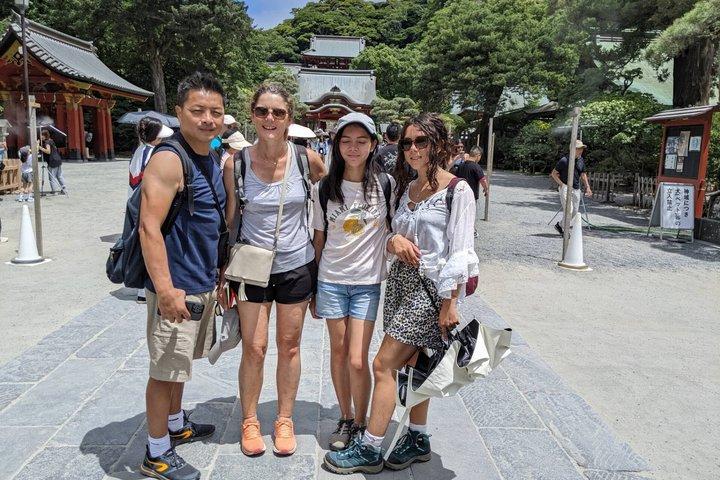
The shrine is dedicated to Hachiman, the patron god of the Minamoto family and of the samurai in general. The deified spirits of the ancient Emperor Ojin who has been identified with Hachiman, Hime-gami and Empress Jingu are enshrined at Tsurugaoka Hachimangu Shrine.
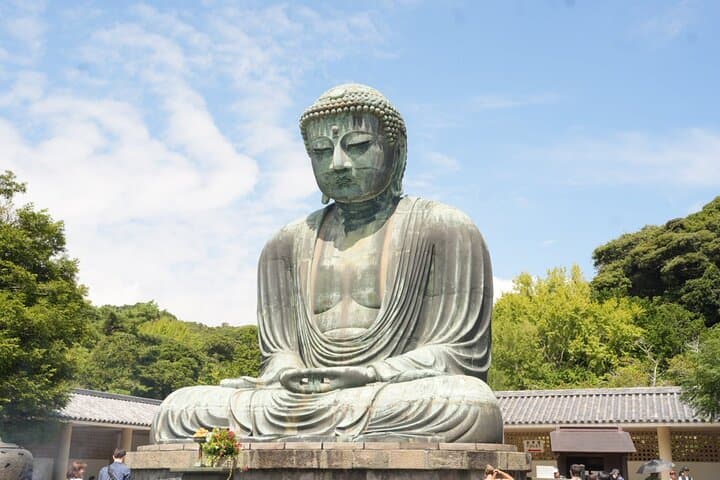
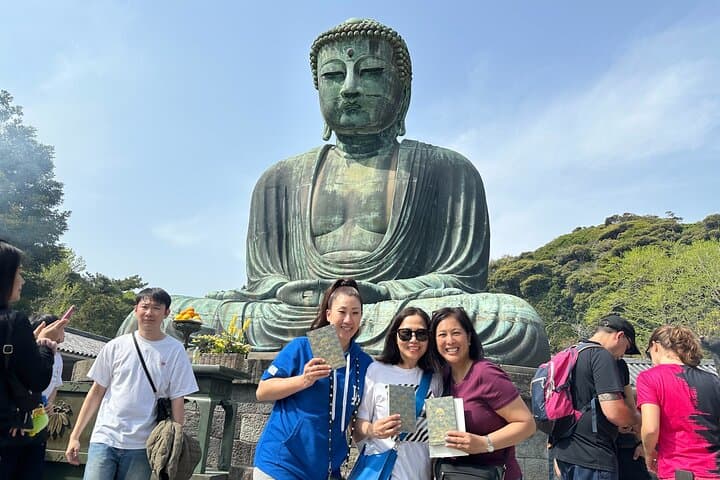
The Great Buddha of Kamakura (鎌倉大仏, Kamakura Daibutsu) is a bronze statue of Amida Buddha, which stands on the grounds of Kotokuin Temple. With a height of 11.4 meters, it has long been the second tallest bronze Buddha statue in Japan, surpassed only by the statue in Nara's Todaiji Temple and some recent creations.
Hasedera (長谷寺) is a temple of the Jodo sect, famous for its eleven-headed statue of Kannon, the goddess of mercy. The 9.18 meter tall, gilded wooden statue is regarded as one of the largest wooden sculpture in Japan and can be viewed in the temple's main building, the Kannon-do Hall
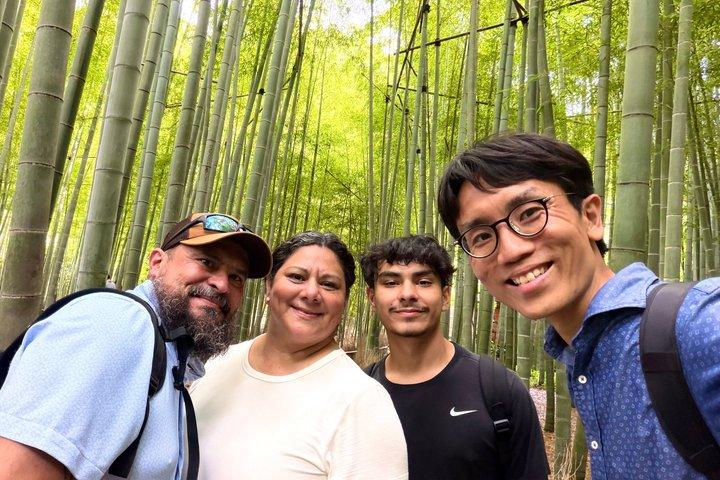
Hokokuji Temple is best known for the beautiful, small bamboo grove found behind the temple's main hall, which lies thick with over 2000 dark green bamboo stalks. A few narrow pathways lead through the bamboo to a tea house where, for a small fee, you can sit and enjoy a cup of matcha tea while enjoying views into the bamboo grove. Also located behind the temple are a series of shallow caves carved into the hillsides, which are believed to hold the ashes of some of the later Ashikaga lords.
Kamakura is surrounded by the ocean in the south and by wooded hills in all other directions. Attractive hiking trails lead through the woods along these hills and connect various atmospheric temples. They are a great way to travel between some of Kamakura's sights. Many of the trails do not take long to complete - typically between 30 to 90 minutes - and allow visitors to enjoy a mix of nature and cultural sights.
Only a short train ride west of Kamakura, Enoshima (江の島) is a pleasantly touristy island just off the coast but connected by bridge with the mainland. The island offers a variety of attractions, including a shrine, park, observation tower and caves. Views of Mount Fuji can be enjoyed on days with good visibility. Enoshima is divided into a yacht harbor accessible to motorized traffic and a forested hill which can only be explored on foot (and paid escalators) and contains most of the sights. Several shrine buildings, collectively known as Enoshima Shrine, are found around the island and are dedicated to Benten, a popular goddess of good fortune, wealth, music and knowledge. Benten is believed to have created Enoshima before subduing a five headed dragon that had been terrorizing the area.
ngakuji (円覚寺) is one of the leading Zen temples in Eastern Japan and the number two of Kamakura's five great Zen temples. Engakuji was founded by the ruling regent Hojo Tokimune in the year 1282, one year after the second invasion attempt by the Mongols had been reverted. One purpose of the new temple was to pay respect to the fallen Japanese and Mongolian soldiers. Engakuji is built into the slopes of Kita-Kamakura's forested hills. The first main structure encountered upon entering the temple grounds is the Sanmon main gate, which dates from 1783. Behind it stands the temple's main hall, the Butsuden, which displays a wooden statue of the Shaka Buddha. The Butsuden was rebuilt relatively recently in 1964 after the former building was lost in an earthquake.
Kenchoji (建長寺, Kenchōji) is the number one of Kamakura's five great Zen temples. The oldest Zen temple in Kamakura, Kenchoji was founded by the ruling regent Hojo Tokiyori in 1253 during the Kencho Era after which it was named. Its first head priest was Rankei Doryu, a Zen priest from China. Although considerably smaller than during its heydays, Kenchoji still consists of a large number of temple buildings and subtemples, and stretches from the entrance gate at the bottom of the valley far into the forested hills behind. After passing through the Sanmon main gate, visitors will see Kenchoji's temple bell (Bonsho), designated a national treasure, on their right.
Zeniarai Benten Shrine (銭洗弁天) is a popular shrine in western Kamakura, which people visit to wash their money (zeniarai means "coin washing"). It is said that money washed in the shrine's spring, will double. Minamoto Yoritomo, the founder of the Kamakura government, ordered the shrine's construction after a god appeared in his dream and recommended him to build the shrine in order to bring peace to the country. Because the dream occurred on the day of the snake, in the month of the snake of the year of the snake, the shrine was later also dedicated to Benten, a Buddhist goddess associated with snakes.
Meigetsuin Temple (明月院) is a temple of the Rinzai Zen Sect founded in 1160 in Kamakura. It is also known as Ajisaidera ("Hydrangea Temple") because hydrangea bloom in abundance on the temple grounds during the rainy season around June. 95% of the hydrangea here are of the Hime Ajisai ("Princess Hydrangea") variety; they are thus named because of their pretty blue colors. The temple was originally a repose built by a son in memory of his father who had died in the struggle for power between the Taira and Minamoto clans in the late Heian Period. It later became part of a larger temple complex called Zenkoji, which was abolished during anti-Buddhist movements soon after the Meiji Restoration, leaving only Meigetsuin to remain as an individual temple today.
Ankokuronji (安国論寺) is one of several temples of the Nichiren sect of Japanese Buddhism along the hills in the southeast of Kamakura. Nichiren himself founded Ankokuronji around 1253 when he first came to Kamakura, and he is said to have lived at the temple for several years. Visitors can walk along a short hiking trail through the wooded hills around the temple buildings. A nice view of the city of Kamakura can be enjoyed underway. Some of the trail's passages are quite steep and should only be explored with good walking shoes and during dry weather.
Jomyoji Temple (浄妙寺, Jōmyōji) is a Zen temple in the hills of eastern Kamakura. Ranked fifth among the five great Zen temples of Kamakura, Jomyoji was founded by the influential Ashikaga family and at its peak was made up of seven buildings and several pagodas. Over the centuries, however, many of the structures were destroyed by fire, and only its historic main hall, reception hall, main gate and warehouse remain today. The main hall sits at the end of a garden and houses a statue of Shaka Nyorai, the historical Buddha. Jomyoji Temple also has a restored teahouse where visitors can sit and enjoy a cup of tea for a small fee while enjoying the view of a nice dry garden. On the hillside behind the main hall is the temple's spacious cemetery, while a path leads up the hill to a small western-style restaurant. The restaurant is operated by the temple and offers good views out over Kamakura from its patio.
Zuisenji (瑞泉寺) is a beautiful Zen temple in the far east of Kamakura, in the back of a narrow valley and surrounded by wooded hills. It is a branch temple of the Engakuji Temple. Zuisenji was founded by Muso Kokushi, a leading Zen master of his time and one of Japan's most famous garden designers. The temple is known for its pure Zen rock garden behind the temple's main hall, designed by Muso himself. The temple furthermore attracts with its many flowers and blooming trees in the other parts of the temple grounds, including a large number of plum trees.
Myohonji (妙本寺, Myōhonji) is one of several temples of the Nichiren sect of Japanese Buddhism along the southeastern hills of Kamakura. The temple was founded by Hiki Yoshimoto in 1260, and features a statue of Nichiren to the left of the main hall. The temple is connected via the Gionyama hiking trail with some other nearby temples and a shrine. It leads through the wooded hills of Kamakura, and should be explored only with good walking shoes and during dry weather, because there are a few steep and rough passages.
Jochiji (浄智寺, Jōchiji) is the number four of Kamakura's five great Zen temples. It is a branch temple of the Engakuji school of the Rinzai sect of Zen Buddhism. Its head temple, the Engakuji Temple, stands just a few hundred meters away on the opposite side of the railway tracks. Jochiji was founded in 1283 by members of the ruling Hojo family on the occasion of the premature death of a son. Once a large temple complex with many buildings and subtemples, Jochiji is now small and calm. In its main hall, the Dongeden, the temple's main object of worship, a Buddhist trinity of the Amida Buddha, Shaka Buddha and Miroku Buddha, is displayed.
Tokeiji (東慶寺, Tōkeiji) is a small branch temple of the Engakuji school within the Rinzai sect of Zen Buddhism. Its head temple, the Engakuji Temple, stands just a few hundred meters away on the opposite side of the railway tracks. Tokeiji was founded by the wife of the regent Hojo Tokimune in 1285 after Tokimune had died at a young age. Until the end of the Edo Period, the temple served as a shelter for women who suffered abuse by their husbands and sought a divorce. An official divorce could be attained by staying at the temple for three years.
Jufukuji Temple (寿福寺) is the number three of Kamakura's five great Zen temples. It is a branch temple of the Rinzai sect's Kenchoji school. Jufukuji was established by the order of Minamoto Yoritomo's wife Masako after her husband had passed away. Its founding priest was none other than Eisai, the man responsible for introducing Zen Buddhism into Japan. Besides the often photographed pathway that leads towards the temple, Jufukuji is not open to the public.
Eisho-ji Temple (英勝寺) is the only surviving nunnery in Kamakura, located near Tsurugaoka Hachimangu. Founded in the early Edo period by a woman connected to the Tokugawa family, it’s known as a “flower temple” for its seasonal blooms. Visitors can enjoy a peaceful bamboo grove and a graceful Amida Buddha statue said to be by the famous sculptor Unkei. The quiet atmosphere makes it a hidden gem worth visiting.
Highlights
What's included
Pickup Locations & Times
**Yokohama Pick-up is not available. Please book 6hr tour if you would like to start a tour from Yokohoma.** This private tour is a walking day tour. A private vehicle is not included. Public transportation or local taxis maybe used to transfer between sites. Exact transportation costs can be discussed with the guide after a reservation is finalized. Please have Japanese Yen on hand for your transportation costs. If you wish to arrange for a private vehicle, please contact us directly. All Private vehicles must be booked 5 days in advance. Maximum number of passengers: 7.
Traveller Ratings
Important Information
- Service animals allowed
- Public transportation options are available nearby
- Infants and small children can ride in a pram or stroller
- All areas and surfaces are wheelchair accessible
- Transportation options are wheelchair accessible
- Wheelchair accessible
- Suitable for all physical fitness levels
- This is a walking tour. Pick up is on foot.
Reviews(61)
We had a great tour experience with Yasuho during our visit to Kamakura. He was very knowledgeable, attentive and enthusiastic about sharing his own experiences. In addition he provided reading material about Japan and offered recommendations of other places to visit as we told him of our intentions to return to the country. Thank you Yasuho for making our tour a pleasurable one.
Seizo planned our itinerary ahead of time for our tour according to our preferences. His guidance and insights into the various places was helpful and enjoyable. The customs and rituals observed at Kamakura’s shrines and temples were well explained. He helped us find an excellent authentic restaurant and navigate public transportation.
Thank you very much for your very valuable and favorable comments on my guiding. It was a great honor for me to have the opportunity to guide you in Kamakura. I myself enjoyed visiting several sightseeing spots in Kamakura with you including the visit to a nice Japanese soba noodle restaurant. I wish you two the very best for the future. Best Regards Seizo Kamiuto
We had signed up for the Kamakura 4 hours private walking tour with government licensed guide. Added 1 extra hour for tour guide Ms Takako to meet us at our Yokohama hotel so that she can help us take the train from Nippon-Odori Station to Kamakura Station. This was a good decision!! We enjoyed the entire Kamakura tour and Ms Takako is an excellent guide. Highly recommended!!
Thank you for your kind comments on the review. I’m pleased you liked the attractive town, Kamakura. You are so cheerful and funny people that I had an exciting time with you. I especially learned how to pose in front of the camera from you. You even invited me to join your trip. See you again somewhere in the world! Takako
We enjoyed the tour and Seizo was very patient with us. He took to very important kamakura places , like shrines l, temples, a very very delicious sushi omakase style restaurant! And recommended other restaurants for after we finished the tour!
Thank you very much for your very valuable and favorable comments on my guiding. It was a great honor for me to have the opportunity to guide you in Kamakura. I myself enjoyed visiting several sightseeing spots in Kamakura with you including the visit to a delicious sushi restaurant. I wish you and your family the very best for the future. Best Regards Seizo Kamiuto
Great to visit Kamakura's Tsurugaoka Hachimangu Shrine and Hasedera Temple. Masa-san pointed out the main shopping street - Komachi-dori and showed us how to use the local train system. Later, we attended the New Year's eve Candle Ceremony at Hasedera Temple - magical!
I thank you very much for your kind review. I have really enjoyed the conversation and jokes with you in the tour nad had a wonderful time. I learned you have more than enough and accurate knowledge about Japan’s history, culture, social problems, and how it is going. Anyhow, I feel relieved that you had enjoyed the stay in Tokyo. If possible, I would take you to explore the other regions when you come back to Japan again and let’s have a great time. sincerely, Masa
The guide, Shinji, was very flexible and accommodating. We appreciate his patience and understanding for our very last-minute booking.
Thank you so much for your kind review. The tour day was blessed with fine weather, and the temperature was perfect for walking around Kamakura. However, since the tour started in the afternoon, we ended up walking along a dark road to the restaurant in a chilly wind. I hope you enjoyed your dinner and Kamakura. Thank you again. Shinji
Helpful to have a friendly local guide, we appreciated his schedule and destination flexibility and knowledge of how to get around the city. We would have benefited from a guide with slightly stronger English skills who would have had the confidence to tell us more about the sites we were visiting and our options for our time together. Ultimately our guide was a positive, jovial local that helped us get more out of our time in Kamakura.
Thank you very much for joining our Kamakura tour and for taking the time to share your feedback. We are glad to hear that you enjoyed spending time with your guide. We also appreciate your comment regarding English communication and will use it to further improve our service for future guests. We hope to have the pleasure of welcoming you again on your next trip to Japan! Japan Guide Agency
My wife and I signed up for a 4 hour tour of Hasadera Temple, The Daibutsu (Great Buddha) and Tsurugaoka Hachiman Shrine with our tour guide Sam. He met us the Kamakura station and gave us a short background on Kamakura, what we'd see and a general time line. I had mentioned that I was really interested in the history of Kamakura and how it tied into the greater arc of Japanese history, as Kamakura was Japans capital from 1185 to 1333.I've just started reading the "Heike Monogatari" which tells of the period just before Kamakura became capital, and he really helped me understand how important that event was for shaping Japans culture till now. He listened well to all our questions - we must have had a thousand questions,seriously, and instead of a tour, it felt more like a we were having a conversation about Kamakura, history and the local sights. Overall a really great experience and if anyone wanted to learn more than just the touristy blurbs about Kamakura, then definitely sign up for this tour. It WILL help you understand Japans history and culture much more, and appreciate Japans culture more as you travel the country.
Thank you for your beautiful review! Before the tour, I reviewed the history of Kamakura Bakufu (Government). As I said, I am a big fan of “Heike Monogatari”, too. I am happy you enjoyed walking around traditional temples and shrines, while learning about our country’s history. Sam
An was very knowledgeable and helpful with bringing me around all the most beautiful temples and shrines. Kamakura is such a gem and lovely place to spend some quality time. I also needed help with trains and restaurants recommendations and An helped me so much. She’s a great guide.
Thank you so much for your kind review! I’m delighted to hear that you enjoyed the tour. It was truly an honor to have you as my guest, and I hope the experience added something special to your time in Japan. Thank you again, and I wish you a wonderful rest of your stay here! An
We had such a wonderful time with Yoshi! He was very knowledge, kind, and considerate. I would highly recommend him.
How are you doing today ? I hope both of you are well. I think that you are enjoying your stay in Kyoto. Thanks for your message to Viator review about the tour in Kamakura. I'm very happy to hear that. I hope you have a lot of memories in Kyoto and Hakone and I look forward to seeing both of you again in Tokyo. Please make sure you stay hydrated. It is 1 of the most important issues in Kyoto. Thanks for your cooperation. Sincerely yours, Yoshihiro "Yoshi" Shimizu