Full Day Old & New Delhi Tour with tickets & Tuk-Tuk
Description
We’ll pick you up from your hotel or airport and start the day exploring Delhi. First stop—Old Delhi. It’s busy, a bit chaotic, but full of life. You’ll have famous Tuk-Tuk ride through Chandni Chowk, step into Jama Masjid, and pass the Red Fort. The spice market? Unreal—smells hit you the moment you enter. In this tour, you'll gonna enjoy the Blend of ancient and modern history. Then we slow things down at Bangla Sahib, peaceful and moving. After that, it’s New Delhi. Qutub Minar, Humayun’s Tomb, Lotus Temple—they’re all different, all worth it. We’ll drive past India Gate and the government buildings too. No rush. No group. Just you, your guide, and a day that feels real.
Tour Options
Itinerary
Located in Old Delhi, the Jama Masjid is India's largest and most renowned mosque, built by Mughal Emperor Shah Jahan between 1644 and 1656. This iconic red sandstone and white marble structure, originally known as Masjid-i-Jehan-Numa ("mosque reflecting the world"), features a massive courtyard accommodating over 25,000 worshippers, two 40-meter minarets, and three domes.
Chandni Chowk, located in the heart of Old Delhi, is one of India's oldest, busiest, and most iconic markets, renowned for its chaotic charm, wholesale shopping, and vibrant street food culture. Established in the 17th century, it offers specialized lanes for spices (Khari Baoli), silver jewelry (Dariba Kalan), textiles (Kinari Bazaar), and traditional sweets.
It served as the main residence of the Mughal emperors. Commissioned by Emperor Shah Jahan on the 12th of May 1639, the fort was constructed following his decision to shift the Mughal capital from Agra to Delhi. Originally adorned in red and white, the fort's design is attributed to Ustad Ahmad Lahori, the architect of the Taj Mahal. The Red Fort is a prominent example of Mughal architecture from Shah Jahan's reign, combining Persian and Indian architectural styles.
Agrasen ki Baoli is one of the ancient sites popular among college students for hangouts and photographers to try their hand at architectural photography. According to Archeological Survey of India (ASI), it is designated as an important and protective monument.
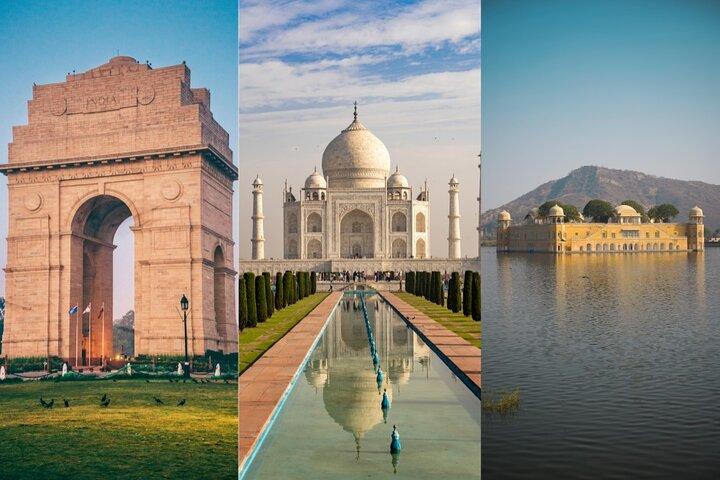
In the heart of New Delhi stands a monument that captures the spirit of a nation and the sacrifices of its heroes. India Gate, an awe-inspiring 42-meter-high archway of sandstone, rises majestically against the backdrop of Rashtrapati Bhawan, inviting you to step into a realm where past and present intertwine. Designed by Sir Edwin Lutyens, this iconic landmark is more than just a stunning feat of architecture—it's a poignant memorial to the 70,000 Indian soldiers who laid down their lives during World War I and the Third Anglo-Afghan War. As you approach the gate, you're walking in the footsteps of history, tracing a path that began in 1921 when the Duke of Connaught laid its foundation stone.
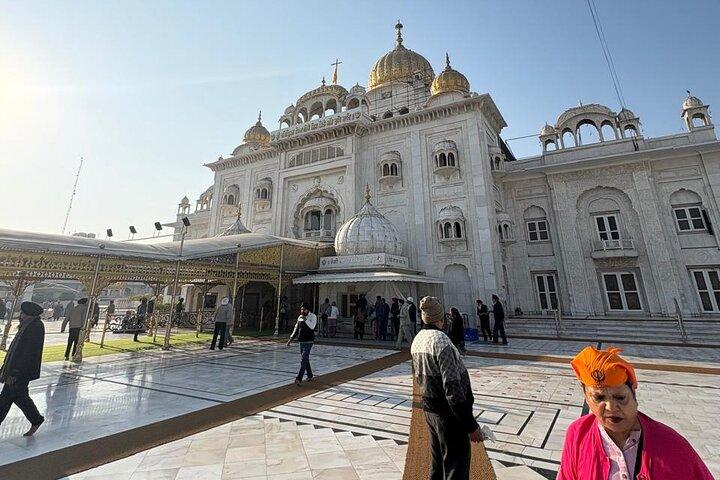
Gurudwara Bangla Sahib is a prominent 18th-century Sikh shrine in New Delhi, India, known for its stunning golden dome, tall flagpole (Nishan Sahib), and association with the eighth Sikh Guru, Guru Har Krishan. Located near Connaught Place, it is open 24/7, features a holy pond (Sarovar), a community kitchen (langar), and is a center for peace, healing, and sewa (service).
The Laxminarayan Mandir is a Hindu temple located in New Delhi, India. The presiding deity in the temple is Laxminarayan i.e., Vishnu along with his consort Lakshmi. The temple was inaugurated by Mahatma Gandhi. Gandhi ensured that members of all castes would be allowed in the temple. It was built by Jugal Kishore Birla from 1933 and 1939. There are also small shrines on the sides dedicated to Shiva, Ganesha, Hanuman and Buddha.
The Parliament of India (ISO: Bhāratīya Saṁsada) is the supreme legislative body of the Government of the Republic of India. It is a bicameral legislature composed of the Rajya Sabha (Council of States) and the Lok Sabha (House of the People). The President of the Republic of India, in their role as head of the legislature, has full powers to summon and prorogue either house of Parliament or to dissolve the Lok Sabha, but they can exercise these powers only upon the advice of the Prime Minister of the Republic of India and the Union Council of Ministers.
The Rashtrapati Bhavan formerly Viceroy's House (1931–1947) and Government House (1947–1950) is the official residence of the president of India, located at the western end of Rajpath, Raisina Hill in New Delhi. The building was designed by Edwin Lutyens and Herbert Baker in Delhi Order based on Indo-Saracenic architecture. The construction began in 1912 and the building was completed in 1929. The building was called known as Viceroy's House after the Viceroy of India occupied the building in 1931. After Indian independence, it briefly served as the Government House, which housed the Governor General of India from 1947 to 1950. When India became a republic, it became the residence of the president of India, and was rechristened as Rashtrapati Bhavan.
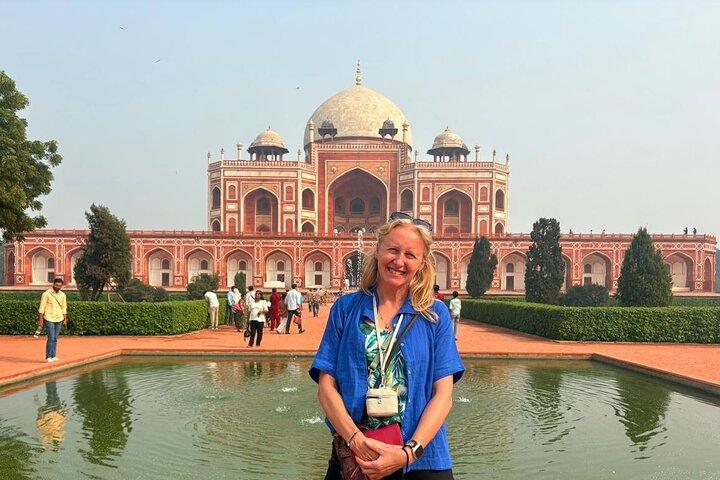
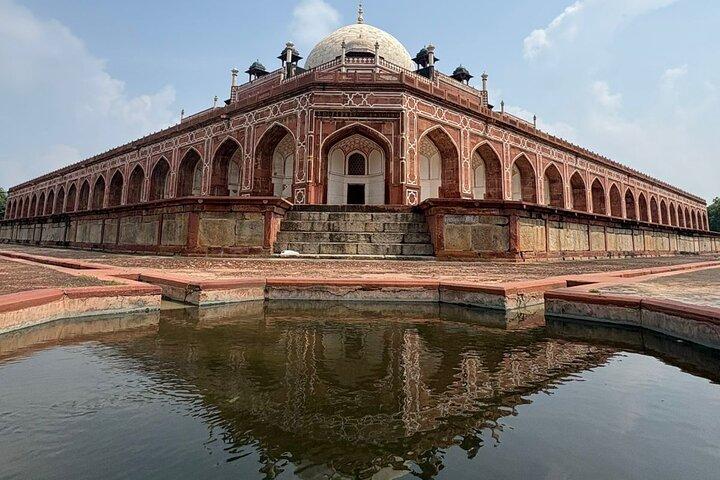
Humayun’s Tomb, Delhi is the first of the grand dynastic mausoleums that were to become synonyms of Mughal architecture with the architectural style reaching its zenith 80 years later at the later Taj Mahal. Humayun’s Tomb stands within a complex of 27.04 ha. that includes other contemporary, 16th century Mughal garden-tombs such as Nila Gumbad, Isa Khan, Bu Halima, Afsarwala, Barber’s Tomb and the complex where the craftsmen employed for the Building of Humayun’s Tomb stayed, the Arab Serai.
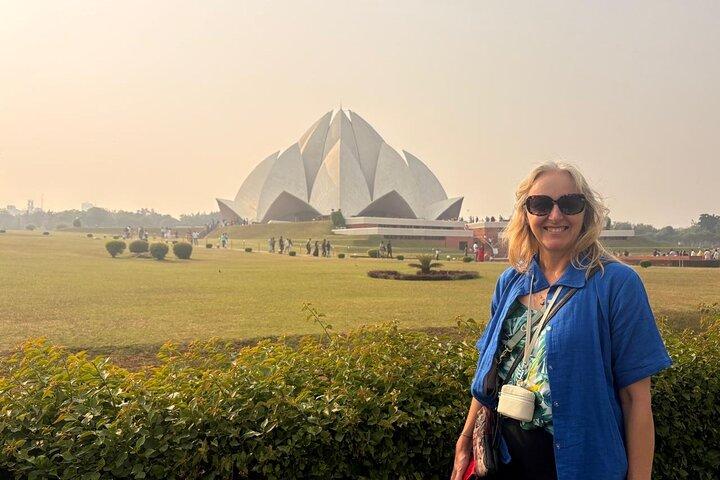
The Lotus Temple, located in Delhi, India, is a Bahá’í House of Worship that was dedicated in December 1986, costing $10 million. Notable for its flowerlike shape, it has become a prominent attraction in the city. Like all Bahá’í Houses of Worship, the Lotus Temple is open to all, regardless of religion or any other qualification. The building is composed of 27 free-standing marble-clad “petals” arranged in clusters of three to form nine sides, with nine doors opening onto a central hall with a height of slightly over 40 metres and a capacity of 2,500 people. The Lotus Temple has won numerous architectural awards and has been featured in many newspaper and magazine articles. A 2001 CNN report referred to it as the most visited building in the world.
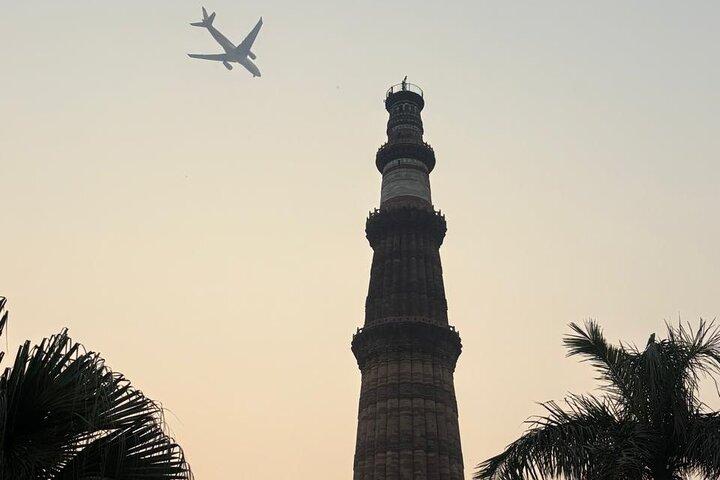
The Qutub Minar, located in Delhi, India, is the world's tallest brick minaret, standing at 72.5 meters as a UNESCO World Heritage Site. Built starting in 1192 by Qutb-ud-din Aibak and completed by his successors, this red sandstone tower features five distinct stories, intricate carvings, and 379 steps. It represents a significant example of early Indo-Islamic architecture.
Highlights
What's included
Pickup Locations & Times
We will pick you up at your given location. The driver will be waiting for you with a placard with the lead travelers name.
Traveller Ratings
Important Information
- Wheelchair accessible
- Infants and small children can ride in a pram or stroller
- Specialized infant seats are available
- Not recommended for travelers with spinal injuries
- Not recommended for travelers with poor cardiovascular health
- Suitable for all physical fitness levels
Reviews(23)
Our tour with the guide in New Delhi was truly excellent. He took a lot of time to explain everything in detail and clearly, so that we could understand the history and culture of the individual sights much better. We visited numerous impressive monuments and received interesting background information on each one. The guide was very friendly, professional, and organized the tour with a lot of dedication. You could tell that he enjoys his work. Thanks to him, the excursion was not only informative but also very pleasant and varied. I can recommend him with full conviction and with all my heart. Anyone who wants to discover New Delhi is in the best hands with him.
Both the driver and the guide were super kind and attentive to everyone's needs. The tour was excellent; we discovered places we would never have known without them.
Great experience! Reliable, Professional and Fun tour!
Guides and drivers are very professional
Wonderful experiance. I discovered Delhi and was amazing. I really suggest it!
Had an amazing day tour and everything was simplified and organised which was such a treat! Loved seeing both old and New Delhi and would definitely recommend.
It was such a great and informative tour! I had so much fun and the pictures taken were amazing. I will definitely come back for more tours
I had a great day seeing New and Old Delhi today. The guide explained the history of every stop. Any fees required were also made aware of ahead of time. The overall tour was great and I would book again.
We booked a full day delhi tour and everything was really nice, The driver and our guide were very polite and also he did everything according to us. Totally recommend
Really enjoyed my tour of Delhi, being on a tight schedule the guide ensured I saw all I wanted to, including some bonus stops. Knowledge was excellent and I came away knowing a lot more about Delhi and the sights I visited.
Thank you for your wonderful feedback! We’re thrilled to know you had a fantastic experience with us. Your kind words inspire our team to continue delivering memorable adventures. Ensuring every detail is seamless and enjoyable is our top priority. We’re delighted to have met your expectations and look forward to welcoming you on your next journey with US!!!!. Have a Safe Journey Ahead !!!!!