Copenhagen Walking Tour with Audioguide on Your Smartphone


Description
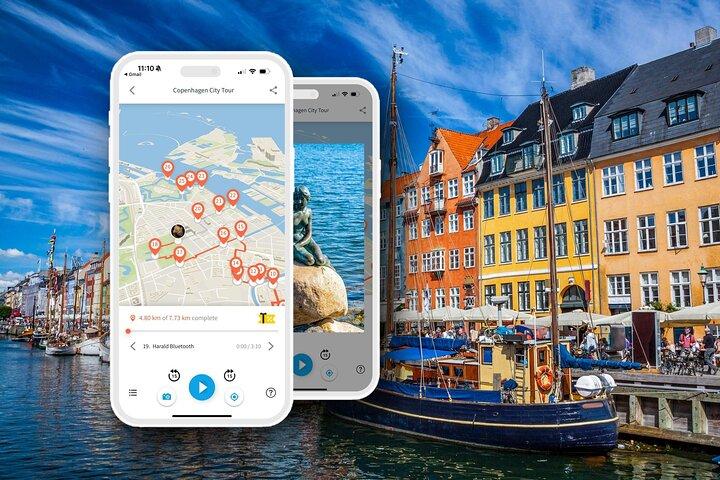
The TouringBee audio guide serves as a handy mobile companion for a self-guided tour in Copenhagen. This tour is specifically designed for those looking to explore the city in a short span of time (2-3 hours). Simply follow the route on the app's map, which takes you from City Hall Square to the Little Mermaid statue, passing through the city center's attractions. You're guaranteed to see: Christiansborg Palace, Amalienborg Palaces, Rosenborg Castle, Opera House, Copenhagen Canal and Nyhavn waterfront, Frederick's Church, Kastellet Bastion, Various museums and celebrity residences. Once you've downloaded the tour, the app runs offline. The audio guide can always be heard clearly through your headphones. Enjoy captivating stories and legends at your own pace, without the need to keep up with a tour group. If you only have a few hours to explore Copenhagen, make the most of it with the TouringBee audio guide, and you won't miss a thing.
Tour Options
Itinerary
City Hall Square (Rådhuspladsen) is Copenhagen’s civic stage — broad, busy, and always in motion. Flanked by the grand City Hall with its soaring clock tower, the square is both a meeting point and a backdrop for parades, protests, and spontaneous celebrations. It’s where Strøget, the main pedestrian street, begins, and where Hans Christian Andersen’s statue gazes out toward Tivoli. Come for the architecture, stay for the people-watching — it’s Copenhagen’s front porch, wide open to the world.
Tivoli Gardens, opened in 1843, is one of the world's oldest amusement parks — and still its most enchanting. Right in the heart of Copenhagen, it blends fairytale charm with vintage roller coasters, glowing lanterns, and live performances. Hans Christian Andersen was a regular; Walt Disney took notes here. At night, it becomes pure magic: gardens lit by thousands of bulbs, music drifting through the air, and fireworks bursting over the lake. It’s not just a theme park — it’s a spell that never quite wears off.
The Ny Carlsberg Glyptotek is Copenhagen’s temple of art and quiet grandeur — founded by brewing magnate Carl Jacobsen in 1888. Inside, under a lush palm-filled winter garden, you’ll find Degas dancers, Rodin sculptures, ancient Roman busts, and a remarkable collection of Egyptian antiquities. The building itself is a masterpiece: marble, mosaic, and light flooding in through glass domes. It’s a museum made not just to display art, but to let it breathe — and take Yours with it.
Dante Square (Dantes Plads) is a small, elegant pause in central Copenhagen — more a refined nod to culture than a bustling hub. Named after the Italian poet Dante Alighieri, it sits just outside the Ny Carlsberg Glyptotek, framed by trees, benches, and quiet grandeur. At its heart stands a bronze bust of Dante, gifted by the Italian community in 1924. It’s a place for reflection rather than spectacle, where literature, sculpture, and city life blend in a whisper, not a shout.
The Crystal (Krystallen) is a striking glass-and-steel structure in Copenhagen’s cityscape — home to the Nykredit Bank and a bold statement in sustainable architecture. Designed by Schmidt Hammer Lassen, it appears to hover above the plaza on just a few supports, like a shard of ice caught mid-melt. Completed in 2011, it’s powered partly by solar panels and reflects the sky, the city, and even its critics with crystalline clarity. More sculpture than skyscraper, it shows that in Copenhagen, even finance dares to dream.
BLOX is Copenhagen’s bold experiment in stacking life, work, and culture into one architectural puzzle-box on the waterfront. Designed by OMA and completed in 2018, its green-tinted glass cubes house the Danish Architecture Center, offices, design shops, a gym, apartments, and a café with views over the harbor. It’s part bridge, part building, part provocation — stirring debate as much as admiration. BLOX doesn’t blend in; it challenges the city to evolve, block by shimmering block.
The National Museum of Denmark is a treasure trove of the nation’s soul — housed in a former royal mansion just off Copenhagen’s center. Step inside and history unfolds: Viking swords, Bronze Age sun chariots, medieval relics, Arctic sleds, Renaissance rooms, and toys from every era. It’s not just about Danes, but about humanity—how we lived, believed, fought, and dreamed. Thoughtfully curated and deeply immersive, the museum turns dusty timelines into vivid stories. History here doesn’t just sit behind glass — it speaks.
Højbro Square sits at the crossroads of old and new Copenhagen, where cobblestones meet cyclists and spires pierce the sky. Overlooked by Christiansborg Palace and edged by cafés and historic facades, it’s a place to pause and breathe the city in. At its center, Absalon’s equestrian statue rises — paying tribute to the warrior-bishop who founded Copenhagen in the 12th century. The square hums with quiet energy: part gathering spot, part open-air gallery, where history and everyday life rub shoulders.
The Stork Fountain (Storkespringvandet), set in the heart of Amagertorv, is one of Copenhagen’s most beloved meeting spots. Gifted in 1894 to celebrate royal marriage, it features three elegant storks poised mid-flight, encircled by playful bronze babies below. Over the years, it’s become a site for tradition — midwifery students famously dance here after graduation. Surrounded by cafés and flowing foot traffic, the fountain is a graceful pause in the pulse of the city.
Strøget is Copenhagen’s central artery — a lively, pedestrian-only stretch that winds from City Hall Square to Kongens Nytorv. One of Europe’s longest shopping streets, it blends flagship stores and indie boutiques, street performers and hidden courtyards. You’ll pass historic churches, Art Nouveau facades, and cafés where locals linger over coffee. It’s more than a shopping street — it’s a slow-moving theatre of urban life, where commerce and culture walk hand in hand.
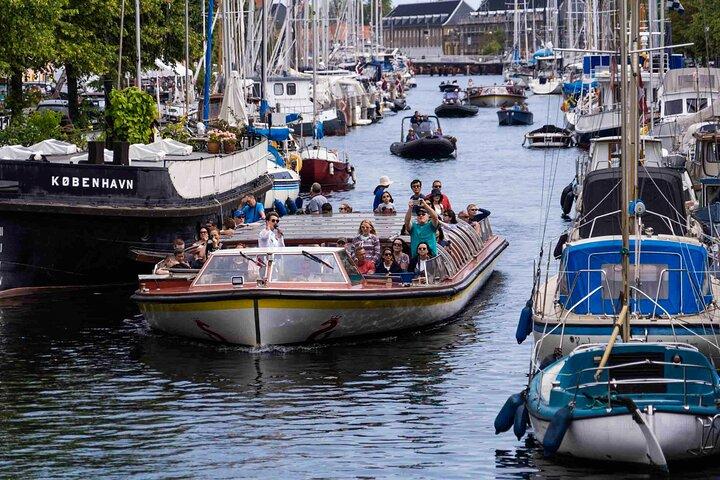
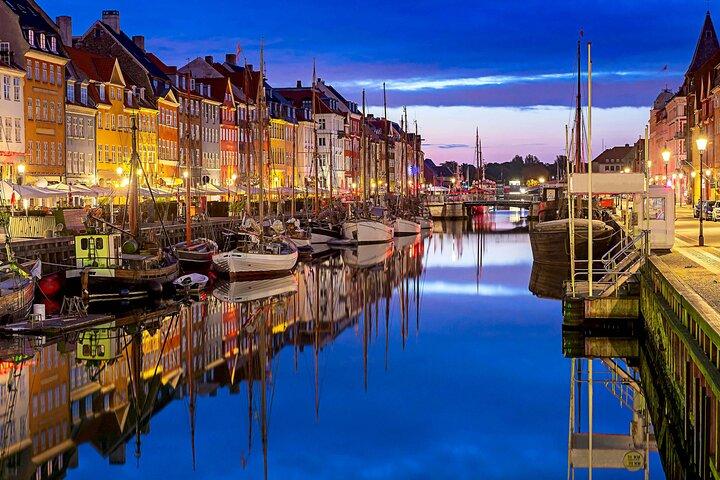
Nyhavn is Copenhagen’s postcard come to life — where 17th-century townhouses in bright candy colors line a canal filled with old wooden ships. Once a gritty sailors’ quarter, it’s now a magnetic blend of history and hygge. Hans Christian Andersen once lived here, penning fairytales above the din of taverns. Today, locals and visitors crowd the cobbled quayside for jazz, beer, and sunset views. It's a place where Copenhagen smiles widest, basking in the golden light off the water.
The Danish Film Institute is the beating heart of Denmark’s cinema culture — supporting filmmakers, preserving archives, and running Cinemateket, its public-facing gem. Tucked near Kongens Have, the building blends modern minimalism with cinephile warmth. Inside, you’ll find screenings of everything from Nordic noir to global arthouse, a cozy café, film-themed exhibitions, and a shop for rare DVDs and books. It’s not just a place to watch movies — it’s where Denmark’s screen dreams take root and flicker to life.
Rosenborg Castle is Copenhagen’s fairy-tale fortress — built in the early 1600s by King Christian IV as a royal pleasure palace. Its red-brick towers and emerald spires rise from manicured gardens, guarding a trove of treasures: baroque interiors, portraits, and the dazzling Danish Crown Jewels in the vaults below. Every room is a time capsule, from the marble-floored Long Hall to the king’s own writing cabinet. Surrounded by the peaceful King’s Garden, it feels like a dream Denmark once had — and decided to keep.
Frederik's Church, also known as The Marble Church, is one of Copenhagen’s most iconic landmarks, crowned with a vast green copper dome — the largest in Scandinavia. Inspired by St. Peter’s Basilica, it took over 150 years to complete, finally opening in 1894. Inside, the rotunda soars above polished stone columns and golden inscriptions, offering hushed grandeur in the middle of the city. Just steps from Amalienborg Palace, it feels both regal and serene — a quiet monument to persistence and faith.
Amalienborg is the living heart of Denmark’s monarchy — a graceful quartet of 18th-century palaces encircling a grand cobbled square, watched over by the equestrian statue of King Frederick V. Home to the royal family, it blends elegance with accessibility: at noon, the Changing of the Guard adds pomp, while one wing opens as a museum revealing royal interiors and personal history. Just beyond lies the Marble Church and the waterfront, making Amalienborg both a royal residence and a civic jewel in Copenhagen’s crown.
Copenhagen’s Opera House is a bold, modernist masterpiece perched on the harbor like a sleek ship ready to sail. Designed by Henning Larsen and opened in 2005, it was a gift from the Maersk shipping magnate and stands as one of the most expensive opera houses ever built. Its vast cantilevered roof, golden foyer, and oak-and-maple interiors blend Danish design with acoustic perfection. Whether you come for Mozart or modern ballet, the view across the water to Amalienborg is always a showstopper.
The Memorial Anchor (Mindeankeret) rests quietly at the foot of Nyhavn, heavy with history. This large anchor commemorates the Danish sailors and resistance members who lost their lives during World War II, particularly those in the merchant navy. Unveiled in 1951, it anchors more than metal — it grounds memory. A solemn flag-raising ceremony is held here every May 5th, Denmark’s Liberation Day. Amid the liveliness of Nyhavn, it offers a moment of stillness, remembrance, and national gratitude.
The Gefjon Fountain is one of Copenhagen’s most powerful and mythic landmarks. Located near the harbor and Kastellet, it depicts the Norse goddess Gefjon driving four wild oxen — her sons, transformed — plowing land to create the island of Zealand. Unveiled in 1908, the fountain is a swirling bronze drama of motion and spray, where legend surges from stone. With its dramatic energy and mythic roots, it's a stirring counterpoint to the calm waters of the nearby Langelinie promenade.
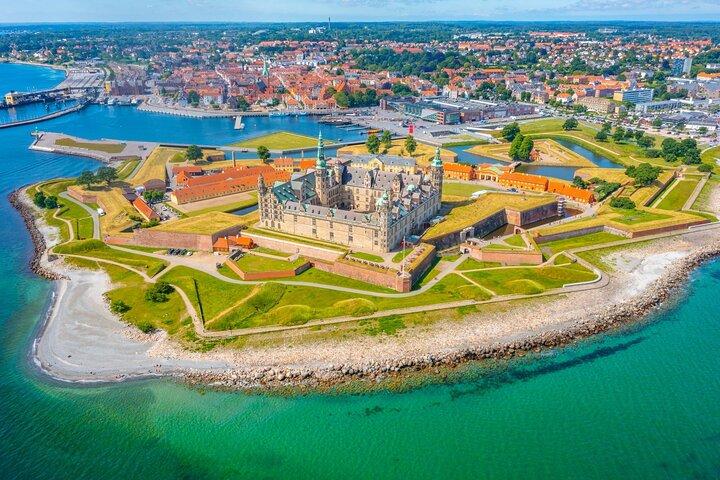
Kastellet is a star-shaped fortress where Copenhagen's past still marches in step. Built in the 17th century under King Christian IV, it remains remarkably intact — with grassy ramparts, red barracks, a charming windmill, and even an active military presence. Though fortified, it's anything but grim: locals jog along the bastions, swans glide in the moat, and cannons sit quietly under Nordic skies. It’s part park, part history, and one of Europe’s best-preserved citadels — stoic, serene, and unexpectedly peaceful.
The Little Mermaid sits on a rock at Copenhagen’s harbor edge, gazing toward the sea with quiet longing. Inspired by Hans Christian Andersen’s bittersweet fairytale, the bronze statue was unveiled in 1913, gifted by brewer Carl Jacobsen. Modest in size but mighty in symbolism, she’s endured everything from tourist adoration to political vandalism. Yet she remains — delicate, resolute, a silent icon of Denmark’s soul. You don’t go to be dazzled — you go to pay quiet homage.
Highlights
What's included
Traveller Ratings
Important Information
- Public transportation options are available nearby
- Suitable for all physical fitness levels
- The audio guide is available through a mobile app for iOS and Android
- Entry tickets to Christiansborg Palace, Amalienborg Palaces, Rosenborg Castle, and other museums are not included. Please purchase these separately in advance
- The tour does not cover all sights in Copenhagen
- This is a self-guided tour. You will need to download the audio guide mobile app, activate your purchase, and follow the route on the app's map. There is no human guide provided
- The audio guide is available anytime, date and time provided for checkout are approximate
Reviews(3)
The weather in march was quite cold, and the rain stopped as in the middle of the journey, but luckily we could continue the tour on the next day. An alive guide can probably tell you much more, but with an audioguide you don't need a fixed appointment, and don't have to tolerate the weather. A good experience even in bad weather.
In Copenhagen, my family and I were for the first time, I was unfamiliar with the city, so we purchased an audio guide. I would like to point out that this time the route was very long. The kind we were able to divide it into two days) The first day we took a walk from the town hall to the promenade, explored the centre, and the walk to the palace and the Little Mermaid was postponed the next day. Thanks to this, we managed to catch the changing of the guard at 12:00. During the excursion, when we reached the Nyhavn Canal - got on the boat for a ride, returned to the same place and went on. This is the main advantage of an audio guide over a live tour. We enjoyed walking in different parts of the city, we really enjoyed Kastellet. Recommended audio guide TouringBee!
This month, the family and I decided on a trip to Copenhagen. After our Oslo trip, we again opted for an audio guide app, this time for here. The tour route seemed a bit long at first glance, but it was manageable. The main advantage is flexibility – we simply split it over a couple of days. This gave us time for proper breaks, a relaxed lunch, and the chance to look at things up close. That kind of pace would be impossible with a live guide. The stories were engaging, with a touch of dry humour here and there. What stood out was that the text felt like it was written by a person, not an AI. These days, when you find AI slop everywhere, that attention to detail is genuinely pleasant and adds to the experience. If you prefer to explore at your own rhythm without being tied to a group, this is a very good solution. You get the context, but on your own terms.
Thank you for such a thoughtful and detailed review! We’re really glad you enjoyed the flexibility of the route and the relaxed pace — that’s exactly what TouringBee audio guides are designed for: letting you explore comfortably, on your own terms. It’s especially nice to hear that the stories felt genuinely written and engaging — we put a lot of care into making them feel human and lively. We hope TouringBee will accompany you on many more trips ahead, and that you’ll choose our audio guides again for your future travels.