Copenhagen Alternative Private Tour: Vesterbro & Christianshavn
Description
Copenhagen is one of the most interesting and fun cities in Europe. But it can be hard to find out what to visit and where to go. This Copenhagen Alternative Tour has been curated to include some of the most interesting sights and hidden gems of Danish culture. Get an insight into Copenhagen's quirky side, from a former red-light district turned into a super cool area to an 800 residents micronation. Get an up-close look at some of the city's more offbeat places, all in half a day with a Local Private Guide.
Tour Options
Itinerary
Formerly this was an area of fortifications, created by Christian IV, in 1600. These fortifications were in turn protected by a moat. In 1950, the process of redevelopment of the area began and this moat looked more like an open sewer. It was decided to place this now famous street over the old moat. The land along the street was sold in lots starting in 1856. Mostly buildings dedicated to charity, such as for officers' widows, were constructed. The buildings at numbers 8, 10 and 12, built in the mid-1800s, are listed in the Danish register of protected buildings and sites.
Opened in September 1908, it is one of the largest theaters in Denmark. The idea of construction was to create a large theater and at the same time open a passage between Gammel Kongevej and the new Vesterbro Passage (now part of Vesterbrogade).
Its name refers to the name of a beer collector, Werner Dam, who acquired a piece of land in the 1700s and opened a popular beer garden on the site. It was also known as Slagtergaden (literally "Butchers' Street"), due to its large volume of butchers.
In the early 1950s, Saxogade residents sent a large letter of protest. They had had enough of the miserable housing conditions. We have to keep in mind that this neighborhood, at first, belonged to factory workers, who had come from the countryside to the city, looking for an improvement in their quality of life. The desire for an improvement in their housing was centered mostly on the children, since the families lived in overcrowded, small one-room apartments, where they could sleep up to 10 people.
The shooting range wall is a castle-like wall flanked by two residential properties located between Skydebanehaven and Istedgade. The wall was constructed as a bullet trap to protect traffic along the then new street, Istedgade, from projectiles from the Royal Danish Army at Skydebane (the Shooting range), which was where Skydebanehaven is today. The wall forms the point de vue for Skydebanegade , which with its uniform, richly decorated houses starts from the opposite side of Istedgade.
Istedgade is named in memory of the 1850 Battle of Isted in the First Schleswig War. It is one of the most important streets in Vesterbro, renowned for its role in the second world war and for being a drug-hit area and the largest red light district in Scandinavia. During WW2 the street was an important refuge for the Danish resistance and the phrase: "They can take Rome, they can take Paris, but Istedgade will never fall" was a popular slogan
Stjerne Radio opened its doors in September 1942, run by Carl Munck and JK Søndergård. They soon began to transmit the English broadcast of BBC radio through loudspeakers. It was an essential part of the Danish resistance.
A revitalized industrial area known for its trendy dining scene and buzzing nightlife.
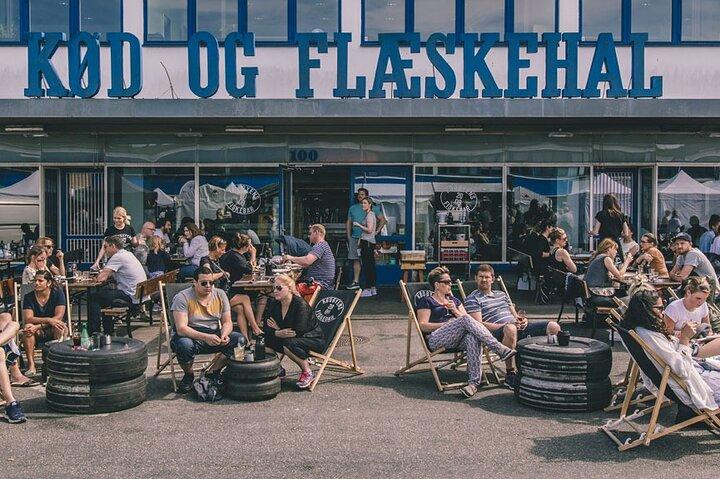
Exhibition space located in an old market, part of the brown area of the Meatpacking District. It was built in 1891 to house merchant offices and had a capacity for 1,600 heads of cattle. The market remained in use until the White Zone opened in the 1959s.
Copenhagen's haymarket was originally located just inside the Western City Gate where the City Hall Square lies today. It closed on 1 January 1888 and relocated to the area outside the new Livestock Market which had opened at the site in 1879. Market days were Wednesday and Saturday and up to several hundred loads of hay and straw were traded and distributed to cattle and horse stables around the city.
Established in 1910, this private organization (subsidized by the Danish state) aims to help homeless and vulnerable people recognize and use their own resources to make a good life and contribute to a diverse society.
Maria Church This small church opened in 1909 and today serves as a shelter for homeless people, families in need and socially marginalized groups. It has an active social involvement in the neighborhood. It provides daily care to all who come seeking both spiritual and economic support, including vulnerable groups such as illegal immigrants, drug addicts, prostitutes and people whose lives are criminalized.
Lunch in a classic Danish restaurant. (Only included in the Full Option)
Built in 1911 and inspired by the architectural style of the town hall building, it is the largest railway station in Denmark (Nørreport St. has the highest passenger flow per day). It has 7 platforms and 13 tracks.
It is a 115 meter long drawbridge. It was built in 1937 and connects Copenhagen with the island of Christianshavn. The current name comes from Hans Knip, who was in charge of operating the bridge and collecting tolls from passing ships in 1641. He lived with his family on the same bridge.
A rococo style Church built between the years 1754-59. The church was originally called Frederik's German Church, named after Frederick V (1746-1766), and for many years served the German-speaking congregation in Copenhagen, who wanted their own church.
This building from the 1780s: until recently it housed the DieselHouse Museum (now moved to København SV) that tells the story of B&W, dating all the way back to 1843, where it all started with a one-man smithing workshop. Later on, B&W developed into being one of Denmark’s largest workplaces, and it retained that title a hundred years ahead. A symbol of the Danish industry (1865-1979, today MAN Energy Solutions).
Former base of the Danish Asia Company (1732-1843), today the Ministry of Foreign Affairs and convention center.
A place to see listed buildings from the 1600s-1700s, including the row of houses 8-22 with remains from some of the oldest houses in CPH (built at ca.1650), no. 14 being the best preserved.
Street dates from 1617-22 (from the founding of Christianshavn), today a quiet residential, cobblestone street with mansions, old houses and warehouses from the 1700s-1800s.
Originally a busy market square, today it is an ideal place to relax and enjoy the water views. Here you will also find one of the most expensive marinas in CPH (only to use if you are a member of the yacht club). We show the Wilders Plads 10 building, a beautiful 2-story timber-framed house. Built in 1736, originally as a sailmaker's workshop and housing.
A big yellow neoclassical building from 1754-6, now listed, it was a naval hospice and later used to house the Danish Naval Museum/Orlogsmuseet until 2016.
It is a baroque church, famous for its twisted spire with an external spiral staircase with which you can climb to the top. It is also a living parish church for about 8000 people.
This was a defense zone, created in the time of Christian IV, to close the ring of protection of the capital and prevent the attack of the Swedes.
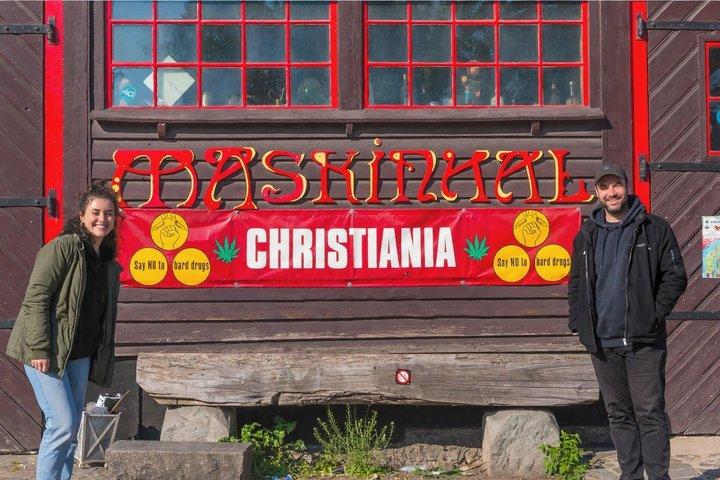
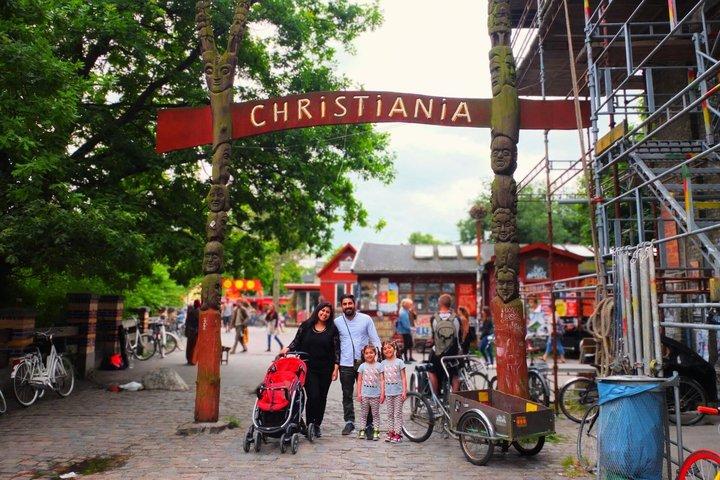
It is a partially self-governed neighborhood of about 1000 residents, created in 1971 by a group of hippies protesting the lack of housing, on military land abandoned by the Danish army. This neighborhood community, covers an area of approximately 34 hectares and is the second most visited sight in Copenhagen after Tivoli with half a million tourists visiting per year.
Highlights
What's included
Traveller Ratings
Important Information
- Wheelchair accessible
- Infants and small children can ride in a pram or stroller
- Service animals allowed
- Public transportation options are available nearby
- Transportation options are wheelchair accessible
- All areas and surfaces are wheelchair accessible
- Suitable for all physical fitness levels
- The tour will not be cancelled in case of rain.
Reviews(17)
This walking tour was one of the major highlights of our trip. Alessandro was highly knowledgeable, professional, and kept an excellent pace throughout the day. He took us to all the major landmarks of these areas that are off the beaten track and also highlighting hidden gems we never would have found on our own or in regular tours. He was very mindful of the group's comfort, ensuring we had washroom and water breaks, time for photos and great conversations on history and Danish local’s culture! It was an excellent, informative introduction to Vesterbro and Chiristanshavn and Danish culture as a whole. I highly recommend :) 'TILLYKKE' ;) to Alessandro and the team for putting together and offering a unique tour!
Freja was wonderful! She knew the city incredibly well and shared so many interesting stories and details as we explored. She also took us through a few extra streets and local spots that gave us a much better feel for the city beyond the usual tourist areas. Freja was warm, thoughtful, and always attentive to the needs of our group. We thoroughly enjoyed the experience and would absolutely recommend a tour with her to anyone visiting Copenhagen.
Grazi was great. She modified the tour to accommodate a wheelchair. Pastry and coffee stop was excellent.
An excellent four-hour walking tour of Copenhagen. Jhon was extremely knowledgeable and engaging, and shared a personal perspective of the city that felt authentic through his experiences living in Denmark. My husband and I had a great time, thank you Jhon!!
Thanks to Daniel, we discovered truly fascinating corners of the city that we probably wouldn’t have found by ourselves. He was packed with engaging facts and clearly passionate about his hometown. I’d absolutely recommend this tour as an ideal way to start your trip and gather great ideas for places to explore during your stay in Copenhagen. Thanks for such an enjoyable and memorable few hours.
We hired Nina on our very first day in Copenhagen, which turned out to be the smartest choice of our long weekend there. Nina personalized our tour around what we were curious about and brought us to some remarkable places that I don’t think are on a typical touring schedule. Her understanding of the art scene and the various neighborhoods that would interest us felt truly off the beaten track, and we absolutely loved it.
We had an amazing half-day walking tour with Mikkel, who showed us Copenhagen and its creative neighborhoods. From the former red-light streets of Vesterbro to the lively Meatpacking District and unique Freetown Christiania, we explored places we never would’ve found on our own. Great stories, local insights, and a fun look into the city’s quirky side. Highly recommend for anyone wanting a different take on Copenhagen!
Our guide Alessandro took my sister and me to some places around Vesterbro and Christianshavn we would never have discovered on our own. The tasting stop was nice too. Alessandro knew his stuff and was very personable and friendly.
What a great day we had with Grazi! We booked this tour wanting to see more of Copenhagen and discover it off the beaten track and it really delivered! Without spoiling the surprise, we strolled through Copenhagen's streets and neighbourhoods, learned about Denmark's history, talked about Danish society and got well needed background information about Freetown Christiania and so much more... The addition of a stop at the butcher's shop and lunch at a traditional Danish restaurant took this already good day to a whole another level. Grazi's full dedication to tell us all about the stops and streets, go above and beyond to answer all our questions really made us feel like the trip was curated to our every need. On top of that, her openness and interest in knowing us made the whole journey feel more like a day with a friend than just a tour. We cannot recommend this tour enough!
Grazi was one of the best guides I have ever had with Viator. You could tell she was excited to share this experience and wanted to ensure we get the most out of the tour. She took us to places we would not have seen or experienced without her. We also appreciated that she shared some personal stories that related to Copehagen. This tour definitely showed us not the typical Copenhagen.