Constanta and the Black Sea Coast - Private Tour from Bucharest



Description
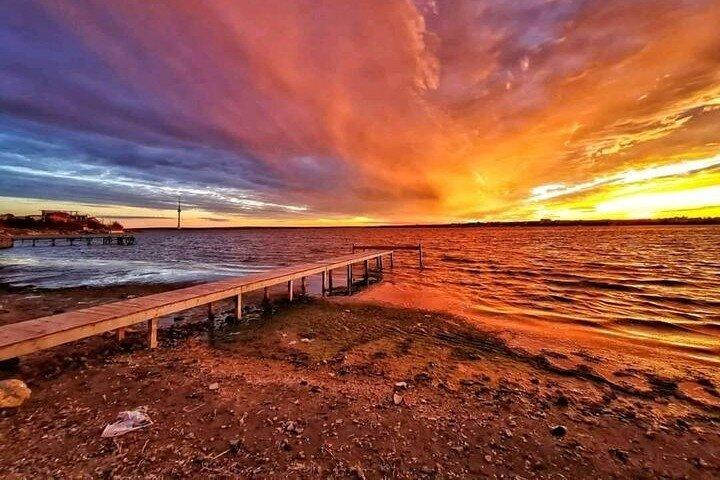
For the summer season and not only, a visit to the Black Sea, respectively Constanta, is the perfect way to spend one or several days. Constanta is a charming city on the shore of the Black Sea, located at a distance of approximately 220 km from Bucharest. In Constanta you can stroll on the sea front, enjoy a drink in the port, you could sun bathe or visit one of the numerous wonderful places hidden in this city. The Casino in Constanta is, certainly, the symbol of the city, being forever present in the pictures of the tourists, being over 130 years old. The headstone of the Casino was laid in 1880 and represented at the time the meeting place of the elites, sailor and tourists. The Casino held two game halls, one dance hall and two reading halls. But unfortunately, in 1891, the casino was destroyed by a very heavy storm, and the City Hall decided to build a new one that was inaugurated two years later, in 1893.
Tour Options
Itinerary
The Constanța Casino is a casino located in Constanța, Romania. It has been designated by the Romanian Ministry of Culture and National Patrimony as a historic monument. The casino is on the Constanta boardwalk at 2 Elisabeta Boulevard along the Black Sea in the historic Peninsulă District of the city. The casino was built three separate times, with the first structure being erected of wood in 1880. It was designed to be a club and community center for elite and upper-class socialites willing to spend. Once considered Romania's Monte Carlo and a symbol of the City of Constanța, the most-recent and modern version was built in Art Nouveau style, also being the most important Art Nouveau building in the country, designed and built according to the plans of Daniel Renard and inaugurated in August 1910. The most modern version of the Casino was in operation for 38 years, with interruption due to the two world wars, attacked and bombed by Bulgarian and German troops in World War I, ravaged in World War II and, at one point, acted as a makeshift wartime hospital. In 1948 it was taken over by the Communist government becoming a House of Culture (Casa de Cultură a Sindicatelor) for the party until 1960 when it was handed to the National Office of Tourism Oficiul National de Turism (ONT). The last major repairs took place in 1986-1988, and the building is currently abandoned.
Is a museum in Constanta, discovered during the works carried out in 1959 in the historical center of Constanta. The edifice, with nearly 2,000 square meters of mosaic, erected in the 4th century BC, probably under the reign of Emperor Constantine the Great, instead of previous harbor buildings, was repaired in various stages until the beginning of the 7th century, when ends his life with the departure of the ancient city of Tomis, following the great invasions.
The Genoese Lighthouse is a lighthouse and historic monument situated on the waterfront of the city of Constanța, Romania behind a group of statues which has in its center the bust of Mihai Eminescu, sculpted by Oscar Han. It is located near Constanța Casino. The lighthouse stands approximately eight meters high and is rectangular at its base to a height of about three and a half meters, and is octagonal above that. The interior of the lighthouse is cylindrical, with a spiral staircase in stone. The structure itself stands upon a pedestal base consisting of two steps, and is finished at the top with brackets supporting the eaves, upon which the metal housing of the lantern room also forms the roof.
The National History and Archaeology Museum of Constanta is one of the richest museums in Romania and the second largest institution in thefcountry, after the National History Museum of Romania from Bucharest. The cornerstone of the museum was laid in 1879 by Remus Opreanu the first prefect of the Romanian administration of Dobrogea, in an attempt to counter the smuggling of antiquities discovered in archaeological sites of Constanta. For nearly a century, the Historical Museum of Constanta has experienced periods of decline and prosperity, being disorganized, reorganized and moved to different locations in the city. In 1977, the museum exhibits are permanently moved to its current headquarters in Ovidiu Square. The imposing building of the museum was built in the Romanian architectural style in the early twentieth century and served as the town hall until 1921.
The Great Mosque in Constanţa, also known as the Carol Mosque, is a Muslim cult site in Constanţa, an architectural monument built between 1910 and 1913. The mosque is referred to by Constanța's Islamic community as the King's Mosque (Romanian: Geamia Regelui, Turkish: Kral camisi). The Grand Mosque of Constanța stands on the site of the former Mahmudia Mosque (Geamia Mahmudia), built in 1822 by Hafız Hüsseyin Pașa and named after Ottoman Sultan Mahmud II. The Grand Mosque of Constanța was commissioned in 1910 by Romanian King Carol I. Construction began on 24 June 1910 with the first cornerstone laid in the presence of Spiru Haret, contemporary Romanian Minister of Religious Affairs; Sefa Bey, contemporary Ottoman ambassador in Bucharest; and the Ottoman consul in Constanța. The project was funded by the Romanian Government and entrepreneur Ion Neculcea, and finished construction in 1912.
Tomis Harbor (port) is one of the famous locations of the city of Constanta for both tourists and locals. Regardless of the season, the area of Tomis port is the choice made by those who want to admire the sea, either by car or by a light ride. Access to the port is made very easy by means of a street that goes down to the "lip" of the bay, even in the area where "luxury" yachts and sailing boats are "rested". Numerous terraces and cozy restaurants are set up on the water's edge, which serve fish dishes. From the port of Tomis, right from the terrace area, a narrow road starts, which, going on the water's edge, will lead you to the famous modern beach Constant. During the summer, the gulf of Tomis harbor is often visited by groups of dolphins, perhaps attracted by the beautiful artesian fountain in the middle of the water or even by the tourists who walk quietly on the shore. Apart from the fact that it is a suitable place for relaxation, Tomis Port is the ideal location for organizing water sports activities. Local authorities intend to transform Tomis Port in the future into an important destination for coastal pleasure vessels that sail along the Romanian coast, with stops south to Eforie, Costinesti, Neptun, Mangalia or north, to Mamaia and Midia.
Highlights
What's included
Traveller Ratings
Important Information
- Infants and small children can ride in a pram or stroller
- Public transportation options are available nearby
- Suitable for all physical fitness levels
Reviews(25)
Bogdan gave us a wonderful day at Constanta. A great driver and full knowledge about the town and surrounding areas. Recommended a very good restaurant for lunch serving Black Sea fish. Highly recommended!!
How tour guide George was from Constanta and gave a wonderful custom tour based on our preferences and interests.. Best meal of the week at a local restaurant he recommended. Thank you George for the memorable last day in Romania. .
We were blessed with nice weather which made it a very pleasant day by the water. This is very flexible day in Constanta so your tour guide will cater to your parameters. From our perspective, the Casino was not worth 10 euros. Going up the mosque minaret provided excellent views and mosaic exhibition was impressive. Our tour guide, Alin, was wonderful and spoke English well. He made sure to take us to the beach and let us walk in the Black Sea and took us to an amazing local restaurant by the water that is popular with the locals away from the tourist. Alin definitely made sure to address our specific requests which made for an awesome experience.
Bogdan was very helpful. He gave us a lot of information and made helpful suggestions not only for this tour, but in general for our stay in Romania. We enjoyed our visit to Constanta. It was well worth the trip. The Casino was amazing, as were the Orthodox Cathedral and the Roman mosaic.
Alin our tour guide was very nice and we had a great time. It is worth going to see Constanta. Beautiful weather first week of September and we were able to enjoy the coast and walking around town. He also took us to a great seafood restaurant and then we walked along a beach.
Being a private tour was very helpful. The guide was gracious and attentive at all times. We explained in detail everything that was there to see.
We had a great time. Radu was very kind and knowledgeable and a great driver. The walk around old town was particularly enjoyable and we took us to a great place for lunch.
The tour was very interesting and pleasant. The tour guide was very knowledgeable, he explained everything to us, help ed us and adapted himself to our wishes! Highly recommended!
Had a great time. Great guide and great driver. Alin was kind, knowledgeable and fun. We went as a group of four and all had a wonderful time
Alin is a wonderful guide! He led us through beautiful Constanța, while teaching about it's rich history from its humble beginning as a Greek fishing village to its current state as a hub of global trade. He was exceptionally courteous and considerate of our needs, and went above and beyond to ensure we had the best experience possible during the tour, and after. He is passionate about sharing Romanian culture with the world, and genuinely kind and thoughtful. Thank you, Alin!