British Architecture Walk, an immersive walking tour in Chennai


Description
Step into the colonial grandeur of Madras, once the beating heart of British India. This isn't a "tour"—it’s a portal into the rise and fall of an empire. As a Ministry of Tourism-approved organization and proud IATO member, our Cultural Evangelists reveal the dramatic fate of the masters who once ruled these halls and defined the city’s skyline. Over three hours, we decode the architectural alchemy of Victorian Gothic, Indo-Saracenic, and Byzantine styles. From the soaring arches of Central Station and the white domes of the Ripon Building to the historic bastions of Fort St. George and the Senate House, we trace how these monuments transitioned from symbols of imperial control to the unifying pillars of modern India. Winners of the Outlook Responsible Tourism Award 2025, we provide an ethical, elite journey that supports our local community. Join us to experience the architectural soul of Chennai.
Tour Options
Itinerary
The Egmore railway station is more than a 100 years old and one of the earliest buildings built in Indo-Saracenic styke. Designed by the legendary Henry Irwin to be larger than Charring Cross station of London, the Station was built by Samynatha Pillai. The building is a fine blend of Gothic and Dravidian design styles. It is the ideal place to start our walk about British Architecture in Chennai.
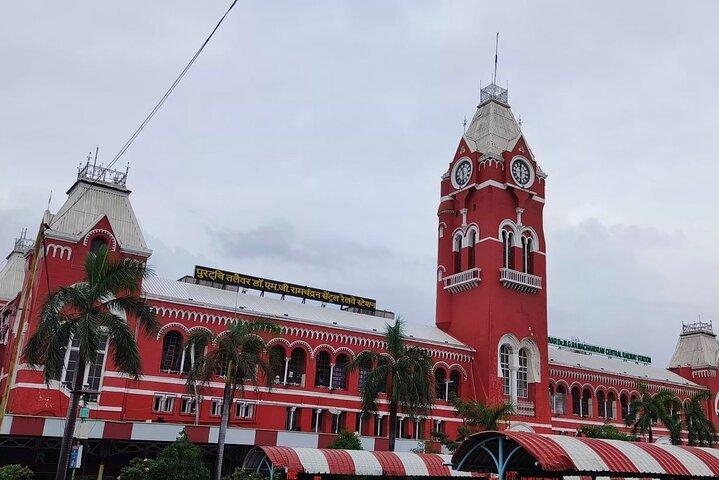
The Central Railway Station was built in 1873 in Gothic Revival style by British architect George Harding. It was modified by Robert Chisholm who added the central clock tower and Travancore caps on the main towers. Today, this station handles more than 350000 passengers every day.
Victoria Public Hall was opened to the public in 1887 to commemorate the Golden Jubilee of Queen Victoria. The hall, named after the queen herself, had been a venue for various events like public meetings, and even film screenings. The hall was designed by British architect Robert Chisholm and it is an excellent example of Indo-Saracenic architecture. Namberumal Chetty, who had by then constructed various public structures in the city of Madras, built the structure.
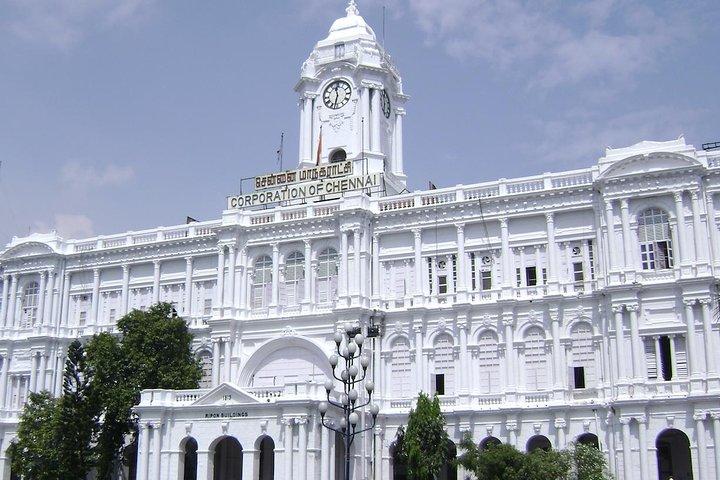
British Architecture Walk continues to Ripon Building which was commissioned in 1913. Designed by G.S.T. Harris. and built by Loganatha Mudaliar, the Ripon building is named after Lord Ripon, a Governor-General of British India who was famously known as the father of local self-government in Chennai. Today this building is the office of Mayor of Chennai.
We next walk to the headquarters of Southern Railways in India. Built in Indo–Saracenic style, this building was designed by N. Grayson and built by Samynada Pillai. It was completed in the year 1921. The Southern Railway headquarters was one of the earliest buildings in India to be built with reinforced concrete.
Napier Bridge was built in 1869 across the Coovum river and is named after the British governor of Fort St George, Francis Napier. It connects the Marina to the Fort St George. The narrow bridge was broadened and converted into a concrete structure and was opened to general public in July 1943. This bridge is often used by Media to represent the city of Chennai!
The Senate House is the administrative center of the University of Madras. It is situated along the Marina Beach. Constructed by Robert Chisholm , the Senate building is considered a great example of the Indo-Saracenic style with a harmonious blend of Byzantine architectural features. This masterpiece was constructed between April 1874 and 1879. It has a convocation hall, porticos, a parapet, meeting halls and a library.
The Victory War Memorial, formerly called the Cupid’s bow, is a memorial constructed to commemorate the victory of the Allied Armies during World War I (1914–1918). It later became the victory war memorial for World War II (1939–1945), erected in the memory of those from the Madras presidency who lost their lives in the wars.
Highlights
What's included
Traveller Ratings
Important Information
- Public transportation options are available nearby
- Not recommended for travelers with spinal injuries
- Not recommended for pregnant travelers
- Suitable for all physical fitness levels
Reviews(64)
Hareesh was flexible with the timing of the trip. He even took us on the suburban train. A significant area of improvement is to expand the knowledge of British architecture. Must include anecdotes to make it more interesting. We did not visit the Santhome Basilica which was disappointing.
Hello. Thanks for this opportunity to host you and for taking the time to share your feedback. It is very valuable. I would also like to clarify that Santhome Basilica is not part of the itinerary, as it was not built by the British and hence it was not covered in this tour.
We had a great time with Hareesh. Learned a lot about the history of Chennai, not just what the Britishers did. Hareesh was very kind when my wife felt a bit ill in the heat. A tour well worth doing.
Thanks so much for your feedback. We are delighted that you enjoyed this tour with Hareesh.
Jainath was a likeable guide and gave a very good introduction to Chennai. He included some history which was very interesting to me as was the British colonial story behind the buildings
This was an AMAZING tour! It began with a great historical overview of India and understanding of the different groups of people that influenced the cultural landscape. We visited some of the iconic British buildings like the Chennai Rail Station and the Ripon Building. I was very impressed with Hareesh's knowledge and ability to answer my (sometimes obscure) questions. Therr is no guidbook that could offer such a rich and fulfilling experience. This is a "must do" tour epecially if you'reinterested in understanding the rich layers that make up this incredible city.
Jainath was a fabulous guide. He was incredibly knowledgeable about the history of these buildings and I learned so much from him. This session was a highlight of my visit to Chennai.
My second tour with Hareesh, just as good as the first. He was very knowledgeable about the British architecture of Chennai, explaining about the different styles of the buildings, when they were built and what they are made of etc. Hareesh is very friendly and relaxed. Definitely recommend.
We thoroughly enjoyed our British Architecture walk. Our guide, Hareesh was both interesting and knowledgeable about both the architecture and the history. He was happy to answer our questions on a wide variety of topics. It was great to understand how Chennai had evolved as first, separate settlements and gradually grown into the major city we know today. We would definitely recommend this tour.
Hareesh told me a lot about the history of India and showed me the architecture of George town. His explanation was clear and detailed. Then we went to drink the traditional filter coffee. It was a nice tour. Only caveat is that I would have liked to go more on foot.
Our guide, Mr. Hareesh , was knowledgeable and wonderful to chat with, pointing out the many different buildings in central Chennai where the British left their mark. He was also very responsive to our questions about Chennai history, municipal organization and daily life. Wonderful insight into an interesting city!
A great tour to get deeper into the history of Chennai and understand how the city evolved before and after colonial times. Hareesh was an excellent guide and took time to explain everything and to answer my questions. An added bonus was a visit to George Town and Marina Beach on the way back to my hotel. Plus the chance to ride a local train. Thoroughly interesting and enjoyable tour which I would highly recommend.