Barcelona in One Day: Gaudí, Gothic Quarter &Tapas (Private Tour)
Description
Barcelona in one perfect day! Discover the city in the most complete and comfortable way on this private full-day experience that combines history, local flavors, and Gaudí’s greatest masterpiece. Accompanied by a licensed expert guide, you will explore the atmospheric streets of the Gothic Quarter, uncover hidden squares and local stories, and enjoy selected tapas stops that introduce you to the city’s authentic culinary culture. Your guide adapts the pace and route to your interests, ensuring a relaxed and fully personalized visit. The day concludes with a skip-the-line guided tour of the Sagrada Familia, where you will dive into Gaudí’s extraordinary vision, symbolism, and architecture, including the interior and museum with original sketches and models. Designed for travelers who want to see the best of Barcelona in one seamless day, this private tour offers expert guidance, smooth organization, cultural depth, and memorable local experiences — without stress or rushing.
Tour Options
Itinerary
In the Plaça Nova, in Barcelona's Gothic Quarter, almost touching the wall of the former Roman city, seven giant letters contrast with their historic backdrop. They are part of the alphabet created by Joan Brossa to spell out the word Barcino, the principal name of the Colonia Iulia Augusta Faventia Paterna Barcino, which was the origin of present-day Barcelona. The letters, six of them made of bronze and one of aluminium, are bolted to the ground and make up a fun and original display, very much in keeping with this Barcelona-born artist's visual poems
Visit the interior of Barcelona's stunning Cathedral, a masterpiece of Gothic architecture. Marvel at its intricate details, including the impressive nave, beautiful chapels, and the tranquil cloister with its fountain. Learn about the cathedral's history, built over several centuries, and the religious significance it holds for the city.
The Casa de l'Ardiaca, the residence of the ecclesiastical hierarchy from the 12th century onwards, has undergone many alterations over the years, such as the ones carried out in the early 16th century which connected the building with the dean's residence. This was also the period when the porticoed central courtyard was built and the Renaissance-style decorations, which tie in with the flamboyant Gothic style of the original building, completed. A staircase leads to the upper terrace, a balcony in the purest Romeo and Juliet style.
The Conjunt Monumental de la Plaça del Rei in Barcelona is, arguably, the Gothic architectural ensemble which best exemplifies the city's medieval past. The royal palace, the Palau Reial Major, and its surrounding buildings, enclose a harmonious and peaceful square which is still imbued with Barcelona's splendour during the Middle Ages.
The Plaça Sant Jaume has been the city's political centre almost since its inception. Today the Plaça Sant Jaume is an open space, a "lung" in the middle of the Gothic Quarter. The square is the site of the most important buildings in the lives of Barcelona and Catalonia: City Hall and the Palau de la Generalitat.
The Jewish Quarter of medieval Barcelona is home to one of Europe’s oldest synagogues, which has been restored and opened to the public. From the 9th century to the 14th century Barcelona had a large Jewish community that is thought to have numbered around 4,000 people. Two neighborhoods of narrow streets, called "calls" from the Hebrew word "kahal", which means community or congregation, sprung up around them.
La Rambla is exactly 1.2 kilometers long and nearly everyone who visits Barcelona walks along with it. La Rambla was laid out in 1766, following the contours of the medieval city walls that had bounded this part of Barcelona since the 13th century. The locals took it to their hearts straightaway. In Barcelona, a city of narrow, winding streets, the Rambla was the only space where everyone could stroll and spend their leisure time. And we mean everyone. Because of its central location, the Rambla became a meeting place for all the social classes.
La Rambla's history is the Boqueria Market's history. The evolution from a past of peddlers to a modern and charming present, full of color and life. The market is a metaphor for Barcelona's life, a human river that is the delight for those who like watching.
Casa Batlló, is a building in the center of Barcelona. It was designed by Antoni Gaudí and is considered one of his masterpieces. A remodel of a previously built house, it was redesigned in 1904 by Gaudí and has been refurbished several times after that. Gaudí's assistants Domènec Sugrañes i Gras, Josep Canaleta and Joan Rubió also contributed to the renovation project. The local name for the building is Casa dels ossos (House of Bones), as it has a visceral, skeletal organic quality. It is located on the Passeig de Gràcia in the Eixample district, and forms part of a row of houses known as the Illa de la Discòrdia (or Mansana de la Discòrdia, the "Block of Discord"), which consists of four buildings by noted Modernista architects of Barcelona. Like everything Gaudí designed, Casa Batlló is only identifiable as Modernisme or Art Nouveau in the broadest sense. The ground floor, in particular, has unusual tracery, irregular oval windows and flowing sculpted stone work. There are few straight lines, and much of the façade is decorated with a colorful mosaic made of broken ceramic tiles (trencadís). The roof is arched and was likened to the back of a dragon or dinosaur. A common theory about the building is that the rounded feature to the left of centre, terminating at the top in a turret and cross, represents the lance of Saint George (patron saint of Catalonia, Gaudí's home), which has been plunged into the back of the dragon.
La Pedrera or "The stone quarry", a reference to its unconventional rough-hewn appearance, is a modernist building in Barcelona, Catalonia, Spain. It was the last private residence designed by architect Antoni Gaudí and was built between 1906 and 1912. The building was commissioned in 1906 by Pere Milà and his wife Roser Segimon. At the time, it was controversial because of its undulating stone facade, twisting wrought-iron balconies and designed by Josep Maria Jujol. Several structural innovations include a self-supporting stone façade, and a free-plan floor, underground garage and the spectacular terrace on the roof. In 1984, it was declared a World Heritage Site by UNESCO. Since 2013 it has been the headquarters of the Fundació Catalunya La Pedrera which manages the visit to the building, exhibitions and other cultural and educative activities at Casa Milà.
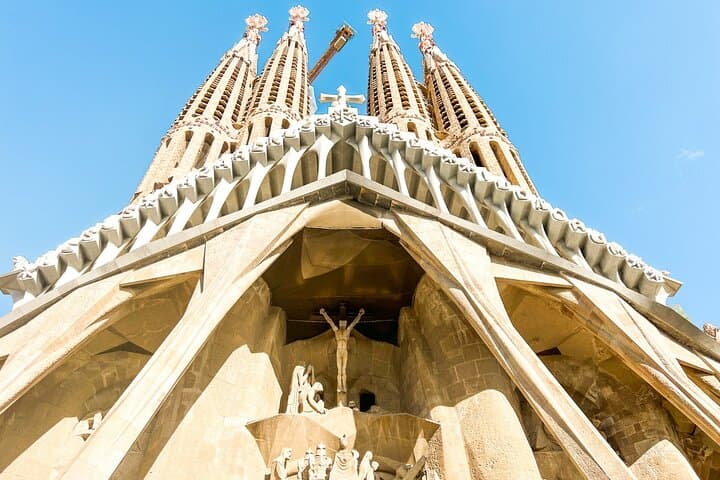
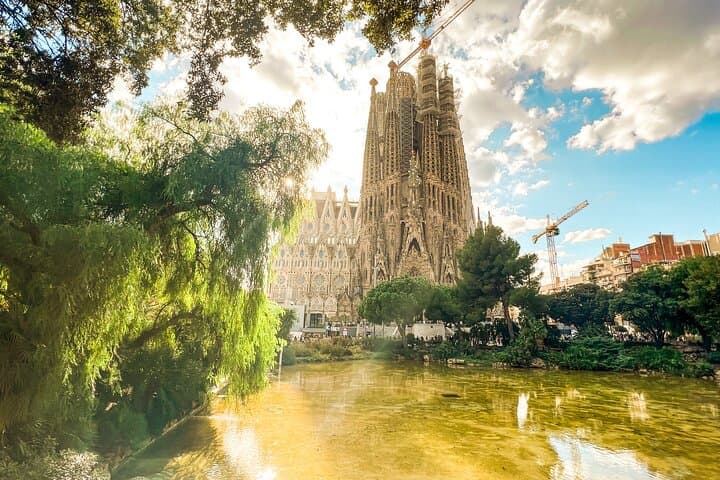
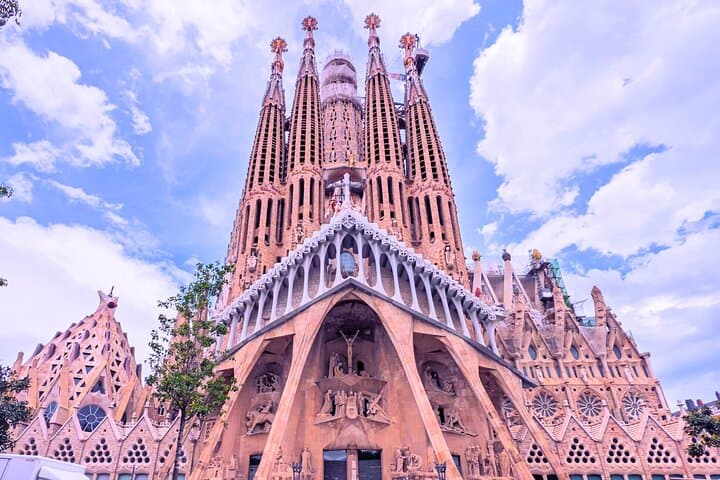
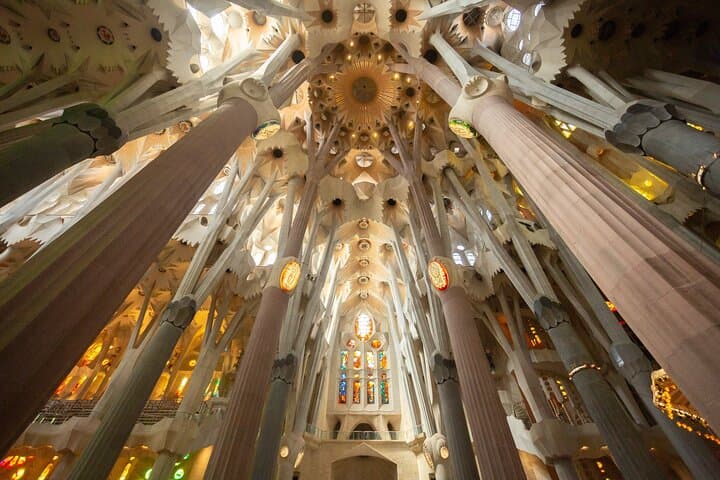
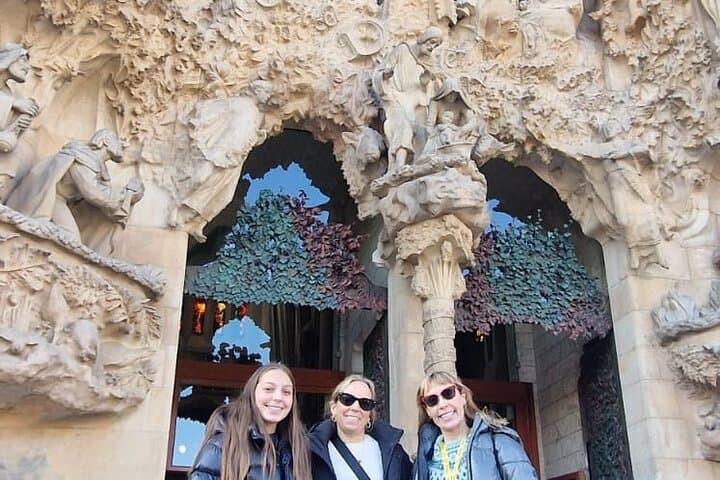
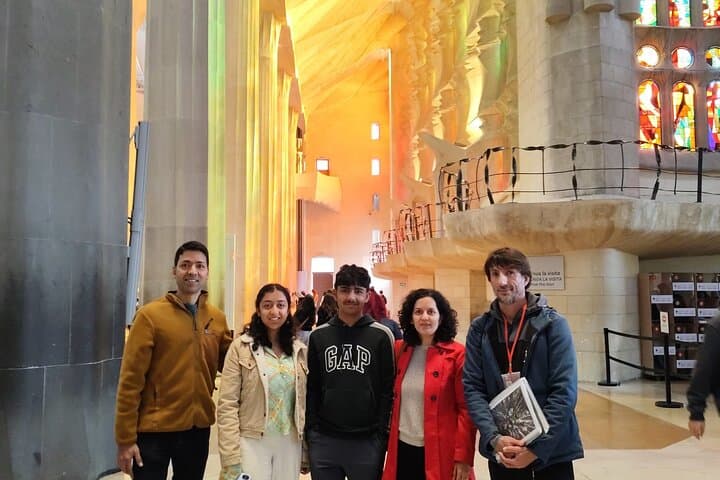
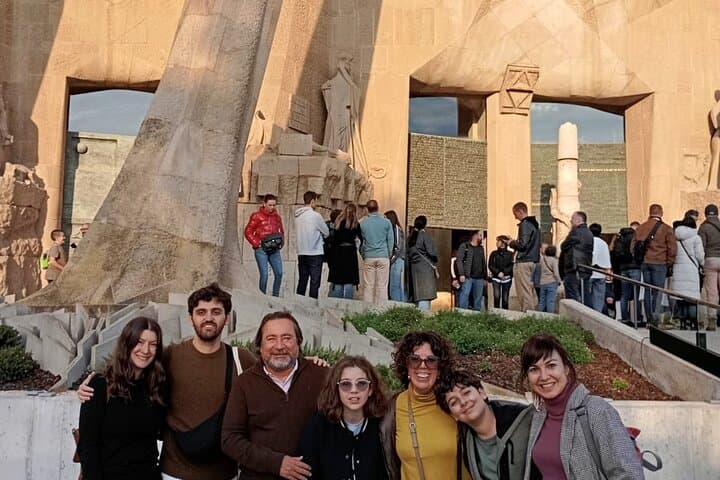
The Sagrada Familia, the jewel of Gaudi's architecture and the skyline of the city of Barcelona, is worth visiting in depth, calmly, without queues or rooms full of people ... The astonishment of walking and observing the details of this Temple in its interior are priceless. And also, we choose for you the best schedule to achieve it. Our proposal focuses on the evening, starting at 4 pm. when the flow of visitors usually decreases and you will have the chance to visit the Sagrada Familia at your own pace.
Highlights
What's included
Traveller Ratings
Important Information
- Wheelchair accessible
- Infants and small children can ride in a pram or stroller
- Public transportation options are available nearby
- Transportation options are wheelchair accessible
- Suitable for all physical fitness levels
- Carefully timed itinerary to avoid peak crowds Breaks for restrooms and refreshments included
Reviews(21)
Nilo is very positive and knowledgeable. The daylong tour was everything we expected and more! Nilo provided extraordinary information about each location and monument. Our tour was fun and educational. It was the perfect combination of touring and traveling. It was a great combination of walking and seeing. It is a must do tour.
Alan our guide was awesome. Extremely knowledgeable on the history and events of Barcelona. Would do it again.
My wife and I were led on a fascinating walking tour of the Gothic section of Barcelona by Alan, a very knowledgeable guide with a deep historical background in the city’s history. We skipped the usual stop at the Sagrada Família because we had already seen it, which gave us more time to explore the city’s Roman, Gothic, and medieval sites. Alan provided a wealth of information in a lively conversational style that was the opposite of dry or dull and showed us many “hidden in plain sight” objects of interest that we would have missed on our own. It was a rewarding and enriching experience. Highly recommend!
The tour was a wonderful introduction to Barcelona, Gaudi and his works. Visit to Sagrada Familia was amazing. Olga is a wonderful guide, informative, hospitable and patient. Our group enjoyed all of the different tapas on the tour. The day was enjoyable and would recommend the tour especially with Olga as the guide!
This has been a poor and costly experience for us. The itinerary of 11 sites were not completed we only went to three. It was essentially a walking tour How are we supposed to get from one sight seeing place to another? I deserve to be refunded for this incomplete tour
Thank you for your feedback. We’re sorry to hear that the walking tour did not fully meet your expectations in terms of timing. We would like to clarify that from the very beginning, your guide adjusted the pace and the itinerary to suit your arrival time, your mobility needs, and the effects of jet lag you mentioned upon meeting. Our aim is always to provide a comfortable and enjoyable experience, and your guide prioritized your well-being throughout the tour. We appreciate your understanding and hope the flexibility and personalized approach we offered helped make your visit more pleasant, despite the circumstances. Should you have any further concerns or suggestions, we’d be happy to hear from you. Warm regards,
Very informative and thoroughly enjoyed a tour knocking out the main sites of the city. Would highly recommend for a small group of friends and family.
Our tour guide, Carla, was excellent. We felt like we were seeing the city with a knowledgeable friend. Expensive, but highly recommend.
We really enjoyed this walking tour of Barcelona. We began learning about Gaudi and the fascinating history and design of the Sagrada Familia and the two of the private residences and apartment buildings he designed. We then walked along La Rambla to make our way to the Gothic quarter to see Roman-era Barcelona, the Cathedral, and the Jewish Quarter. We tasted traditional nougat at Planelles Donat and ended our tour eating traditional tapas at Orio, a chain famous for is pintxos, wine and beer. It was a great way to end the day. Really recommend this fun tour.
This was a well organized tour with a very knowledgeable guide. He provided historical insights and interesting stories at every location. We were able to go at our pace, staying a bit longer at places of interest and moving quickly when we wanted. The tapas were very good and included a nice glass of wine. We covered 12,000 steps in about 5 hours. We would definitely recommend this tour.
Anna was an excellent guide and shared an incredible experience. One of the best experiences we had in Barcelona.