6 Hours Private Tour in Petra


Description
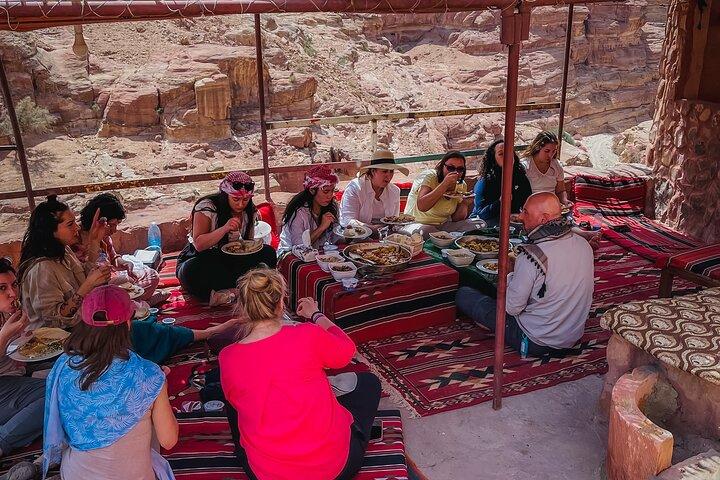
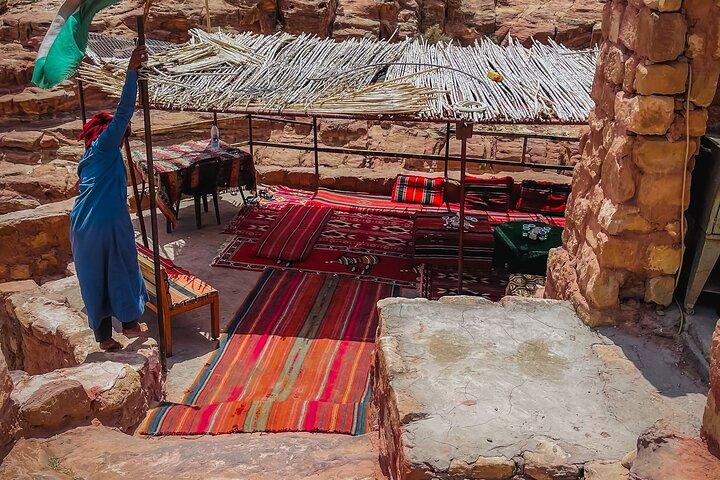
Here's why you should choose our tour: Authentic Local Insight: Our local Bedouin guides are native to the area and offer profound insights into the hidden gems of Petra. Their knowledge extends beyond the usual tourist paths, providing you with a deeper understanding of the history, culture, and secrets of this ancient city. Experience traditional Bedouin hospitality with a tea break in a cave home or under a tent. Engage with stories from your guide who grew up in Petra, offering personal anecdotes and historical context that bring the ancient city to life. Our guides know the best times and spots to capture the perfect photos of Petra’s iconic facades bathed in the ideal light, away from the crowds. By booking with us, you are directly supporting the local Bedouin community, preserving their cultural heritage. We ensure a personalized and safe experience, perfect for both solo adventurers and families. Our tour is designed to make your visit to Petra unforgettable.
Tour Options
Itinerary
Travellers will experience Petra with a local ( with or w/o mule ) visiting the beautiful places like Wadi Farasa Trail, The Royal Tombs, The Byzantine Church and The Monastery with lunch inside an ancient Nabatean Cave converted into a Bedouin Cave home. See the life of the locals with a very unique experience.
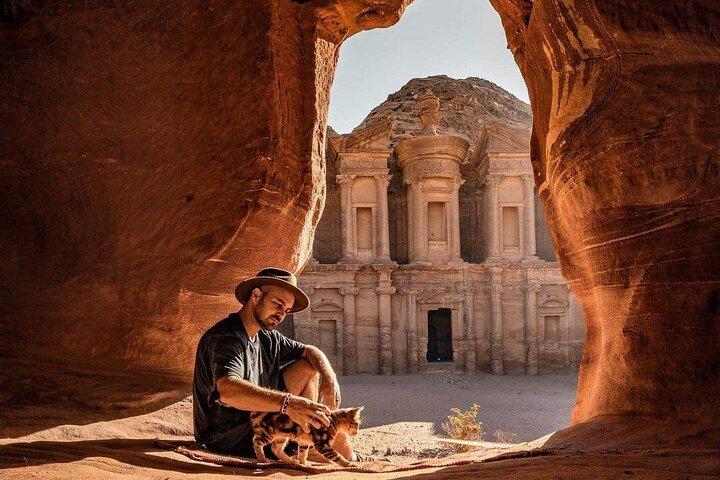
The Monastery, also known as Ad-Deir or Al-Deir in Arabic, is one of Petra's most iconic and majestic structures. It is renowned for its grand scale and the intricacy of its carved façade, which features classical Nabataean design elements combined with Hellenistic influences. The Monastery is particularly notable for its large, impressive doorway and the urn crowning its tholos, a circular structure at the center of the façade. Archaeological insights suggest that the Monastery was carved out of the rock in the mid-first century AD, possibly before the Roman annexation of the Nabataean Kingdom in 106 AD. Despite its name, which was given by Bedouin tribes who believed it to be a monastery, the structure's original purpose is not definitively known. It may have served as a Nabataean temple or a monumental tomb, similar in function to Petra's famous Treasury, but this remains a topic of scholarly debate.
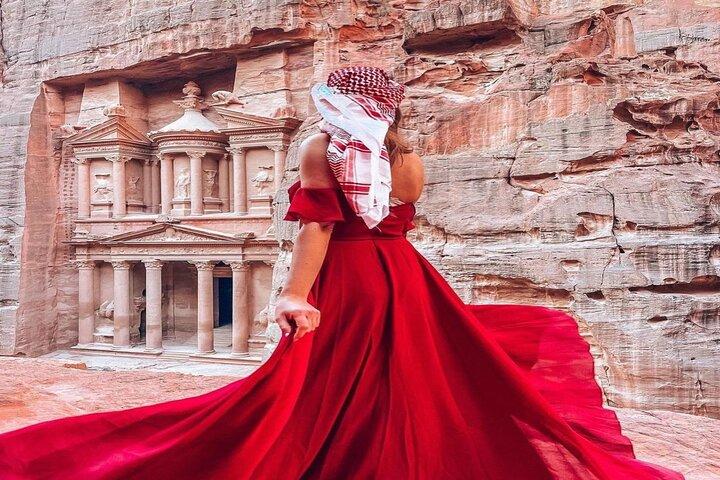
The Royal Tombs of Petra, hewn from the rose-red sandstone cliffs, are among the most magnificent and culturally significant architectural feats within the ancient city. These tombs include the Urn Tomb, the Silk Tomb, the Corinthian Tomb, and the Palace Tomb, each showcasing the advanced craftsmanship of the Nabataeans and their unique blend of Eastern traditions with Hellenistic architectural styles. The Urn Tomb, notable for the large urn atop its façade, is perhaps the most famous of these tombs. Originally built around 70 AD, it was later repurposed into a Byzantine church around 446 AD, illustrating the historical and cultural transitions of the region. The Silk Tomb is distinguished by its vivid, multi-colored sandstone layers that resemble silk drapes, making it a visual testament to natural artistry. These tombs were not just burial places but also served as a statement of wealth and power, reflecting the socio-economic status of those entombed within.
The Byzantine Church, also known as the Petra Church, is a notable archaeological site within Petra, renowned for its splendid mosaic floors which are among the best preserved in the region. Located on an elevated ground north of the Colonnaded Street, the church is part of a cluster of Byzantine era buildings that also includes the Ridge Church and the Blue Chapel. It was likely constructed in the second half of the 5th century, as suggested by its architectural style and decorative elements and actively used until the early 7th century when it was destroyed by a fire. Archaeological excavations, which began in 1992 and concluded in 2002, have unearthed valuable insights about the church's structure and function during the Byzantine period. The church is characterized by a large triple-aisled basilica with three apses and a richly decorated nave that prominently features mosaic floors depicting various Christian symbols and scenes.
The Wadi Farasa Trail in Petra is a captivating hike that offers a blend of natural beauty and archaeological splendor, perfect for those keen to explore beyond the more frequented paths of Petra. This trail is relatively less touristy and winds through various fascinating sites, beginning with the Street of Facades and ascending towards the High Place of Sacrifice. This initial ascent takes about 45 minutes and leads to several notable monuments, including the striking Lion Monument, believed to have once functioned as a water fountain. As you continue into Wadi Farasa, the trail presents a series of significant archaeological features like the Garden Triclinium and the Roman Soldier's Tomb, which are complemented by the stunning natural landscape. The path also passes the Renaissance Tomb and culminates at the Qasr al-Bint, a major religious and cultural structure within Petra. The trail offers an immersive experience into the heritage of Petra.
Highlights
What's included
Traveller Ratings
Important Information
- Public transportation options are available nearby
- Not recommended for travelers with spinal injuries
- Suitable for all physical fitness levels
- The extra time (3-6 hours) depends on how long you take at each stop to walk around and explore.
Reviews(1)
The trip to the monetary was not eventful. We were asked so many times to buy things and tour guide did not keep them from giving us, undo pressure to give money and buy items. The tour included lunch, but this was not provided. We would say go to Petra on your own and walk past Petra as far as you wish, maybe to the Church and then back.
Thank you for sharing your feedback. We’re sorry to hear that certain aspects of the tour didn’t meet your expectations, and we appreciate the opportunity to clarify a few points. The Monastery is indeed a major part of Petra, and many of our guests request to visit it due to its historical significance. We respect every traveler’s choice of sites within the park and work hard to accommodate each itinerary to make the experience fulfilling and you did say you wanted to visit there so we had the guide take you.. If you had stated prior to the tour that you wanted to skip this major part of Petra, we would have gladly accommodated that. Regarding the vendors, we understand it can feel overwhelming in a popular destination like Petra, where vendors are eager to share their goods with tourists. Unfortunately, the vendors operate independently, and while we always strive to ensure a smooth journey, the local culture of offering goods is something we can’t control. We did notice your concern about lunch not being provided as planned. To address this, we refunded the lunch cost in full which is why it seems a bit unfair for you to have mentioned that here. In addition to that, and as a courtesy, we arranged free transport back to your hotel. Our guide even waited patiently despite a delayed meeting time as you were not in the place you were asked to meet, to ensure you had a comfortable return, something we typically don’t offer without an additional charge. We truly hope you enjoyed the rest of your time in Jordan and that, despite these points, you took home memorable experiences from Petra and beyond. Even though we can not control what the country has to offer and if you like the destinations themselves for example the Monastery, We strive to offer our guests an authentic and enjoyable experience for the destinations they ask to see, and we’re committed to taking this feedback to heart to improve wherever we can. Thank you again for helping us learn and grow.