1-Day Temple Tour: Explore Rolous Group, Grand Circuit & Sunset
Description
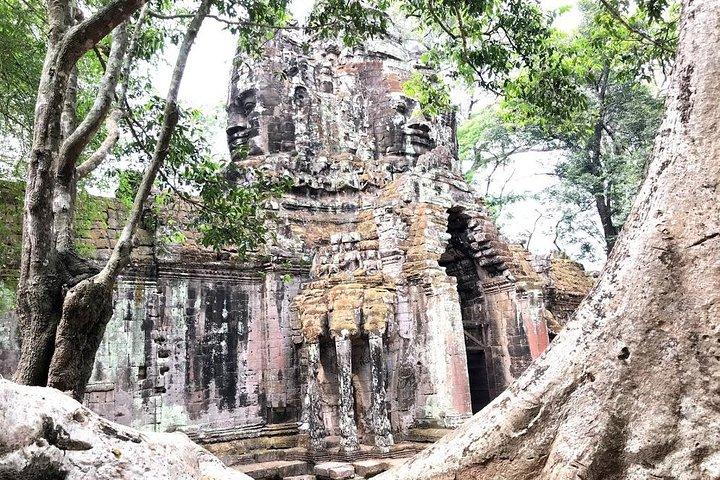
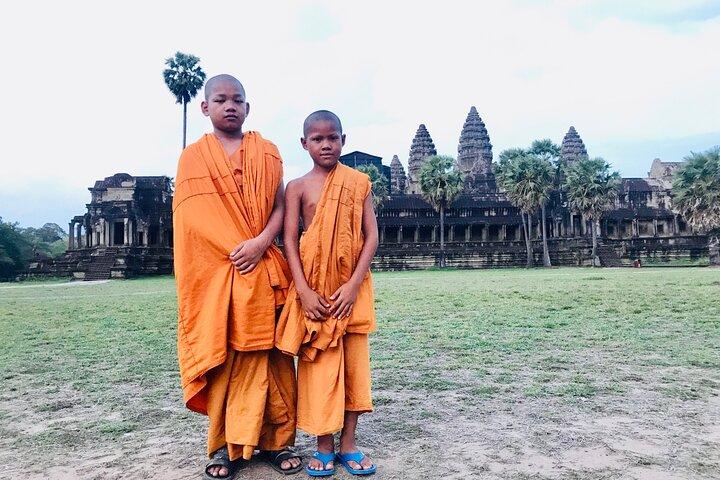
This itinerary is based in Siem Reap, Cambodia, offering you the opportunity to explore the major attractions of the Angkor temples. Although this is a one-day tour, it is carefully designed to cover the highlights of a typical two-day itinerary, ensuring you experience the very best of Angkor. We are dedicated to making your dream trip a reality. With just one payment, you can enjoy a rich and fulfilling experience that feels like much more! The tour includes visits to the ancient Angkor city of the Roluos Group temples and the Grand Circuit, featuring Pre Rup, East Mebon, Ta Som, Neak Pean, and Preah Khan temples. Additionally, we can include a sunset visit at Phnom Bakheng Hill before transferring you back to your hotel in Siem Reap city, marking the end of the tour for the day.
Tour Options
Itinerary
The Rolous Group is a collection of ancient temples located about 13 kilometers east of Siem Reap, Cambodia. It is one of the earliest temple complexes built during the Khmer Empire, dating back to the late 9th century. The group includes three main temples: Lolei, Preah Ko, and Bakong. The Rolous Group is significant for its historical and architectural value, showcasing early Khmer temple design and the transition from brick to sandstone construction. It provides insight into the early development of Khmer art and culture before the rise of the more famous Angkor temples.
In 802 AD, Jayavarman II, the first king of Angkor, declared the sovereignty of Cambodia. After experiencing various ups and downs, he established his capital at Hariharalaya. A few decades later, his successors constructed Bakong in stages as the first temple mountain of sandstone at Angkor. The inscription on its stele (classified K.826) states that in 881, King Indravarman I dedicated the temple to the god Shiva and consecrated its central religious image, a lingam named Sri Indresvara, which combined the king's own name with the suffix "-esvara," meaning Shiva ("Iśvara"). According to George Coedès, the devarāja cult was based on the idea of divine kingship as a legitimacy of royal power; however, later authors have stated that it does not necessarily involve the cult of the physical persona of the ruler himself.
Preah Ko, which means "The Sacred Bull," was the first temple to be built in the ancient and now-defunct city of Hariharalaya (in the area that is today called Roluos), some 15 kilometers southeast of the main group of temples at Angkor, Cambodia. The temple was constructed under the Khmer King Indravarman I in 879 to honor members of the king's family, placing them in relation to the Hindu deity Shiva. After the Khmer king Jayavarman II founded the Khmer Empire in 802 A.D., he established his capital at Hariharalaya, where he later died. Indravarman I was the nephew of Jayavarman II. When he ascended to the throne, he ordered the construction of Preah Ko, which was dedicated in 879, and later of the temple-mountain known as Bakong. It is likely that this building program was made possible by the king's peaceful reign and his ability to draw income from the expanding empire. A restoration of the towers took place in the early 1990s, financed by the German government.
Lolei is the northernmost temple of the Roluos group, which consists of three late 9th-century Hindu temples at Angkor, Cambodia; the other two are Preah Ko and Bakong. Lolei was the last of the three temples to be built as part of the city of Hariharalaya, which once flourished at Roluos. In 893, the Khmer king Yasovarman I dedicated it to Shiva and to members of the royal family. The name "Lolei" is thought to be a modern corruption of the ancient name "Hariharalaya," which means "the city of Harihara." Once an island temple, Lolei was located on an island slightly north of the center of the now-dry Indratataka baray, the construction of which had nearly been completed under Yasovarman's father and predecessor, Indravarman I. Scholars believe that placing the temple on an island in the middle of a body of water served to symbolically identify it with Mount Meru, the home of the gods, which in Hindu mythology is surrounded by the world oceans.
Neak Poan is situated at the center of Jayatadak Lake, surrounded by tranquil waters. The name "Neak Pean" translates to "the entwined serpents." Originally designed for medicinal purposes, this temple reflects the ancient belief that bathing in its pools could restore balance among the body's elements, thereby curing ailments. It is one of the many hospitals constructed by King Jayavarman VII, embodying the ancient Hindu principle of equilibrium. The temple features four interconnected pools, each representing one of the fundamental elements: Water, Earth, Fire, and Wind. These pools are linked to the central water source, the main tank, by stone conduits, each presided over by one of the Four Great Animals (maha ajaneya pasu): the Elephant, Bull, Horse, and Lion, corresponding to the cardinal directions of north, east, south, and west. This intricate design not only serves a practical purpose but also symbolizes the harmonious interplay of nature and health in ancient Khmer culture.
The Banteay Samre is situated on the eastern side of the Yasorvarmantadak water reservoir. Constructed by King Suriyavarman II, it was dedicated to his family and friends. Banteay Samre is renowned for its well-preserved stone carvings and its harmonious coexistence with the surrounding nature. The temple exudes a tranquil and refreshing atmosphere, embodying the architectural style of Angkor Wat. The name "Banteay Samre" translates to "The Citadel of Samre." From 1936 to 1944, the temple underwent an exemplary restoration led by Maurice Glaize. Its distinctive single ogival tower is instantly recognizable as part of the Angkor Wat style, akin to other temples in the region, such as Thommanon and Chau Say Tevoda. The temple's resemblance to certain monuments in northeastern Thailand gives it the appearance of a compact version of Phimai. Although there are no inscriptions detailing its foundation, it is likely that Banteay Samre was constructed by a high-ranking official.
Preah Khan is a sacred temple located within the main park of Angkor, constructed by King Jayavarman VII in 1191. This magnificent edifice is dedicated to his father, Dharanindravarman II, who is represented in the central sanctuary by Lokesvara, the Savior God of Mahayana Buddhism, who was widely revered during Jayavarman VII’s reign. In the central sanctuary, a stupa was erected in honor of Lokesvara. Preah Khan is situated to the north of Angkor Thom, approximately 800 meters from the north gate to the west entrance of the temple. Renowned for its stunning scenery and the beauty of its original ruins, Preah Khan also served as a center of learning, functioning as a University of Fine Arts and Culture under the reign of King Jayavarman VII. This temple not only stands as a testament to the architectural prowess of the Khmer Empire but also reflects the rich cultural and spiritual heritage of the time.
Pre Rup is a temple located in the Angkor archaeological park in Cambodia, built in the late 10th century during the reign of King Rajendravarman II. It is known for its distinctive red sandstone architecture and is often associated with funerary practices. The temple features a series of tiered platforms and five central towers, symbolizing Mount Meru, the center of the universe in Hindu cosmology. Pre Rup offers stunning views of the surrounding landscape, especially at sunset, making it a popular destination for visitors exploring the rich history of the Khmer Empire.
Highlights
What's included
Pickup Locations & Times
We will pick you up from your hotel lobby, and our team will meet you there promptly at the scheduled time. To ensure a smooth departure, we kindly ask that you wait for us for about 5 minutes before the designated departure time. Your punctuality will help us make the most of our day together. Thank you for your cooperation, and we look forward to an exciting adventure ahead!
Traveller Ratings
Important Information
- Public transportation options are available nearby
- Specialized infant seats are available
- Suitable for all physical fitness levels
Reviews(2)
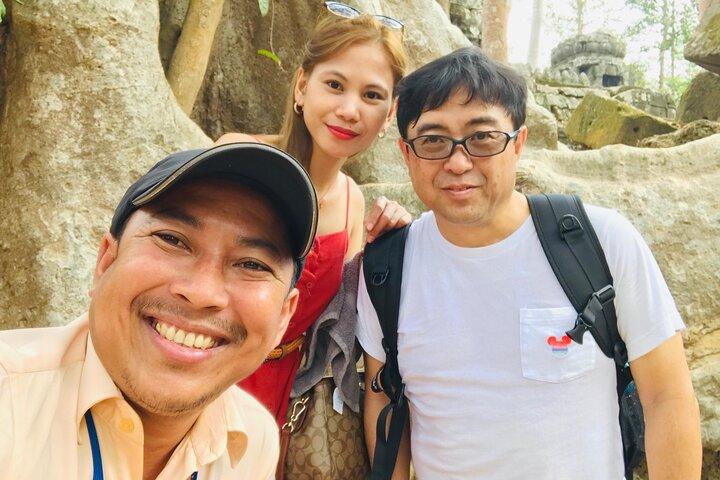
Hok was our guide when we first visited Siem Reap in 2007. We found him on Facebook and booked a day tour with him. Excellent service as before and highly recommended. He is very accommodating.
Dear Ying, A billion thanks for returning to visit our magnificent Angkor Temples once again! We are truly grateful for your thoughtful gift, your excellent review, and your unwavering support. Wishing you all the best, always! Warm regards,
Hok was a wonderful knowledgable guide. He explained the complexities of the Cambodian religious history and knew each carving as if he’d carved them himself. He gave us wonderful insights into Cambodian culture - and we are richer for the experience.
Dear Martin I hope this message finds you well! I wanted to take a moment to express my heartfelt thanks for your fantastic feedback on our TripAdvisor account. Your kind words and thoughtful insights mean a great deal to us. We are thrilled to hear that you had a positive experience with us. It is always our goal to provide exceptional service and create memorable moments for our guests, and your review reassures us that we are on the right track. Thank you once again for taking the time to share your experience. We truly appreciate your support and look forward to welcoming you back in the future! Warm regards, Hok