Philadelphia Walking Tour : Geschichte des Geldes und der Inflation in den USA


Beschreibung
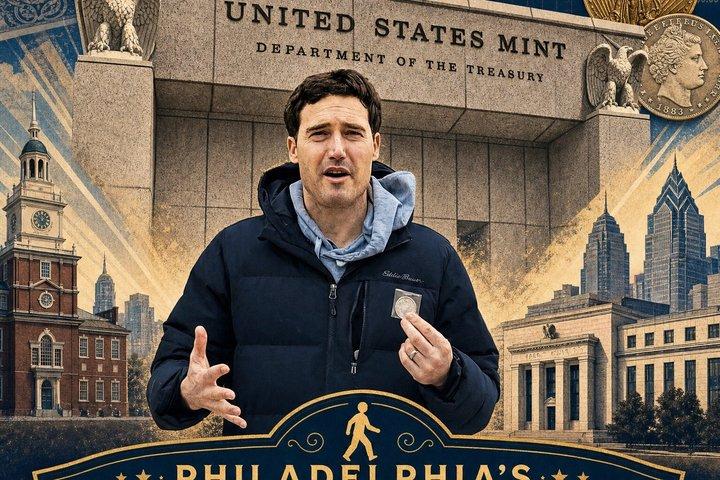
Warum ist alles so teuer? Wie kamen wir von der Verwendung von Goldmünzen im 17. Jahrhundert zur Verwendung von Papiergeld heute? Wie dachten unsere Gründerväter über den Aufbau des Währungssystems der jungen Nation? Diese Tour soll sowohl lehrreich als auch unterhaltsam sein und die historische Bedeutung von Stätten wie dem Museum der amerikanischen Revolution, der 1st Bank of the United States, der 2nd Bank of the United States, der US Mint, der Independence Hall und dem Grab von Benjamin Franklin behandeln. Der Reiseleiter ist ein Philadelphianer mit einer Leidenschaft für Geschichte, die Gründerväter unserer Republik und den aktuellen Stand der Inflation und finanziellen Bedingungen heute.
Tour-Optionen
Reiseverlauf
Erzählen Sie Geschichten über die 2 Wandmalereien an der Wand
Externe der ersten Bank der Vereinigten Staaten
Externe der Second Bank of the United States
Extern von Independence Hall
Extern von US Mint
Äußerlich des Friedhofs
Externes des US-Verfassungszentrums und der Federal Reserve. Erfahren Sie mehr über die 3. US-Zentralbank von 1913 bis heute.
Erzählen Sie über die Kontinental-Dollar-Hyperinflation zur Finanzierung des Unabhängigkeitskrieges 1775 - 1779
Erfahren Sie mehr über die erste Börse in Philadelphia und Gold und Silber Nutzung in Geld in den USA.
Highlights
Was ist inklusive
Bewertungen der Reisenden
Wichtige Informationen
- Rollstuhlgerechter Zugang
- Kleinkinder können in einem Kinderwagen gefahren werden.
- Begleittiere erlaubt
- In der Umgebung sind öffentliche Verkehrsmittel verfügbar.
- Die Transfermöglichkeiten sind rollstuhlgerecht.
- Alle Bereiche und Böden sind rollstuhlgerecht.
- Für alle Fitnesslevel geeignet
Bewertungen(6)
Fascinating !! We didn’t know what to expect, and a tour about banking in Philadelphia sounded dry. Boy were we wrong. Brian is a Philadelphia native, and this tour is his personal project, built from years of genuine passion for the subject. That shows in every stop. In less than ninety minutes, he takes you from the colonial currency chaos that preceded the Constitution, through Hamilton’s creation of the American banking system, all the way to the Federal Reserve and the inflation we live with today — and he makes every bit of it fascinating. His gift is making the abstract tangible. He pulls out side-by-side comparisons of historical and modern currency, walks you through an inflation chart spanning 1792 to today, and explains fiat money and the Nixon Shock in ways that suddenly make the dollar in your pocket feel like a living piece of history. Standing in front of the United States Mint while he tells these stories gives the whole thing a weight no classroom can match. Brian is warm, funny, and endlessly knowledgeable. This is not a franchise tour — it is one Philadelphian’s intellectual passion shared generously with anyone willing to walk and listen. Five stars. And would do it again.
Loved this tour. Got to see main sites (1st bank, carpenters hall, ind hall) and learn something about money. Great experience!
Brian is a very knowledgeable and interesting guide. I learned a great deal and enjoyed the tour. Recommend!
Brian took on an interesting, important and challenging topic. I learned a great deal and the tour stimulated my interest in learning more. Although Brian’s perspective is not my own, I found it is stimulating that he offered a point of view.
Really interesting tour with a lot of interesting nuggets. It made me think about how much money changed over US history, and never would have guessed so much happened in Philly. Tour guide Brian did great job. Highly recommend!
This was such a fun and informative tour. The tour started with two questions and both were answered by the end of the tour. I thoroughly enjoyed it! There is quite a bit of walking, so please wear comfortable shoes. Unfortunately, both the USMint and Federal Reserve buildings were closed for reconstruction during my time in Philly and during the 250 America celebration (dumb timing in retrospect). Also, not all of the slavery signs have been put back where they were previously.