Eintritt Kurá Hulanda Museum - Reiseleiter nicht inbegriffen

Beschreibung
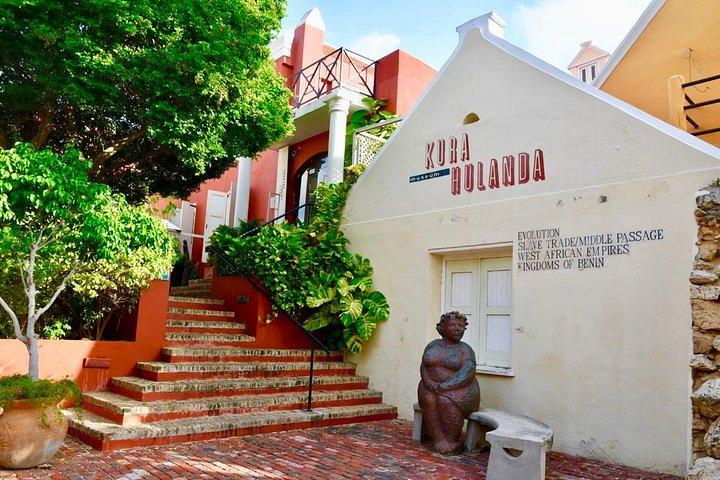
Das Museum Kurá Hulanda befindet sich direkt am Hafen der Innenstadt von Willemstad, wohin die Niederländischen verschifften und mit versklavten Afrikanern "handelten". Dieses Museum zeigt eindrucksvoll den Transatlantischen Sklavenhandel in seiner Gesamtheit, von der Gefangennahme in Afrika, der Reise durch die Mittelpassage und dem Leben in der Karibik und Amerika. Wir laden unsere Gäste ein, sich nicht nur das Trauma und den Schmerz vorzustellen, den versklavte Afrikaner erlebten, sondern auch den Mut, die Widerstandsfähigkeit und die Hoffnung, diese brutale Periode der Geschichte zu überleben. Das Museum Kurá Hulanda stellt außerdem eine umfangreiche Sammlung von Artefakten aus Kontinentalafrika aus, die die dynamische Vitalität und die großen Reiche Westafrikas zeigen. Mit der Ausstellung Westafrikanischer Königreiche wollen wir die negative Darstellung eines verarmten Afrikas zerstreuen, um die Tiefe afrikanischer Geschichte, Schönheit und kultureller Beiträge zur menschlichen Zivilisation zu zeigen.
Tour-Optionen
Reiseverlauf
Das Kurá Hulanda Museum befindet sich direkt am Innenstadthafen von Otrobanda, Willemstad und widmet sich der Rolle der Sklaverei auf der Insel Curacao. Die Geschichte Curacaos ist tief verwoben mit dem schrecklichen Erbe der Niederländischen Westindien-Kompanie und der Sklaverei; und Willemstads Hafen war einer der wichtigsten Umschlagplätze für die Verschleppung von versklavten Menschen in der Region auf dem Weg zu Plantagen in Nord- und Südamerika und dem Rest der Karibik. Es ist ein wesentlicher Halt, der in die Kräfte eintaucht, die Curacao und den Rest der westlichen Hemisphäre geformt haben. Neben der transatlantischen Sklavereiausstellung zeigt das Kurá Hulanda Museum eine umfangreiche Sammlung von Artefakten aus Kontinentalafrika, die die dynamische Vitalität und die großen Reiche Westafrikas zeigen. Darüber hinaus hat das Kurá Hulanda Museum eine kleine, aber einzigartige Ausstellung über alte mesopotamische Zivilisationen, die Rituale, Religion, Handel und Alltag zeigen.
Highlights
Was ist inklusive
Bewertungen der Reisenden
Wichtige Informationen
- Rollstuhlgerechter Zugang
- Kleinkinder können in einem Kinderwagen gefahren werden.
- In der Umgebung sind öffentliche Verkehrsmittel verfügbar.
- Für alle Fitnesslevel geeignet
Bewertungen(133)
Wow! What a wealth of information at this Museum. I did do the tour with a guide and so glad I did as there is a lot of history and information to cover. I was able to listen to the guide instead of having to read all of the information. I believe this added value to the experience. Highly recommend using a guide.
Visiting the Kura Hulanda Museum was an interesting, amazing, yet deeply depressing experience — in the way that honest history often is. I learned so much about the history of slavery, and the exhibits were powerful, sobering, and thoughtfully curated. Our historian guide was incredibly knowledgeable. You could feel the weight of the past in the way she explained what happened throughout the centuries — not just reciting facts, but conveying the human pain behind them. Her storytelling made the experience even more impactful. The staff were also very kind and accommodating. They encouraged us to take our time, never rushed us, and welcomed every question with patience and respect. That level of care made a difficult subject feel supported and safe to explore. This museum is not an easy visit emotionally, but it is an important one. I walked away with a deeper understanding of history and a profound appreciation for the way it was presented. If you’re looking for a meaningful, educational experience that honors truth and humanity, I would absolutely recommend visiting Kura Hulanda.
Very interesting museum, I absolutely wanted to see this. It's quite big, very fascinating and a must-see, but does need an update urgently. Not everything says what it is, sometimes it is not in all languages, museums are nowadays a bit more modern and interactive. But nevertheless a very fascinating place that I can definitely recommend.
It's a must-see museum. The history of slavery is overwhelming. It gathers one, ample show from times BC to the 20th century. Its richness is sculptural art.
Interesting section on the slave trade and beautiful African antiquities collection. Make sure you look through all the buildings, almost missed one since signage isn’t clear. Some of the text is hard to read and repeats, but was happy to support and it’s well maintained.
We would have opted for a tour guide, except that I like moving very slowly through exhibits, reading and studying in detail. We started in the ancient history room that displayed many artifacts from areas of Mesopotamia, Egypt, around the Mediterranean, through Greek and Roman Empires. It then follows a time line through to the present with focuses on trade, cultures, religious influences, colonization, and enslavement of peoples. Lots of great signage with information is posted throughout, many documents and artifacts to view. The curators mention that they are taking care to use accurate replicas where possible to ensure original artifacts can be returned to their countries of origin, which is admirable.
This museum has a fascinating and varied collection
The Kura Museum is a treasure trove of authentic history.. Sad, but necessary to know.. This is a must see for everyone!
Very moving and informative displays throughout. First exhibits highlight Africa and its history. The last building gets into the slavery exhibition. It sure shows the lack of funding as many areas of the museum are quite dusty and not maintained. We did a self guided tour and the fonts used on all the exhibits are pretty small and difficult to read. I took pictures of many of them to read later. Many of the plaques to read are positioned way too low. If you’re 4 feet tall they’re perfect. Also it seemed like there is little to no maintenance of the actual exhibits which is such a shame. They really need to spruce the place up. They need to do audio tours like the Jewish museum to get a much better feel of the place. It’s worth seeing but kind of disappointing.
Dear Guest Thank you so much for your visit and the feedback! The museum was established in 1998 and indeed is in need of a major update! After surviving the 'COVID' years and uncertainty around the future of the museum, in 2023 we crafted a plan to update the museum, starting with the basic infrastructure. This year a curator will come on board, earmarking a key phase in the journey of how our valued guests view and interact with materials in the space. Follow us on social media, Instagram and Facebook to celebrate the milestones we hope to achieve in this year and beyond! Thank you again for your visit and support and we hope to welcome you back in the future.
A critical look at the historical Dutch Slave Trade in Curacao. Very moving museum tour at times upsetting for the honest look at the brutal, inhumane treatment of an enslaved people. If you are sensitive, be prepared to cry.