Mobiles Ticket oder Ticket in Papierform akzeptiert
Anbieter
Manatour - Let's visit Airbus
Beschreibung
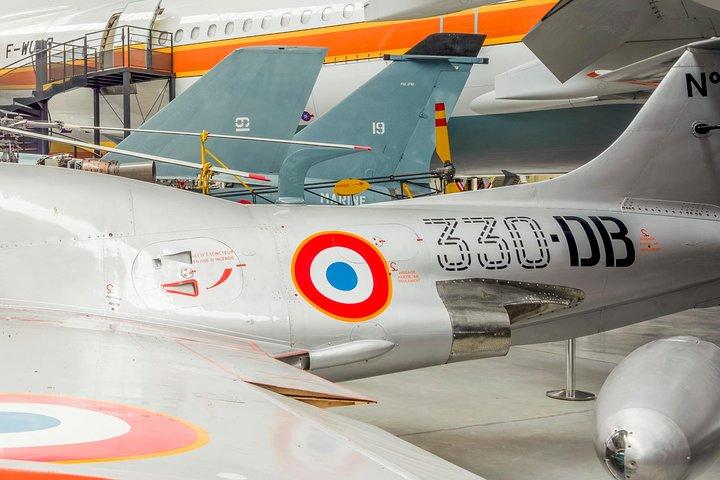
Der Aeroscopia-Komplex erstreckt sich über 15.000 Quadratmeter und ist ganz der Luftfahrt gewidmet. Er kombiniert ein Museum, ein Restaurant, ein Dokumentationszentrum für Luftfahrt und viele Entdeckungs- und Animationsbereiche.
Machen Sie sich bereit für eine Zeitreise!
Maschinell aus dem Original übersetzt von Google Translate.
Termine & Preise
Termine
Täglich
Nächster freier Termin
Mo., 5. Okt.
Erwachsene (ab 18 Jahren)
$17
Kinder (6–17 Jahre)
$14
Kleinkinder (0–5 Jahre)
Kostenlos
Aus dem aktuellen Terminplan des Anbieters bei Viator, Stand 4. Okt.
Tour-Optionen
Aeroscopia-Eintrittskarte
Reiseverlauf
Aeroscopia
Eintritt inklusive
Unter seinem Baldachin präsentiert das Aeroskopie-Museum eine sehr reiche Sammlung ziviler und militärischer Flugzeuge, von denen mehrere besichtigt werden können.
Rund um das Flugzeug erzählen viele Modelle, Videos und Animationen für jedes Alter und ein historisches Fresko die Geschichte der Luftfahrt von ihren Anfängen bis heute
Lernen Sie die vier Sterne unserer Kollektion kennen:
- Concorde : die Legende
- Der Airbus A300B und seine erstaunliche Sanierung, mit transparenten Boden- und Fensterverkleidungen
- Der beeindruckende Super Guppy und sein Cargo Bay Kino.
- Caravelle, der klassische Französische Vintage Jetliner
Übernehmen Sie die Kontrolle über Ihren Besuch :
- Entdecken Sie unsere interaktiven thematischen Ausstellungen
- Sie sind der Pilot : probieren Sie unseren echten Flugsimulator
- Verpassen Sie nicht unsere wissenschaftlichen und kulturellen Veranstaltungen
- Vermitteln Sie die Kultur der Luftfahrt an Ihre Kinder dank unserer Workshops und Präsentationen, die das ganze Jahr über verfügbar sind.
Es werden verschiedene Besuche vorgeschlagen:
- unabhängige Touren
- Themenführungen
- die Entdeckungstour, die Familientour...
Besondere Aufmerksamkeit gilt den Kindern mit einer Geschichtenführung und einem kostenlosen Heft :« Rallye im Museum »
Aeroscopia beherbergt auch mehrere Empfangszonen : den Bereich Evénement’Ciel, der für Abendveranstaltungen privatisiert werden kann, sowie die Seminarräume und das Auditorium in der Ferme DE Pinot.
Ein Geschäft ermöglicht es den Besuchern, ein Andenken an ihren Besuch mit nach Hause zu nehmen und bietet eine breite Palette von Produkten, von Stiften und Modellen im Maßstab bis hin zu T-Shirts oder Spielzeug, Postern, Postkarten, Büchern und DVDs über die Luftfahrt.
Im Sky-Trotter, einem 150-Sitzer-Restaurant mit Terrasse, das sich zum Park hin öffnet, können Besucher oder Passanten an jedem Tag des Jahres ein Mittagessen oder einen Snack genießen.
Das « Atelier DE avions », das sich direkt neben der Ferme de Pinot befindet, bündelt die Sammlung von Flugzeugen des Vereins Ailes Anciennes, der das luftfahrttechnische Kulturerbe Toulouses restauriert und konserviert, sowie der Vereine Aérothèque und Cap’Avenir Concorde.
Regelmäßig werden Führungen für Jung und Alt organisiert.
Was ist inklusive
Inklusive
Eintrittskarte für Aeroscopia
Nicht inklusive
Transport von/zu den Sehenswürdigkeiten
Speisen und Getränke
Bewertungen der Reisenden
Bewertungen gesammelt von Viator und Tripadvisor
4.3
369 Bewertungen
5
192
4
110
3
43
2
19
1
5
Im Vergleich: Touren in Toulouse
Platz 3 nach Anzahl der Bewertungen unter 107 Touren in Toulouse
Startpreis $17 liegt 66 % unter dem üblichen Preis von $51 für ähnlich lange Touren in Toulouse
Vergleich von Excurgo über 107 Viator-Touren, täglich neu berechnet.
Wichtige Informationen
Rollstuhlgerechter Zugang
Kleinkinder können in einem Kinderwagen gefahren werden.
Begleittiere erlaubt
In der Umgebung sind öffentliche Verkehrsmittel verfügbar.
Die Transfermöglichkeiten sind rollstuhlgerecht.
Alle Bereiche und Böden sind rollstuhlgerecht.
Für alle Fitnesslevel geeignet
Kinder müssen von einem Erwachsenen begleitet werden
Stornierung
Stornieren Sie mindestens 24 Stunden vor der geplanten Abfahrtszeit, um eine vollständige Rückerstattung zu erhalten.
1+ Tage vorher100% Rückerstattung
0–1 Tage vorher0% Rückerstattung
Bewertungen(369)
Bewertungen gesammelt von Viator und Tripadvisor
K
kellypN2889SW
September 27, 2026 · über Tripadvisor
Save your time
Most of the displays were broken. No guides or activities worked well. Disappointing displays and no public transport without a 1 km walk. Lockers for bags were broken and dodgy.
All around a lot of money for an underwhelming experience.
P
Paula_B
September 6, 2026 · über Viator
Great museum!
I enjoyed seeing the history of aircraft and the displayed planes & jets one could walk inside of. It was well organized and i recommend the combined ticket with Airbus tour.
The nearby restaurant was understaffed, but staff were very friendly & accommodating as we only had a short time before our Airbus factory tour bus. I had an excellent roasted chicken lunch!
6
600maudf
August 26, 2026 · über Tripadvisor
You are going to love the planes!
A great experience: a very large hangar with various planes, you don't know where to look anymore! You can enter the Concorde and an Airbus A300 to visit as you wish and see the interior of a Super Guppy. Two tarmacs exhibit other Airbuses and a Beluga, you feel so small! Super interesting and informative visit!
N
Natalie_S
August 20, 2026 · über Viator
A great way to spend the day
A great place for plane enthusiasts with lots to see. Free easy parking, not too long waiting with friendly staff. Comfy shoes are recommended for the stairs. It does get hot in the hanger too so water recommended. Easy to take lots of photos. Worth a look around the gift shop. I would allow at least 2 hours to look around. Unfortunately the restaurant was closed
S
Seatnat01
August 18, 2026 · über Tripadvisor
A must for any plane enthusiasts
If you love planes you will love it here. Lots of information of interesting facts on planes of all types. You get to see models of planes as well as physically go on them. There are also planes outside to look at and go on. Free parking but unfortunately the restaurant was closed. Great little gift shop. Friendly staff. Literally opposite Toulouse terminal
K
Kikawan
August 13, 2026 · über Tripadvisor
Very good but could be modernized.
Very interesting museum; the tour of the Concorde and the A380 is great. The Beluga is impressive, but you cannot visit the interior yet. Overall we liked it a lot, but the potential of this museum is not exploited enough. It's quite old-fashioned in the hangar; there could be more interactive and fun things. Warning: no air conditioning, except in the A380. The heat is stifling in the hangar.
I
isa2stet
August 12, 2026 · über Tripadvisor
A beautiful aeronautical visit.
A very interesting museum with recent planes that we were able to board (A380) but also older ones (Concorde).
There are enough explanations for it to be informative without being tedious.
On the other hand, it is a shame that we cannot board the Beluga or the A400M or the helicopters.
C
Compass43464996774
August 12, 2026 · über Tripadvisor
Airplane museum not fun
So it's great, airplanes are impressive, but couldn't we take the experience all the way?
Follow the construction of the plane, the boarding, and so on? That we navigate the roles but while being immersed in the adventure. The museum has potential but not the spark that makes it an unforgettable museum.
Maybe immersion and imagination could be used. Because right now it's not fun. And getting into several planes or cockpits would make the whole thing more interesting.
1 Personen fanden das hilfreich
F
Franck_P
August 12, 2026 · über Viator
Meh... passable! Could do better!
Not very informative. Why not implement audio guides that would be more effective and interactive for the explanations?
You feel left to your own devices.
3
346elied
August 11, 2026 · über Tripadvisor
Aeroscopia Museum is an absolute must
Aeroscopia Museum is very good for plane fans; you can visit the interior of an Airbus A380
Ähnliche Touren in Toulouse vergleichen
Am günstigsten: Aeroscopia-Eintrittskarte — $17
Am besten bewertet: Toulouse Food & History Tour with a Chef (in English) — 5.0 (640 Bewertungen)
Am kürzesten: Toulouse Sightseeing Bus Tour — 1 Stunde