South Omo Valley om 4 dage, Etiopien


Beskrivelse
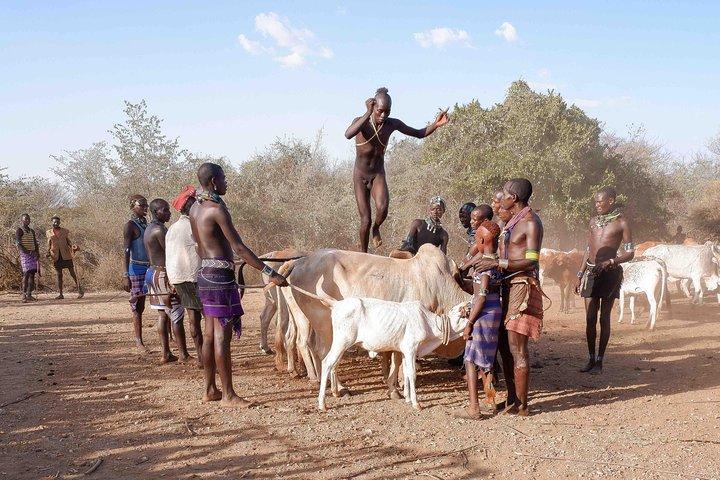
Den nedre Omo-flod i det sydvestlige Etiopien er hjemsted for otte forskellige stammer, hvis befolkning er omkring 200.000. De har boet der i århundreder. Dalen er for det meste en tør savannevidde, der bliver fodret med Omo-floden - en af deres vigtigste ressourcer. Langs floden og i hele dalen, pejser hundreder af små stammebyer landskabet, hver af dem med deres unikke skikke og endda deres eget sprog.
Turmuligheder
Højdepunkter
Hvad er inkluderet
Afhentningssteder og tider
Arba Minch Lufthavn
Rejsendes vurderinger
Vigtig information
- Spædbørn og småbørn kan køre i barnevogn eller klapvogn
- Servicedyr er tilladt
- Der er adgang til offentlig transport i nærheden
- Spædbørn skal sidde på skødet af en voksen
- Specialiserede sæder til spædbørn er tilgængelige
- Anbefales ikke til rejsende med rygskader
- Anbefales ikke til gravide rejsende
- Anbefales ikke til rejsende med fare for hjerte-kar-sygdomme
- Velegnet til alle fitnessniveauer
Anmeldelser(1)
From August 18 to 23, 2025, my wife and I spent an unforgettable vacation in South Omo, exploring the Museum of Anthropology and the UNESCO World Heritage Site in the region. Our trip was a deeply enriching experience, offering us the rare opportunity to observe firsthand the vibrant culture, traditions, and heritage of the local communities. During our stay, we visited several unique tribes that make South Omo a cultural treasure. We met the Hamar people, one of the most renowned tribes in the area, known for their intricate hairstyles and traditional rituals. We were also fascinated by the Karo tribe, famous for their elaborate body painting. In the Tsamai region, we witnessed the stick-walking boys, a striking symbol of youth and tradition. Lastly, we explored the village of the hardworking Konso people, whose terraced agriculture and social structure reflect a rich legacy of resilience and innovation. Our time in South Omo was more than a vacation—it was a meaningful journey into the heart of Ethiopia’s diverse cultural landscape.